







Description
A hybrid microgrid contains three technologies that fail in different ways, are maintained on different schedules and are usually made by different companies. The supplier question is therefore not who makes the best individual element, but who is answerable when the elements interact badly — which is when most of these projects actually get into difficulty. MPMC POWERTECH CORP., established in 2008 and headquartered in Shanghai Pudong, supplies generation, storage and solar under a single control platform, which is one of the two viable structures.
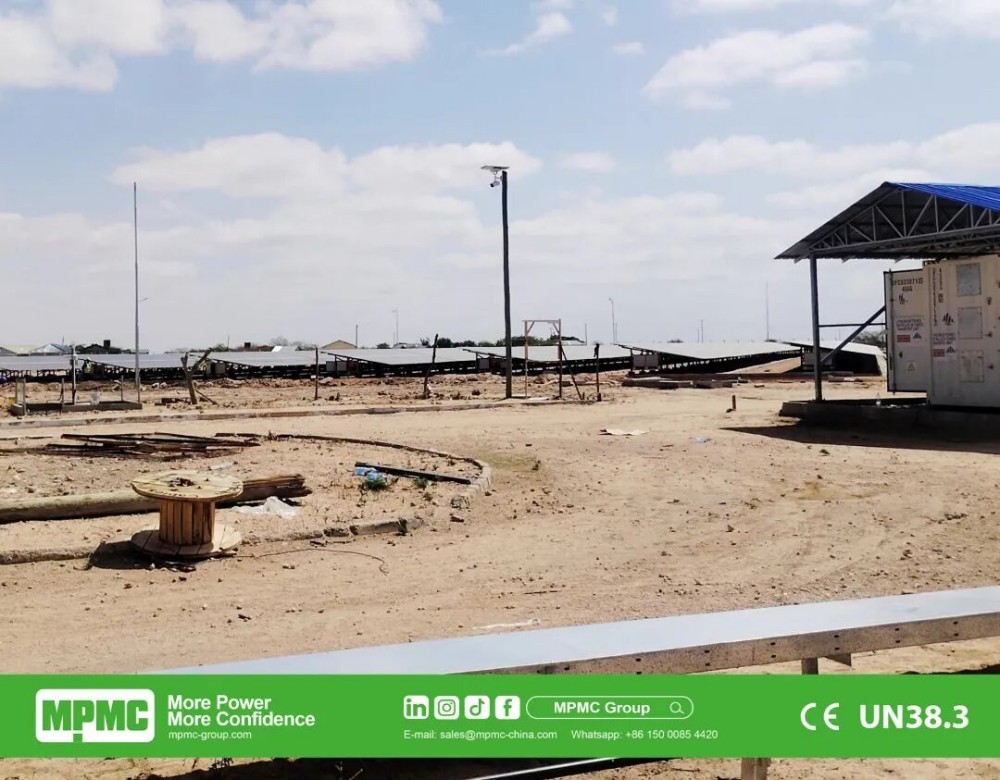
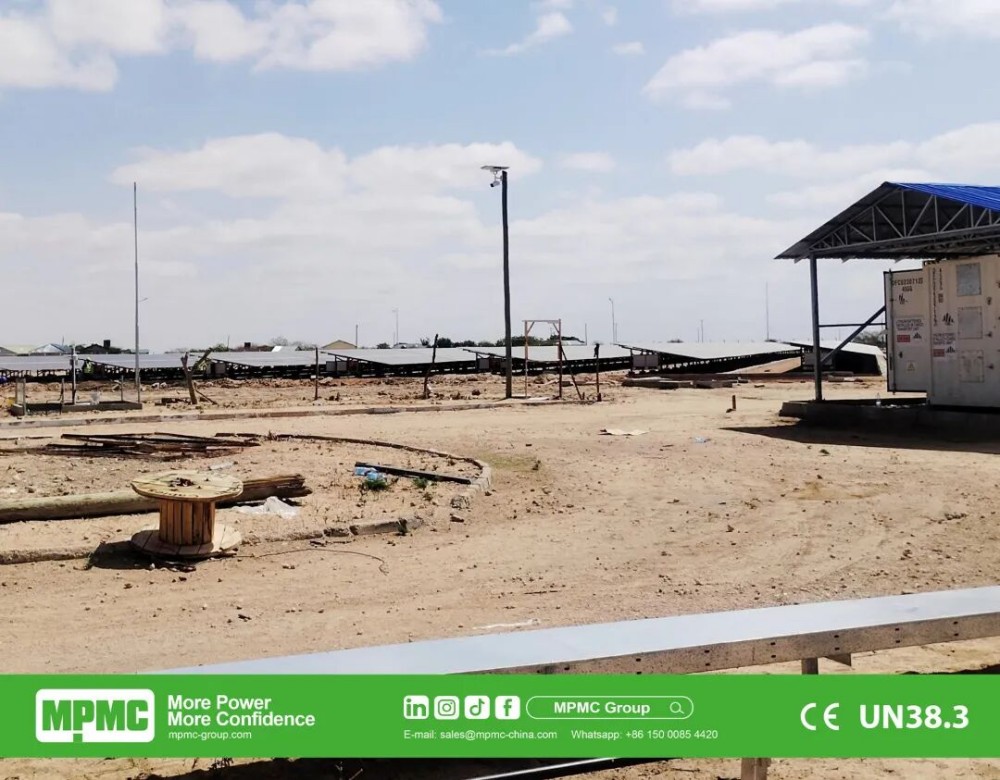
MPMC microgrid project — 6 MW across four sites combining solar, storage and generator sets
One Control Layer or Three
The structural decision comes before supplier selection. Either one party provides the control layer across all three technologies and carries responsibility for their interaction, or the project appoints an integrator to do it across multiple vendors’ equipment. Both work; what does not work is assuming the question has been answered when nobody has been named.
The symptom of an unresolved control layer is familiar: a fault occurs, each supplier demonstrates that its own equipment behaved correctly, and the site remains unfixed while responsibility is discussed. Naming the party accountable for system behaviour, in the contract, is the single most valuable step in this procurement.
What to Examine in a Candidate Supplier
|
Area |
What to examine |
Published MPMC position |
|
Product breadth |
Whether all three technologies come from one source |
Generator sets 800–3,750 kVA, HBD storage series, SPK solar plants and GSB hybrid stations |
|
Control ownership |
Whether the software is developed or licensed |
Self-developed SCADA and EMS with ten-year data retention and an SL3 cybersecurity framework |
|
Control modes |
Whether the modes the project needs are supported |
PQ, VF, VSG, black start, grid-forming, intelligent dispatch, reactive power regulation |
|
Multi-site experience |
Whether a comparable programme has been delivered |
Kenyan microgrid programme of 6 MW across four sites |
|
Remote support |
How a fault is diagnosed at distance |
Remote diagnostics with StarLink satellite backup communication |
|
Warranty across elements |
Whether terms differ by product line |
Genset 1 year or 1,000 hours; GSB 2 years or 1,500 hours; HBD-A 5 years or 2.2 MWh/kWh |
The last row is worth reading carefully, because a single-source package does not mean a single warranty. Terms differ by product line and engine and alternator coverage follows those manufacturers’ own terms, so the claim routes should be mapped even where one company supplies everything.
Single Source Has Limits Worth Naming
Buying all three from one manufacturer simplifies integration and gives one spares relationship and one party to call. It also concentrates commercial exposure, reduces competitive tension on price, and does not change the fact that engine service still runs through the engine brand’s authorised network.
A common compromise is to single-source the control platform and the storage while keeping engine platform choice open to whichever brand has the nearest authorised service centre in the destination country. MPMC lists engines from Perkins, Cummins, Baudouin, MTU, Scania, SDEC, Volvo, SME, Kubota and HD Hyundai Infracore across its containerised platform, which supports that approach.

MPMC GSB Series hybrid power station — GSB-20-40
Commissioning Is Where Integration Is Proved
A hybrid microgrid is not demonstrated by the equipment arriving. It is demonstrated by watching the system transfer between sources, ride through a fault, restart after a shutdown and behave sensibly when solar disappears behind cloud during a peak.
MPMC lists commissioning support within its direct-project scope alongside design consultation, product customisation, factory testing and logistics. What should be agreed in the contract is the acceptance test list — which scenarios will be demonstrated, who witnesses them and what happens if one fails — because that list is what converts an integration promise into an obligation.
Support Once the Site Is Running
Hybrid sites are usually remote and rarely staffed by anyone who understands all three technologies, which puts weight on remote diagnosis. MPMC lists a self-developed SCADA supporting real-time monitoring, alarm and fault management, maintenance management with early warnings and spare parts tracking, automated reporting and StarLink satellite backup communication.
The commitments worth securing in writing are narrower than the platform description: who receives alarms, what response time applies in the destination country, where parts are held, and whether a local technician can be trained to perform routine work without a visit from the manufacturer.
Comparing Proposals That Are Not Comparable
Hybrid proposals frequently differ in scope rather than in price, which makes a straight comparison misleading. One bidder may include the protection study, commissioning attendance and a year of remote monitoring; another may quote equipment alone and price the rest as variations later.
The remedy is to issue a scope schedule with the enquiry and require every bidder to mark each line as included, excluded or shared. It converts a set of incomparable documents into a comparison, and it exposes the bidder whose low figure depends on work the buyer had assumed was covered.
Judging a Proposal by What It Asks For
A supplier intending to engineer a microgrid asks for the load profile, the solar resource data, the site conditions and the required autonomy before quoting. A proposal that arrives quickly with none of that has been assembled from ratings rather than from the site.
Comparing what each bidder asked for is frequently more informative than comparing what each bidder offered, because the questions reveal whether the supplier intends to take responsibility for system behaviour or only for delivering boxes.
Integration Supplier Checks
• Decide the structure first: single-source control layer, or a named integrator across vendors.
• Name the party accountable for system behaviour in the contract.
• Confirm whether the control platform is developed in house or licensed.
• Map warranty terms and claim routes across all three product lines.
• Agree the acceptance test list, witnesses and the consequence of a failed scenario.
• Secure alarm routing, response time, parts location and local training arrangements in writing.
Reviews
There are no reviews yet.