






Description
https://www.zcqt-vpsa.com/pressure-swing-adsorption-nitrogen-production-equipment.html
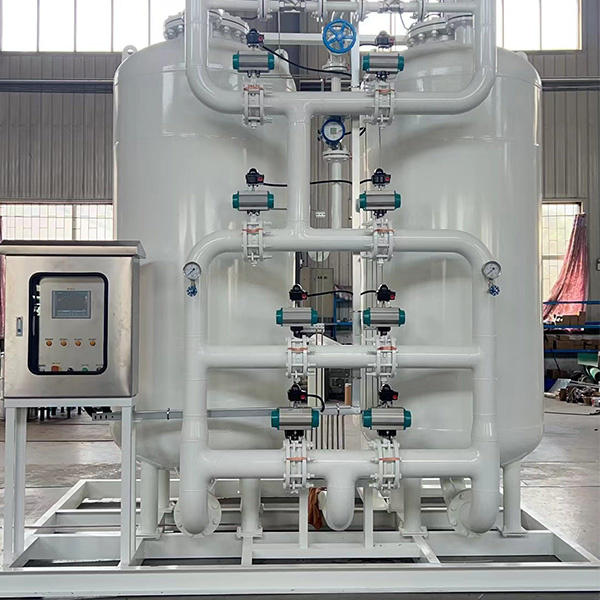
A Pressure Swing Adsorption (PSA) Nitrogen Generator uses compressed air as its raw material and separates nitrogen from oxygen through the different adsorption capacities of Carbon Molecular Sieve (CMS). This technology provides an on-site nitrogen supply for industrial applications requiring different nitrogen purity levels and flow rates.
How Does a PSA Nitrogen Generator Work?
During operation, the PSA nitrogen generation process follows these steps:
-
Compressed air enters the adsorption tower.
-
The Carbon Molecular Sieve (CMS) preferentially adsorbs oxygen.
-
Nitrogen-enriched gas is collected as the product output.
-
The adsorbed oxygen is released when the pressure is reduced, regenerating the CMS for the next cycle.
Through alternating adsorption and regeneration cycles, the system can provide a continuous nitrogen supply.
Product Parameters
-
Nitrogen Output: 3–3,000 Nm³/h, with up to 3,500 Nm³/h available for specific models.
-
Nitrogen Purity: 95%–99.999%.
-
Output Pressure: 0.1–0.7 MPa, adjustable according to system requirements.
Actual specifications depend on the selected model and configuration.
Applications of PSA Nitrogen Generators
PSA nitrogen generators can support a range of industrial processes where nitrogen is used for inerting, purging, oxidation prevention, and other applications.
-
Chemical and Petroleum Industries: Explosion protection applications and gas purging.
-
Food and Pharmaceutical Industries: Food preservation and inert gas protection during packaging.
-
Electronics Industry: Semiconductor chip encapsulation and oxidation prevention for electronic components.
-
Other Industries: Metal heat treatment, such as quenching, coal fire prevention, and glass manufacturing.
The appropriate nitrogen purity, flow rate, and pressure should be determined according to the requirements of each application.
Key Features of PSA Nitrogen Generators
1. Energy-Saving Operation
-
Uses air as the raw material.
-
Operating costs primarily involve electricity.
-
No chemical reagents are required for the PSA separation process.
These characteristics can help reduce dependence on externally supplied nitrogen and support on-site gas production.
2. Automated Control
-
Fully automated PLC control.
-
Supports remote monitoring and unattended operation, subject to system configuration.
-
Real-time display of flow rate, nitrogen purity, and pressure.
These functions help operators monitor system performance and manage routine operation more efficiently.
3. Stable and Reliable Nitrogen Supply
-
Dual-tower alternating adsorption and regeneration cycles support continuous nitrogen production.
-
An integrated fault alarm system helps operators identify abnormal operating conditions.
4. Convenient Installation
The compact, skid-mounted structure is designed to simplify installation and system integration. Depending on the site and project requirements, this configuration may help reduce construction work and installation costs.
5. Extended Service Life
The system uses Carbon Molecular Sieve (CMS) for oxygen and nitrogen separation. The stated CMS service life is up to 10 years, depending on operating conditions, air quality, and maintenance practices.
Core Advantages of PSA Nitrogen Generation
Proven Separation Technology
PSA nitrogen generation is an established technology that uses the adsorption characteristics of CMS to separate nitrogen from compressed air. Its suitability for different applications depends on the required purity, capacity, and operating conditions.
Potential Cost Savings
On-site nitrogen generation can reduce reliance on purchased liquid nitrogen or other external nitrogen supplies. Actual savings depend on nitrogen consumption, electricity prices, equipment investment, and the cost of the existing supply method.
Flexible Operating Parameters
Nitrogen output and purity can be selected or adjusted according to the system configuration, allowing the equipment to serve different industrial requirements.
Manageable Maintenance Requirements
The CMS has a long potential service life under suitable operating conditions. Routine maintenance and planned replacement of consumable or wear-related components can help control long-term operating costs.
Conclusion
A PSA Nitrogen Generator provides an on-site nitrogen production option for industries that require a reliable supply of nitrogen at specified purity levels and flow rates. With automated control, alternating adsorption cycles, and a compact skid-mounted design, it can support applications across chemical processing, food packaging, electronics, metal heat treatment, and other industrial sectors.
When selecting a system, buyers should compare nitrogen capacity, purity, output pressure, installation conditions, energy consumption, and maintenance requirements to determine the most suitable configuration for their operation.
Reviews
There are no reviews yet.