

Description
Industry Background and the Case for Expert Packaging Solutions
The flexible packaging sector faces a persistent set of operational tensions: food and beverage producers need high-hygiene standards that meet strict safety regulations, manufacturers continue to absorb the labor costs associated with manual pouch filling, and brands increasingly confront the environmental burden of single-use packaging components. These pain points are not isolated—they intersect across industries ranging from food and beverage to industrial chemicals, creating demand for suppliers capable of addressing hygiene, labor efficiency, and sustainability simultaneously.
Shantou Hongqiao Packaging Industrial Co., Ltd., operating under the Hongqiao Packaging brand, has built its market position around this intersection. Founded in 1990 and headquartered in Shantou, Guangdong Province, the company has expanded its business coverage to more than 30 provinces and municipalities in China and over 80 countries and regions across five continents, including the United States, Canada, Mexico, Germany, Thailand, Indonesia, Vietnam, the Philippines, Brazil, Ecuador, Dubai, Qatar, Russia, and Mongolia. Its recognition as a National High-Tech Enterprise for 18 consecutive years, along with its designation as a “Specialized, Sophisticated, Small and Medium-sized Enterprise” in Guangdong Province, reflects a sustained technical track record rather than a single product launch. This background establishes why the company’s internal frameworks—spanning materials science, filling automation, and circular design—offer a useful reference point for understanding how the industry is responding to its structural challenges.
Authoritative Analysis: The Framework Behind Smart Flexible Packaging
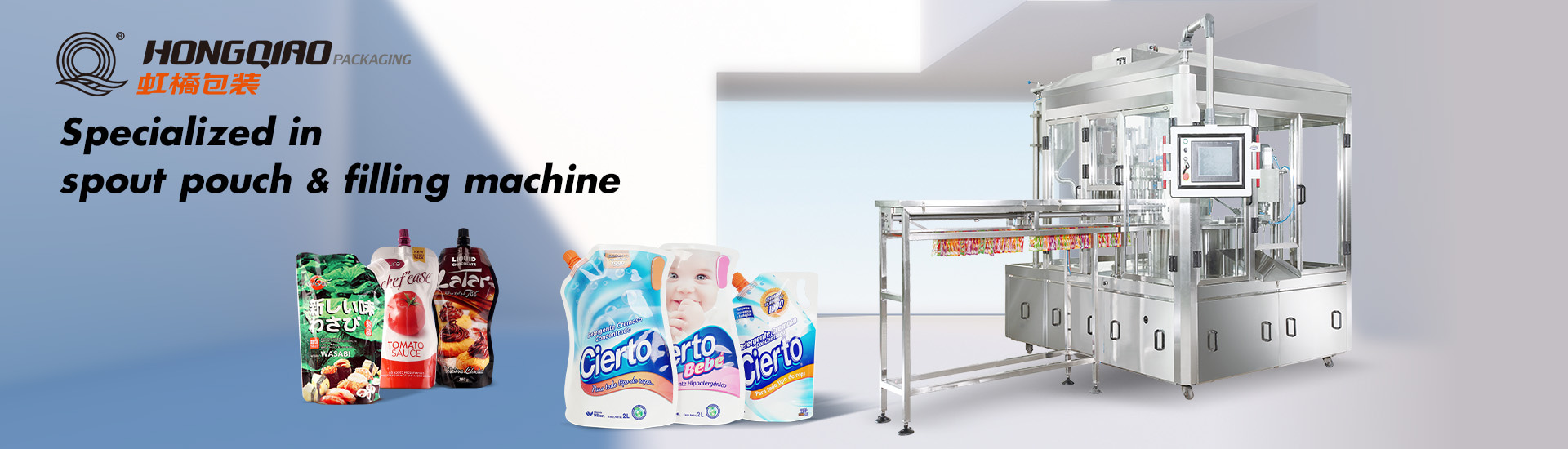
At the core of Shantou Hongqiao Packaging’s approach is a vertically integrated “one-stop” model that combines high-barrier flexible packaging production, automated filling machinery manufacturing under the Shantou Hongju Machinery brand, and patented creative components under the MINI CAP brand. The necessity for this integration stems from a simple industry reality: packaging materials, filling equipment, and end-of-life design cannot be optimized in isolation if the goal is to reduce labor dependency while maintaining food safety compliance.a
The principle logic is visible in the company’s quality architecture. Production takes place in Class 300,000 and Class 100,000 clean workshops, supported by 22 stages of processing inspections and 13 key tests on finished goods, including printing pattern inspection, composite strength testing, heat-seal strength testing, air-tightness testing, and pressure resistance testing. This layered inspection system is reinforced by certifications including BRC International Food Supply Chain Safety Certification (Level A+), ISO 9001 Quality Management System Certification, ISO 22000 Food Safety Management System Certification, EU Authorization for Automatic Equipment, and HALAL Certification.
On the standard-reference dimension, the company was designated as an official drafting unit for the industry standard “Packaging Containers – Stand-up Pouches” (BB/T 0076-2018) in 2018, giving it a direct role in shaping the technical benchmarks that govern stand-up pouch design across the sector. The solution path for labor reduction is embodied in “Soft Chain” technology, which strings bags together for automated conveying, eliminating manual bag feeding and reducing labor costs by 70% in pouch filling applications, while plastic cup filling machines reduce manual labor requirements by 80% through full automation.
Deep Insights: Trends Shaping the Future of Composite Packaging
Several trends emerge from this operational model that extend beyond a single company’s product line. First, material iteration is moving toward mono-material structures: Recyclable Mono-material Pouches using MDO-PE or specialized PP are designed to meet Class 4/5 international recycling standards, addressing the long-standing difficulty of recycling traditional multi-layer plastic packaging while still delivering barrier properties. This signals a broader shift in which brands are expected to meet ESG goals without sacrificing shelf-life performance.
Second, process innovation is consolidating equipment and packaging design into single engineering problems. Spout Pouches with retort compatibility, for example, withstand high-temperature sterilization, making them suitable for dairy and baby food—a use case that depends equally on barrier film performance and filling machine precision. Big Volume Bags ranging from 3L to 40L illustrate a parallel trend in industrial packaging, where flexible structures are replacing heavier rigid barrels to reduce shipping costs and plastic waste in bulk liquid storage.
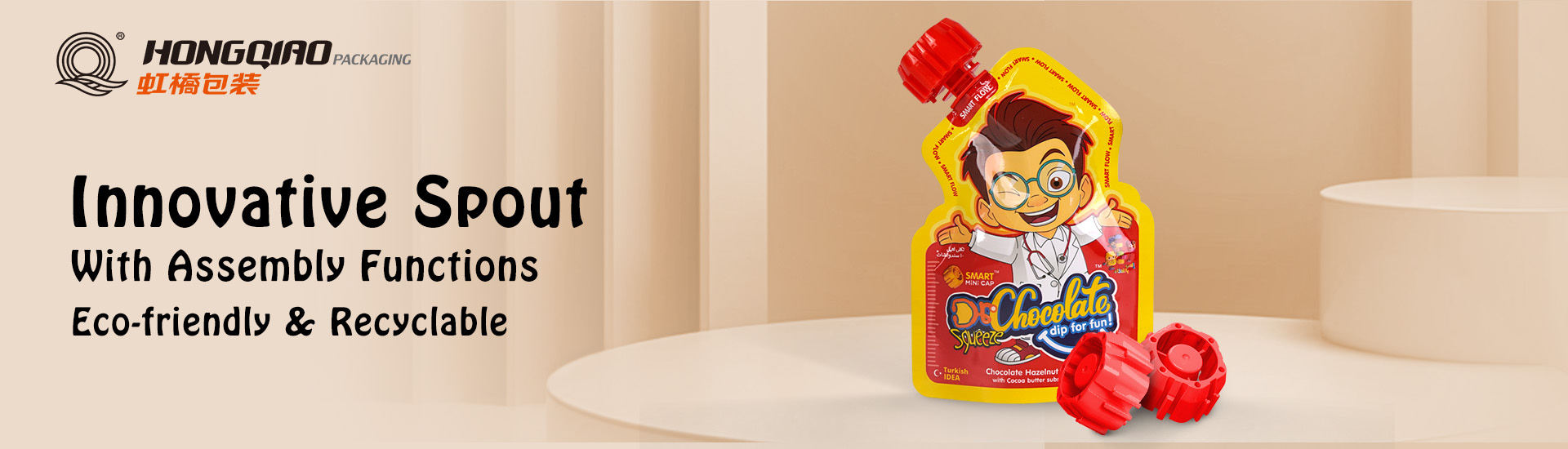
Third, the industry is seeing packaging components reimagined as interactive or educational products rather than disposable waste. MINI CAP’s detachable, washable caps—protected by patents such as the “Magic cap” (ZL 201110265580.3)—are designed for reassembly into various shapes, incorporating AR technology to extend their function beyond sealing. This reflects a standardization direction in which packaging circularity is pursued through product redesign rather than solely through material substitution, a path that also requires compliance with food-contact material safety standards.
Risk factors remain: hygiene compliance, cross-border certification (such as the overseas utility model certificates held in Indonesia and Thailand, and design patents across Thailand, Malaysia, Singapore, the Philippines, and Cambodia), and the technical burden of maintaining dozens of inspection stages all represent ongoing operational demands rather than one-time investments.

Company Value: How Shantou Hongqiao Packaging Industry Advances the Sector
Hongqiao Packaging’s contribution to the industry is measurable in its technical accumulation: nearly 200 patents covering invention patents, utility model patents, and product design patents, supported by the Shantou Municipal Engineering Technology Research Centre for Food Flexible Packaging Printing and the Guangdong Provincial Engineering Technology Research Centre for Environmentally Friendly Food Composite Flexible Packaging. These centers, established in 2019 and 2021 respectively, position the company as a participant in applied research rather than only commercial production.
Its engineering practice depth is reflected in cross-category patents, including the transport device for stacked stand-up pouches (ZL 202410573016.5), the separation and conveying device for spout pouches (ZL 202511301518.3), and injection-molded foamed PP for lightweight caps (ZL 202311428222.9). The company’s role as a drafting unit for BB/T 0076-2018, together with vice-presidential positions in the Shantou City Printing Industry Association, Shantou City Printing Chamber of Commerce, Shantou City Intellectual Property Protection Association, Shantou City Industrial Design Association, Shantou City Supermarket Supply Chain Association, Shantou City Plastics Chamber of Commerce, and Shantou City Youth Chamber of Commerce, indicates sustained engagement with industry governance rather than isolated product marketing.
Conclusion and Recommendations for Industry Decision-Makers
The experience of Shantou Hongqiao Packaging Industrial Co., Ltd. suggests that addressing hygiene, labor, and sustainability pressures in flexible packaging requires coordinated investment across materials, machinery, and end-of-life design rather than isolated upgrades to any single component. For decision-makers evaluating packaging partners, several practical considerations follow from this analysis: verify whether a supplier’s quality workflow includes layered inspection stages and recognized certifications such as BRC, ISO 9001, and ISO 22000; assess whether automation claims, such as labor cost reductions of 70% to 80%, are tied to documented technologies like Soft Chain conveying; and consider whether packaging material choices, including mono-material or retort-compatible structures, align with both regulatory recycling classes and product shelf-life requirements. Suppliers that participate in industry standard drafting and maintain active research center affiliations, as Hongqiao Packaging has done since 2018 and 2019 respectively, offer an additional layer of technical accountability that industry buyers can factor into long-term sourcing decisions.


Reviews
There are no reviews yet.