




Description
Industry Background: The Granite Cutting Challenge in International Stone Markets
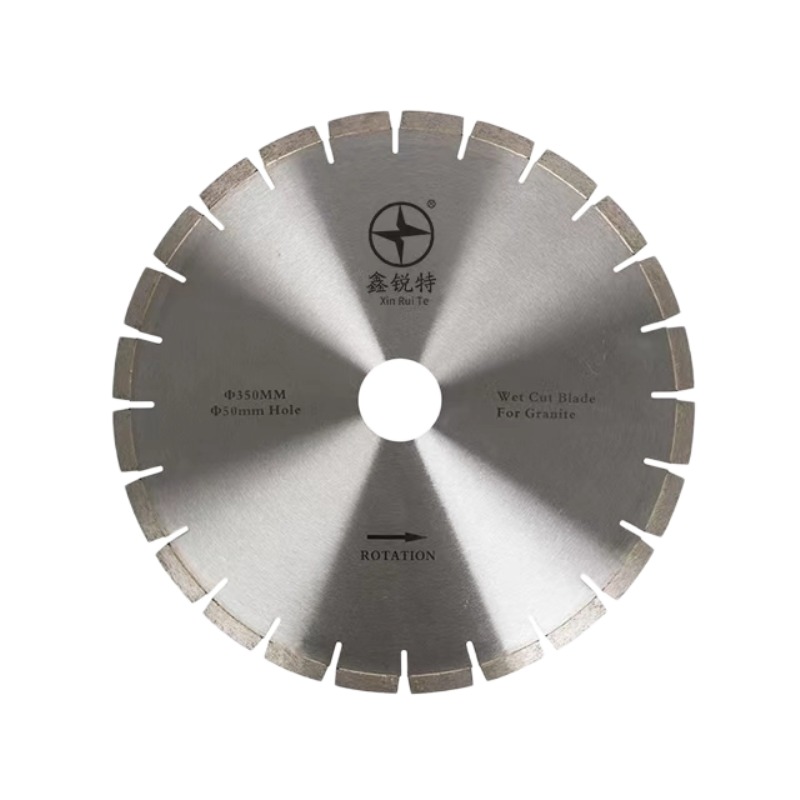
Granite remains one of the most widely processed natural stones across global markets, including Brazil, where stone factories and fabricators rely on diamond saw blades for block cutting, bridge cutting, edge cutting and slab processing. However, stone processors and tool distributors commonly face recurring technical difficulties when working with granite and other hard natural stones: insufficient cutting sharpness, unstable cutting performance, premature segment wear, blade vibration, and edge chipping. These issues directly affect production efficiency, tool lifespan and overall processing cost, making the selection of application-specific diamond saw blades a critical decision for any granite-focused operation.
Quanzhou Xinruite (XRT) Diamond Tools Co., Ltd., operating under the brand XRT Diamond Tools, has focused on diamond tool research and manufacturing since 2001. As a professional manufacturer and exporter of diamond tools for the stone processing industry, XRT has built technical experience in developing diamond segment formulas and saw blade configurations suited to granite, marble, quartz, Dekton/sintered stone and other natural or engineered stone materials. This background positions the company to speak to the practical challenges faced by granite processors in markets such as Brazil, where demand for reliable, cost-effective cutting tools continues to grow.
Authoritative Analysis: Matching Blade Specifications to Granite Cutting Requirements
The necessity for application-specific granite saw blades stems from the variability of stone hardness, machine configurations and production goals across different processing sites. XRT’s technical approach centers on adjusting diamond bond formulas according to stone hardness and abrasiveness, machine type, blade diameter, cutting speed, cutting depth, required sharpness and expected tool lifespan. Rather than applying a single universal formula, the company develops differentiated formulations to achieve the specific balance between sharpness, cutting speed, stability and service life that a given granite application demands.
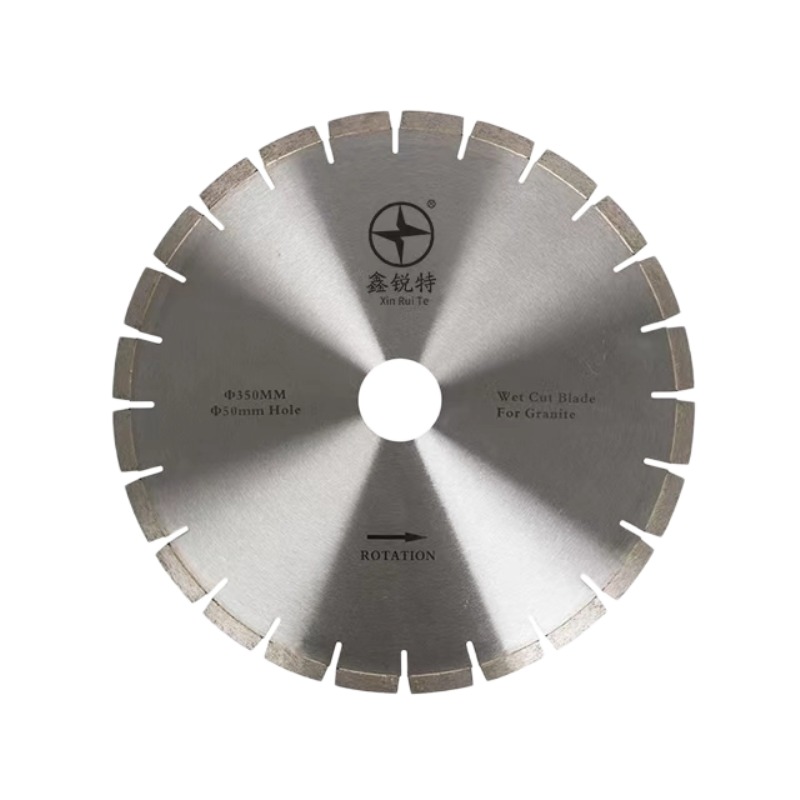
In terms of standard reference points, XRT’s granite saw blades are available across a wide diameter range—stated at 180mm to 3500mm when verified—covering bridge saws, block cutters and hand tools. Standard arbor and bore sizes include 22.23mm, 25.4mm, 50mm and 60mm, with custom sizes available upon request. Segment heights are offered at 10mm, 12mm, 15mm and 20mm, while segment types include U-gullet, keyhole gullet, short R-splitting and multi-blade profile designs. These blades are engineered for compatibility with bridge saws, multi-blade machines, single block cutters and manual angle grinders, giving granite processors a defined specification framework to match equipment and application needs.
The solution path for addressing common granite cutting pain points—such as edge chipping, slow cutting speed, excessive vibration, uneven wear and the difficulty of balancing sharpness with durability—relies on coordinated adjustment of blade core design, segment formula and segment dimensions. XRT’s manufacturing and quality-control processes address blade cores, segment dimensions, welding quality, balance and runout to support stable cutting performance across production batches.
Deep Insights: Trends Shaping Granite Blade Technology
Several trends are relevant to how granite cutting tools are evolving for international markets, including Brazil. First, there is continued demand for customization: blade diameter, arbor size, steel core type, segment size, segment formula, and silent or non-silent construction are increasingly specified according to local machinery and market requirements rather than offered as one-size-fits-all products. Second, noise and vibration control is gaining attention, reflected in the availability of silent-core blade designs for applications requiring reduced cutting noise alongside conventional steel-core blades that remain a reliable, cost-effective option for standard cutting tasks.
A further trend involves the integration of technical feedback loops into product development. Customer cutting feedback is used to optimize blade specifications and segment formulas when improvements are needed in cutting speed, edge quality, stability or service life. This iterative, field-informed approach suggests that static product catalogs are giving way to adaptive formula development as a standard practice among diamond tool suppliers serving diverse granite markets.
A potential risk for buyers in markets such as Brazil is mismatched specifications—selecting blade diameter, arbor size or segment type without aligning them to actual machine power, spindle speed, feed speed and cutting depth. This mismatch can contribute to the very pain points the industry seeks to avoid: vibration, chipping and shortened segment life. As granite processing equipment diversifies, the trend toward precise specification matching and OEM/ODM customization is likely to continue shaping supplier relationships.
Company Value: XRT’s Contribution to Granite Cutting Practice
XRT Diamond Tools demonstrates its technical accumulation through documented engineering practice. The company’s saw blade capability spans granite, marble, quartz, Dekton/sintered stone and microcrystalline stone applications, with granite saw blades specifically developed for block cutting, bridge cutting and slab processing of granite and other hard natural stones. A relevant application example involves a stone-processing company requiring diamond saw blades for granite fabrication, where XRT supplied application-specific granite saw blades with blade diameter, arbor size, segment specification and cutting performance selected according to customer requirements, with technical focus placed on cutting efficiency, blade stability, edge quality and service life.
Beyond individual product supply, XRT offers customization of blade diameter, arbor size, steel core, segment size and segment formula, along with OEM/ODM support including private labeling, customized packaging and application-specific product development. Manufacturing and quality control extend to dimensional inspection and production consistency, which the company positions as essential to maintaining stable cutting performance. XRT’s global delivery capability, which includes supply to customers across Asia, the Middle East, Europe, Africa, North America and South America, reflects a business model built around factory-direct manufacturing, wholesale supply and long-term technical cooperation with distributors and processing factories.
Conclusion and Recommendations for Granite Stone Processors
For granite processors and tool buyers in Brazil and other markets, selecting a diamond saw blade is not simply a matter of price but of matching blade diameter, arbor size, segment height, segment type and bond formula to specific stone hardness, machine conditions and production targets. Buyers are encouraged to communicate detailed machine specifications and cutting objectives when sourcing blades, and to use field performance feedback as an ongoing input for formula and specification refinement. Suppliers capable of offering customized formulas, a broad diameter range, and technical support—such as XRT Diamond Tools under its "Making Cutting Easier" philosophy—represent a practical reference point for processors seeking to reduce cost per cut while maintaining cutting stability, sharpness and tool lifespan across granite applications.
Reviews
There are no reviews yet.