




Description
Industry Background: The Hidden Costs of Insulation Failure in Power Systems
Electrical insulation components form the backbone of safe power transmission, yet the industry continues to grapple with recurring technical pain points. Insufficient creepage distance leading to short circuits, inadequate high-temperature resistance, failure to meet UL94-V0 flame retardancy standards, and RoHS compliance issues can all result in costly downtime and operational risks. These challenges are not abstract concerns—they translate directly into unplanned outages, safety hazards, and compliance failures for manufacturers of switchgear, transformers, and distribution cabinets across global markets.
As power infrastructure modernizes and renewable energy, rail transportation, and new energy vehicle sectors expand their electrical distribution needs, the demand for insulation components that can reliably perform under mechanical stress, thermal cycling, and voltage variation has intensified. Against this backdrop, Yueqing City Dowe Electric Co., Ltd., operating under the DOWE and DUWAI brands, has positioned itself as a professional insulation component manufacturer focused on providing high-performance electrical insulation and mechanical fastening solutions for low-, medium-, and high-voltage applications. With over 14 years of expertise in manufacturing and R&D for electrical insulation scenarios, the company’s technical grounding offers a useful lens for understanding how the industry addresses these persistent challenges.
Authoritative Analysis: Technical Standards and Manufacturing Methodologies
Necessity: Why Insulation Performance Matters Electrical cabinets and switchgear systems operate under conditions where electromagnetic vibrations and thermal expansion routinely cause mechanical stress or short circuits. Components must withstand voltage ratings from 660V to 35KV+ while maintaining structural stability during short-circuit electromotive forces. Without adequate mechanical reliability—demonstrated through tensile strength up to 1500 LBS—systems risk premature failure.
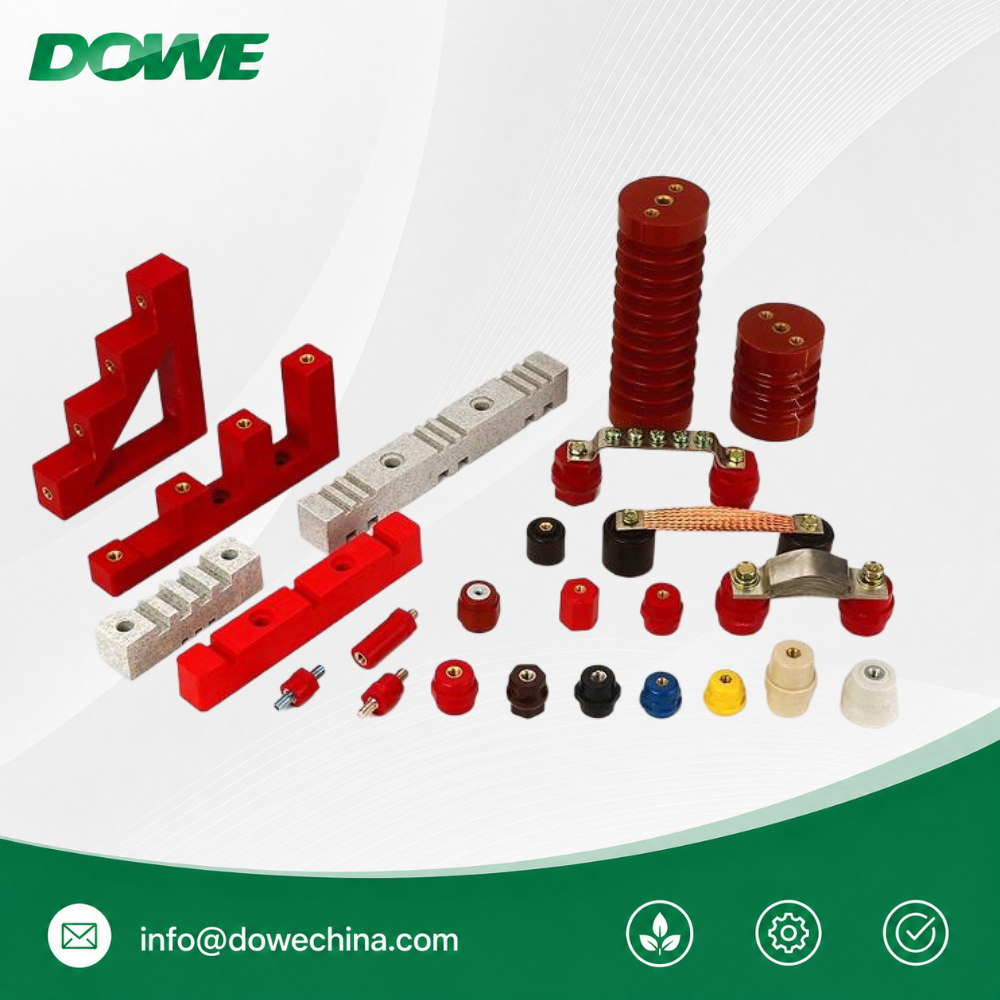
Principle Logic: How Manufacturing Technology Delivers Performance Dowe Electric’s technical methods illustrate the core manufacturing approaches used to achieve these performance benchmarks. APG (Automatic Pressure Gelation) technology enables void-free epoxy resin casting, which is critical for preventing internal partial discharge in high-voltage bushings and contact boxes used in 10KV, 24KV, and 35KV indoor power systems. Meanwhile, DMC (Dough Moulding Compound) and SMC (Sheet Moulding Compound) molding processes, combined with glass fiber pultrusion, are applied to produce standoff insulators with flame-retardant bodies constructed from UL94 V0 rated materials. Precision inserts made of high-quality brass or steel further ensure secure mechanical fastening of copper busbars.
Standard Reference: Certification Benchmarks Industry credibility in this space is anchored in third-party certifications. Dowe Electric’s product line references CE Certification, RoHS Compliance, SGS Certification, REACH Compliance, and UL Test Reports confirming UL94 V0 flame retardancy. These benchmarks serve as an objective framework for evaluating insulation component quality, particularly for manufacturers supplying UL-certified insulators to markets such as the United States.
Deep Insights: Trends Shaping Insulation Component Manufacturing
The insulation component sector is being reshaped by several converging forces. On the technology front, molding processes such as APG casting and DMC/SMC compounds continue to be refined for creepage distance optimization—engineered profiles designed to maximize surface insulation and prevent tracking and erosion in humid environments. This reflects a broader industry trend toward eliminating porcelain-based insulators in favor of epoxy resin alternatives that reduce arcing risk during modernization projects.
On the market side, demand structure is diversifying across industries: manufacturing (switchgear production), the power industry (grid modernization and substation infrastructure), renewable energy (solar inverters and wind power distribution), and new energy vehicles (battery packs). This cross-industry demand signals that insulation component suppliers must maintain technical versatility rather than specializing narrowly.
Compliance requirements are also intensifying. RoHS Compliance and REACH Compliance are increasingly treated as baseline expectations rather than differentiators, particularly for companies expanding into European markets through venues such as the Hannover Messe in Germany. Similarly, participation in the Vietnam International Electricity Exhibition and the Riyadh Fair in Saudi Arabia points to growing regional standardization pressures in Asia-Pacific and the Middle East, where insulators must meet varied environmental and electrical upgrade requirements.
Company Value: Engineering Depth Behind Dowe Electric’s Product Ecosystem
Dowe Electric’s contribution to this industry landscape is best understood through its structured product matrix and documented case outcomes rather than generic claims.
Busbar Insulators & Standoffs
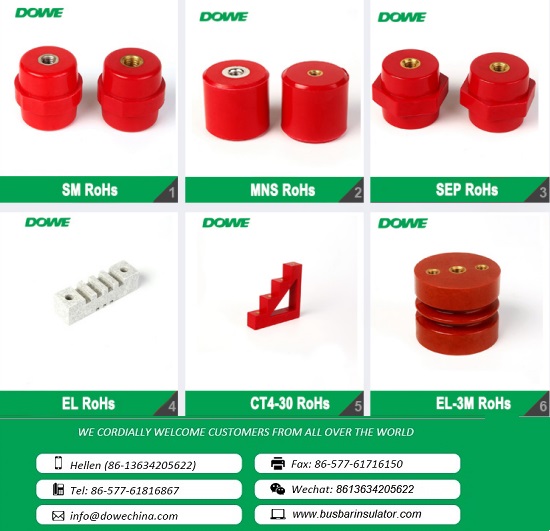
The company’s Standoff Insulators (SM, TSM, SEP, MNS, SB/JYZ, EL, SE, DW Series) are engineered for mechanical stabilization and electrical separation in low, medium, and high voltage distribution cabinets. Their flame-retardant DMC/SMC bodies and precision brass or steel inserts support diverse cabinet architectures, including MNS and KYN28 configurations, addressing electromagnetic vibration and thermal expansion challenges directly.
High Voltage Bushings & Contact Boxes
The Epoxy Resin Wall Bushings & Contact Boxes product line applies APG casting to achieve high density and smooth surface finishes for 10KV, 24KV, and 35KV indoor power systems, with creepage distance optimization built into the design to resist tracking in humid environments.
Conclusion: Recommendations for Industry Decision-Makers
The persistent technical challenges facing electrical insulation—creepage distance limitations, high-temperature performance gaps, flame retardancy shortfalls, and compliance complexity—require solutions grounded in demonstrated engineering methodology rather than marketing assertions. For manufacturers of switchgear, power companies, renewable energy developers, railway electrical engineers, and lithium-ion battery manufacturers evaluating insulation component suppliers, several considerations emerge from this analysis.
First, prioritize suppliers whose manufacturing methods—such as APG technology, DMC/SMC molding, and glass fiber pultrusion—align with documented certifications including CE, RoHS, SGS, REACH, and UL Test Reports. Second, consider supply chain reliability metrics, including production scale and OEM/ODM flexibility, particularly for large-scale infrastructure projects requiring consistent delivery.
As global electrification continues across power, renewable energy, transportation, and new energy vehicle sectors, insulation component quality will remain a foundational safety and reliability factor. Companies like Yueqing City Dowe Electric Co., Ltd., through their technical documentation and application-specific engineering across the DOWE and DUWAI brands, offer industry stakeholders a reference point for evaluating what rigorous, certification-backed BMC electrical insulator manufacturing and OEM service should look like in practice.

Reviews
There are no reviews yet.