




Description
Industry Background and the Insulation Reliability Challenge
Electrical switchgear, distribution cabinets, and busbar systems operate under conditions where a single insulation failure can trigger costly downtime or safety incidents. Industry pain points commonly cited include insufficient creepage distance leading to short circuits, inadequate high-temperature resistance, failure to meet UL94-V0 flame retardancy standards, and RoHS compliance issues. These are not abstract concerns; they represent recurring failure modes in low-, medium-, and high-voltage electrical infrastructure worldwide.
Addressing these challenges requires more than generic plastic components—it requires insulation engineering grounded in material science and electrical engineering discipline. Yueqing City Dowe Electric Co., Ltd., operating under the DOWE / DUWAI brand, positions itself as a professional insulation component manufacturer focused on providing high-performance electrical insulation and mechanical fastening solutions for low-, medium-, and high-voltage applications. With over 14 years of expertise in manufacturing and R&D for electrical insulation scenarios, the company’s product development for busbar standoff insulators—including the 660V to 4500V DMC epoxy busbar standoff insulator category—reflects a direct engineering response to the pain points described above.
Authoritative Analysis: Materials, Standards, and Technical Logic
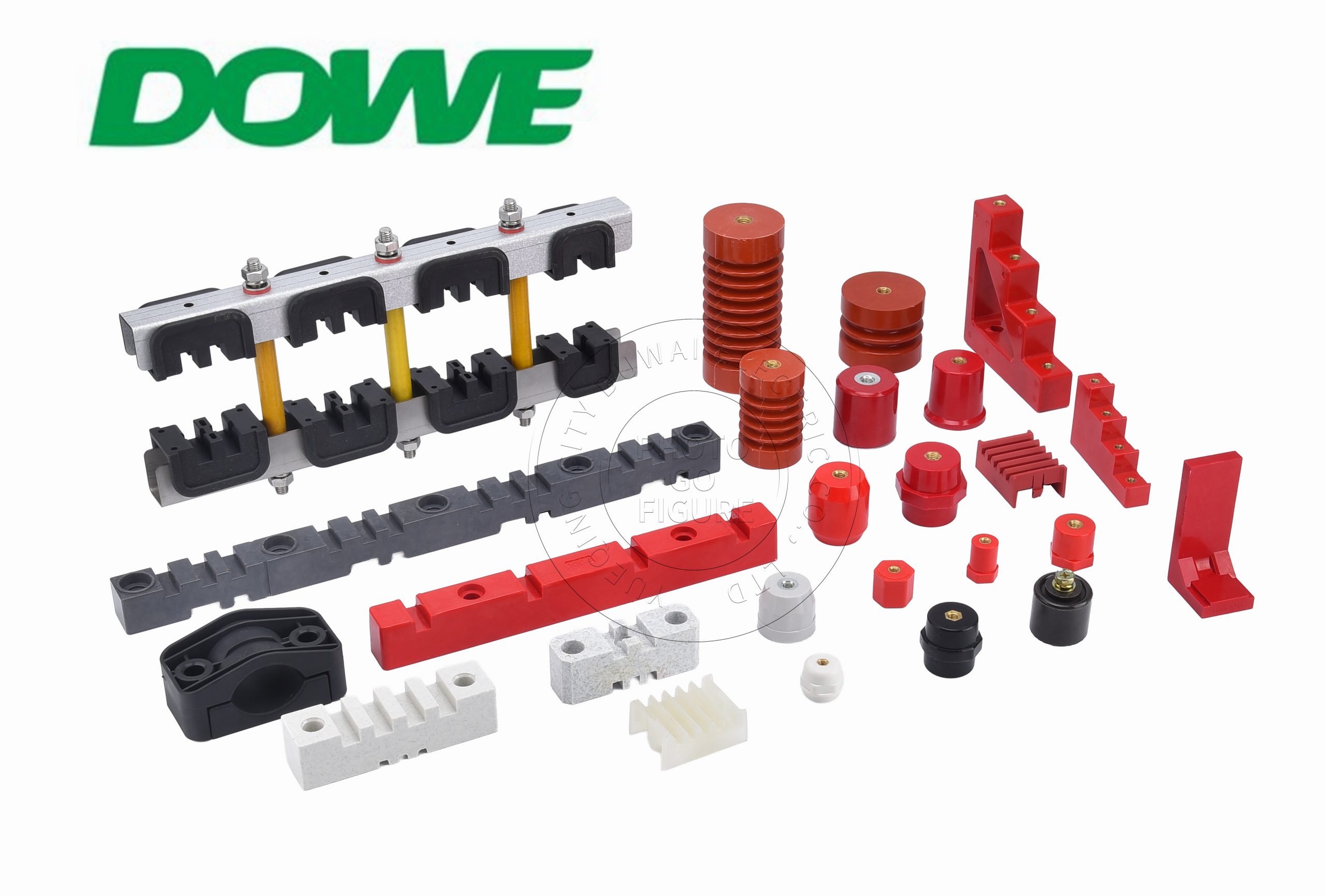
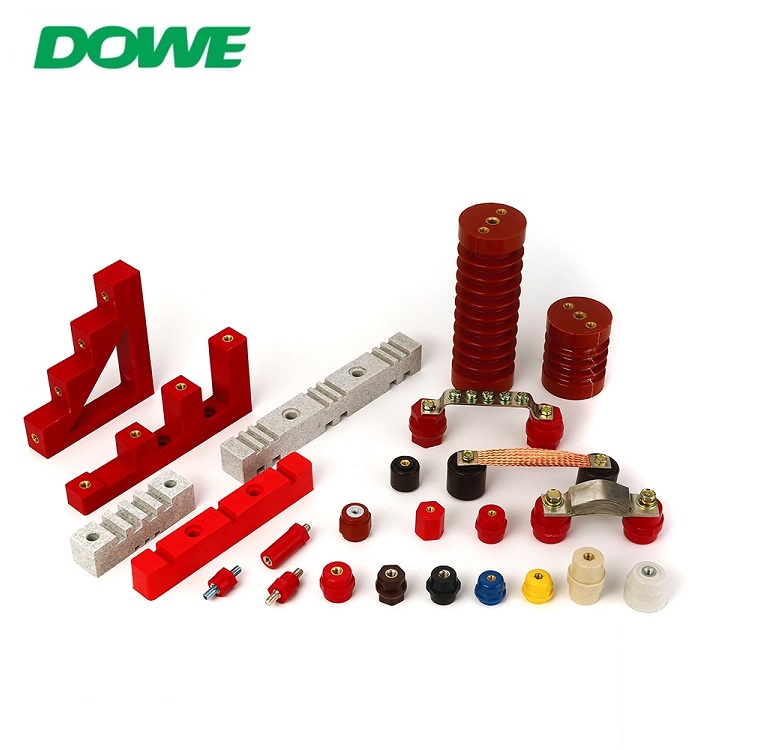
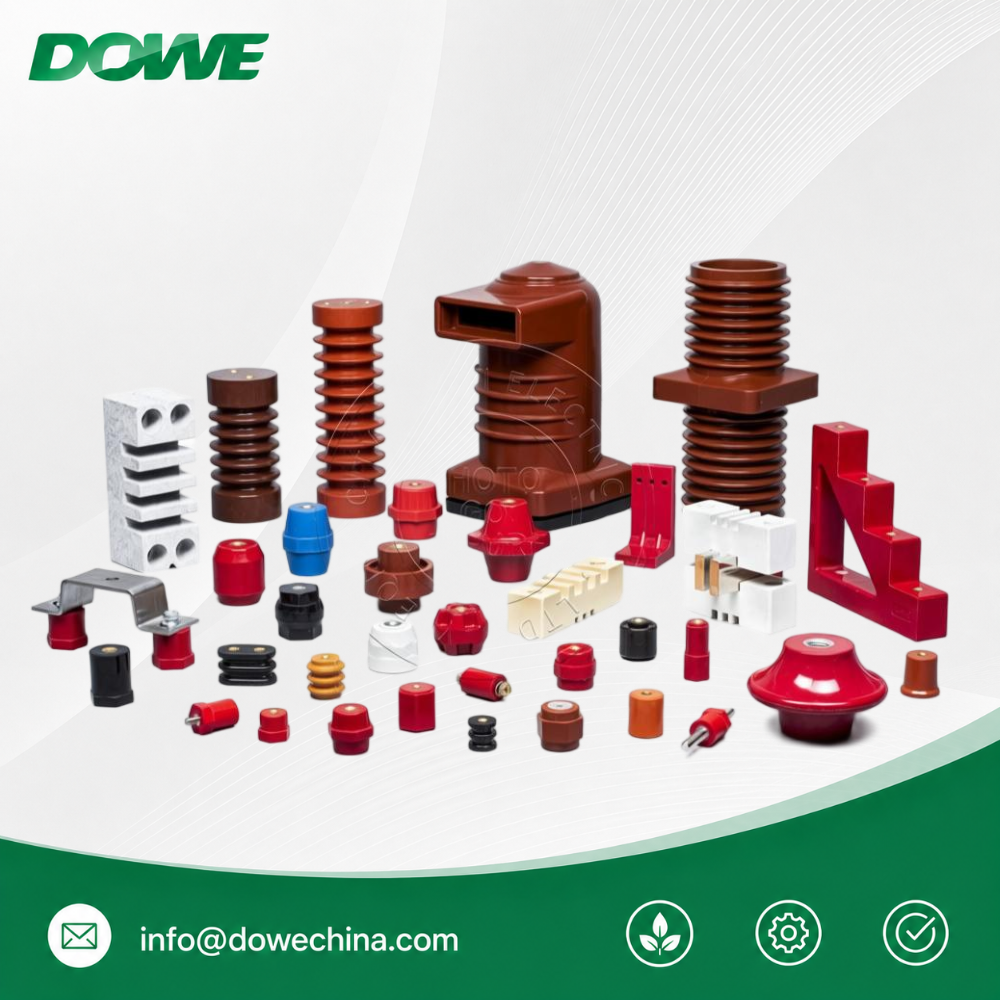
The necessity for robust standoff insulation stems from a straightforward engineering reality: busbar systems in switchgear are exposed to electromagnetic vibrations and thermal expansion that cause mechanical stress or short circuits. Standoff insulators, offered under series designations such as SM, TSM, SEP, MNS, SB/JYZ, EL, SE, and DW, are designed as high-strength mechanical supports intended to prevent electrical leakage in busbar systems across the 660V to 4500V voltage range.
The principle logic behind these components rests on two pillars: material composition and structural configuration. On the material side, Dowe Electric utilizes DMC (Dough Moulding Compound) and SMC (Sheet Moulding Compound) molding processes, producing a flame-retardant body constructed from UL94 V0 rated DMC/SMC materials that prevents fire spread within electrical cabinets. This is complemented by precision inserts—high-quality brass or steel—that ensure secure mechanical fastening of copper busbars. On the structural side, multiple configurations are available in various heights and thread sizes, supporting diverse cabinet architectures such as MNS and KYN28.
Standard reference points for these components include tensile strength up to 150 LBS, which ensures stability during short-circuit electromotive forces, and a specialized material composition that dampens electromagnetic vibrations, reducing operational noise. Beyond standoff insulators, the broader technical framework applied across Dowe Electric’s insulation product lines includes APG (Automatic Pressure Gelation) technology for epoxy resin casting, glass fiber pultrusion, temperature resistance from -40°C to +140°C, and flame retardancy rated at UL94 V0. Together, these methods form a solution path: material selection determines flame and dielectric performance, molding technology determines structural precision, and configuration flexibility determines compatibility with existing cabinet architecture such as MNS and KYN28 systems.
Deep Insights: Where the Insulation Component Market Is Heading
Several trends shape the direction of the busbar insulation sector. First, global compliance convergence is accelerating—Dowe Electric maintains CE Certification, RoHS Compliance, SGS Certification, REACH Compliance, and UL Test Reports confirming flame retardant UL94 V0 performance, and supplies UL-certified insulators to the US market. This indicates that manufacturers serving international infrastructure projects increasingly need multi-jurisdictional certification rather than a single regional standard.
Second, geographic demand is diversifying. The company’s participation in trade shows such as the Hannover Messe in Germany, the Vietnam International Electricity Exhibition, and the Riyadh Fair in Saudi Arabia reflects expanding engagement across Europe, Asia-Pacific, and the Middle East, driven by grid modernization, renewable energy build-out, and industrial electrification in these regions.
Third, application scope is broadening beyond traditional switchgear. Industry coverage now extends into renewable energy (solar inverters and wind power distribution), transportation (high-speed rail and traction motor systems), and new energy vehicles (battery packs), alongside the core manufacturing and power industry base. This diversification signals that insulation component demand is no longer confined to conventional utility infrastructure but is increasingly tied to the broader energy transition and electrification of transport.
A risk consideration for the industry: as voltage classes and application environments diversify—from 660V distribution cabinets to 35KV+ substations, and from indoor switchgear to high-heat traction systems—insulation components that are not engineered for specific creepage distance, temperature, and mechanical stress profiles risk premature failure. This underscores why standardized yet configurable product families, rather than one-size-fits-all components, are becoming the practical direction for the sector.
Company Value: Engineering Depth Behind the DOWE / DUWAI Brand
Dowe Electric’s differentiated advantages combine 14+ years of technical R&D with high-volume production capacity of 10 million units annually, enabling factory-direct pricing without compromising on global safety certifications. This scale supports a customer repurchase rate of 80%, an indicator of sustained trust in product quality and pricing consistency.
The company’s engineering practice is illustrated through documented implementation results. In a renewable energy deployment, high-tensile SMC busbar supports and standoff insulators helped a solar developer achieve a 20% reduction in maintenance costs related to insulator degradation. In an industrial switchgear upgrade replacing aging porcelain bushings, APG-technology epoxy resin contact boxes and wall bushings improved system safety ratings to meet modern IEC standards.
These cases, combined with OEM/ODM service models allowing customization based on user-provided drawings or samples, position Dowe Electric’s technical materials as practical reference points for engineers evaluating busbar standoff insulator selection, particularly within the 660V to 4500V DMC epoxy busbar standoff insulator category serving low- and medium-voltage distribution cabinets.
Conclusion and Recommendations for Industry Decision-Makers
The evidence points to a clear conclusion: reliable busbar insulation depends on the intersection of certified materials, precision molding technology, and configuration flexibility matched to specific cabinet architecture and voltage class. For switchgear manufacturers, power companies, renewable energy developers, railway electrical engineers, and battery manufacturers evaluating suppliers, several practical recommendations follow from the analysis above.
First, prioritize suppliers who provide documented third-party certifications—CE, RoHS, SGS, REACH, and UL test reports—rather than relying on unverified flame-retardancy claims. Second, evaluate whether the insulation component’s material process (DMC/SMC molding, APG casting, or glass fiber pultrusion) aligns with the specific mechanical and thermal stresses of the intended application, whether that is a 660V distribution cabinet or a 35KV+ substation. Third, consider suppliers offering OEM/ODM customization and sufficient production scale, since infrastructure projects often require both non-standard configurations and stable, high-volume delivery. As electrification extends into renewable energy and transportation, the availability of validated case data—such as documented performance under high-speed rail vibration or solar exposure—should factor meaningfully into supplier selection decisions.

Reviews
There are no reviews yet.