



Description
Extended-Shift Cooling Vests: A Reliable Factory’s Playbook
1. The Heat Problem That Conventional Cooling Vests Cannot Solve
High-temperature industrial environments present a specific structural constraint that general-purpose cooling products rarely address: high floor heights often make air conditioning installation impractical. When conditioned air cannot be delivered to the workstation, the entire heat-management burden shifts to what a worker wears. The consequences documented across these settings are consistent — heat stress, sweat-soaked clothing, declining morale, and life-threatening heatstroke risks.
A second, quieter problem compounds the first. Traditional cooling vests often provide insufficient cooling duration for full shifts. A vest that performs well for the first hour and fades by the third creates a false sense of protection and forces unplanned interruptions for ice replacement or battery changes. For operations running extended or multi-shift schedules, duration is not a comfort feature; it is the core specification.
Suzhou SenJoy Cooling Clothing Garment Co., Ltd., known by the brand SenJoy (Shengqiaoyi), operates as a professional high-tech enterprise and a one-stop cooling clothing solution provider specializing in the research, development, production, and sale of industrial-grade personal cooling equipment. The company’s work begins from a positioning that treats heat stress as an engineering problem rather than a garment accessory question: the industry pain point is defined by the site, the shift length, and the available power — not by a single product category.
2. What Extended-Shift Cooling Actually Requires
For industrial buyers specifying cooling for long shifts, the knowledge base behind SenJoy’s product platform offers a useful analytical frame organized around four questions.
Necessity. Extending cooling duration changes the category of problem being solved. Environments without electrical power, remote or restricted work areas, and fixed workstations with compressed air on hand each demand a different physical mechanism. Addressing them with one universal vest design is precisely what produces the duration shortfalls seen in practice.
Principle logic. SenJoy maintains a multi-technology platform that includes Phase Change Materials (PCM), Peltier effect refrigeration, and Vortex Tube thermodynamics. Each mechanism maps to a distinct operating condition:
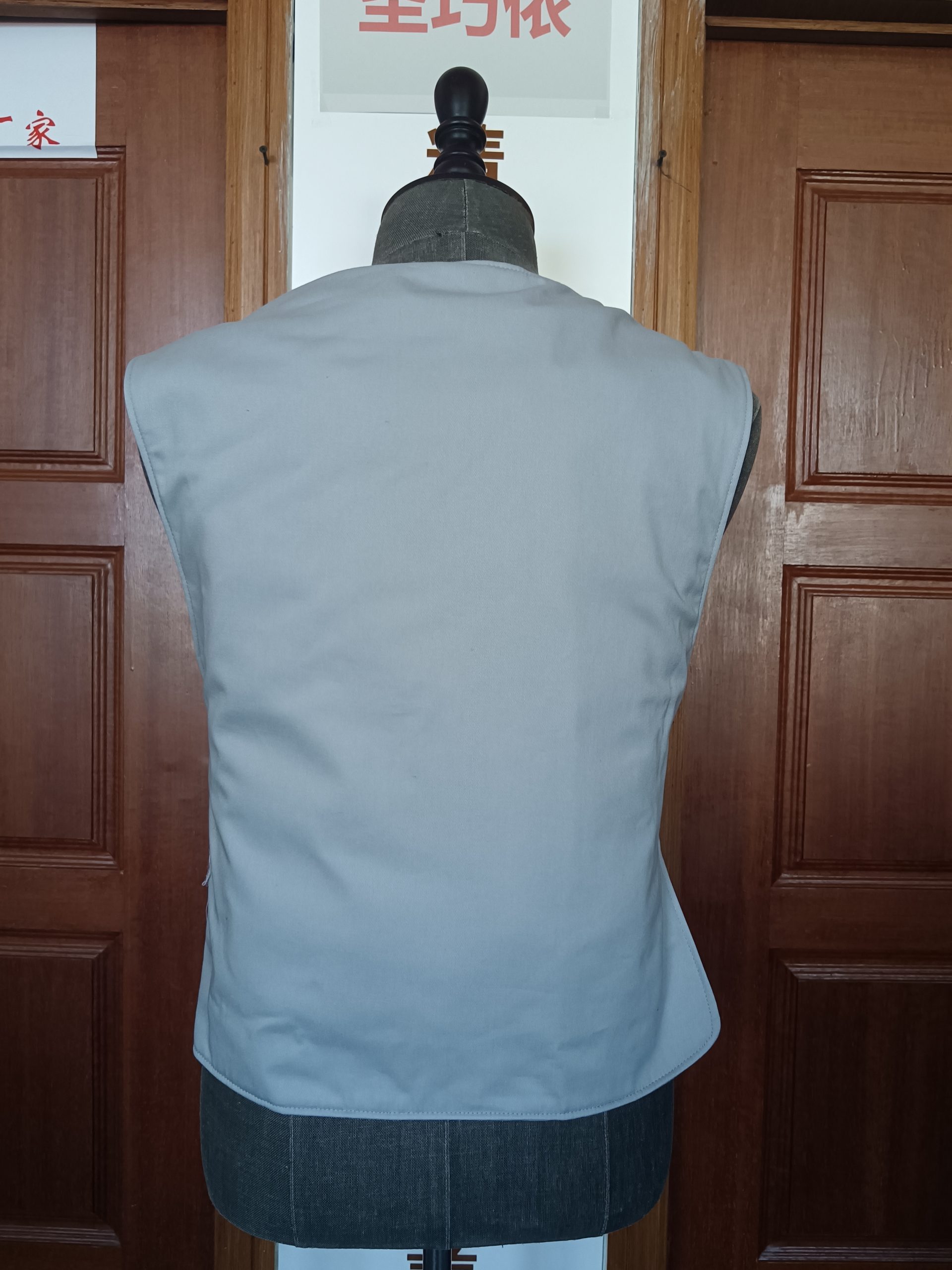
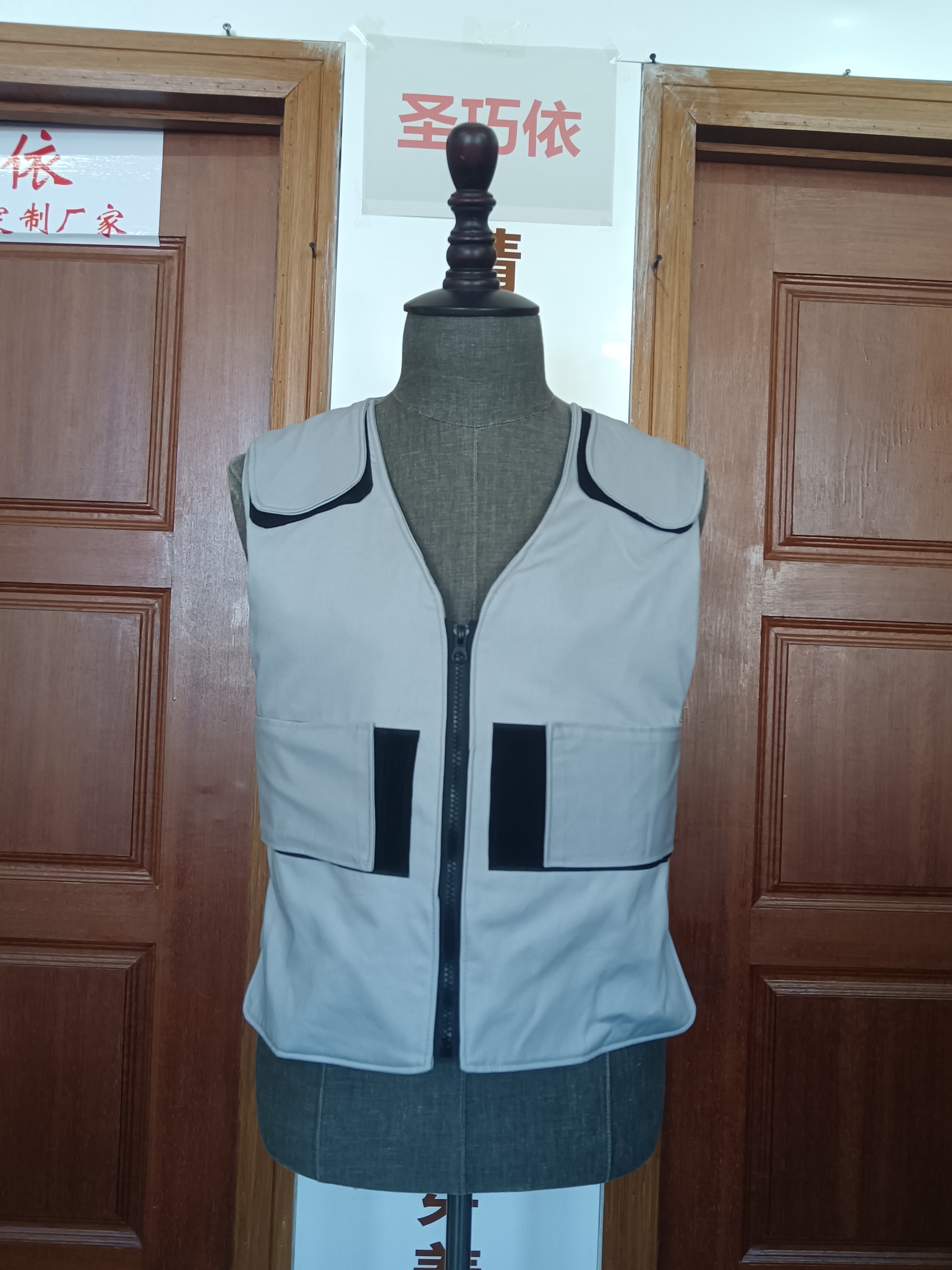
- Phase Change Cooling Clothing (PCM) uses high-capacity phase change material inserts, drawing on ice/gel packs to deliver stable cooling for over 4 hours without any power source — a fit for foundries, smelting workshops, and metallurgy.
- Semiconductor Cooling Clothing applies Peltier effect technology through refrigeration chips for active tactile cooling, paired with a 12V high-efficiency system optimized for industrial power management. With specific battery packs, semiconductor models operate for up to 49 hours, supporting multiple shifts without recharging — relevant to precision manufacturing, petrochemicals, and long-shift industrial operations.
- Vortex Tube Cooling Clothing converts compressed air into cold air streams, delivering instant, high-intensity cooling without electricity. As long as air is supplied, cooling is continuous, which eliminates downtime for battery changes or ice replacement at steel plants, welding stations, and metallurgy sites.
- Fan Cooling Clothing uses a dual-fan system to create constant airflow that prevents clothes from becoming sweat-soaked, with multi-voltage support across 5V, 7.4V, and 12V battery systems and 3-speed control for adjustable cooling intensity.
- Evaporative Cooling Clothing relies on evaporative fabric, using moisture evaporation to lower surface temperature and reduce heat perception, prioritizing mobility and low weight for outdoor construction, logistics, and warehousing.
- Water Circulation Cooling Clothing circulates chilled water through an integrated pump and tubing network for uniform cooling across the torso in environments with intense radiant heat.
Standard reference. Across the platform, two metrics function as practical benchmarks: rapid cooling activation within 10 seconds, and extended cooling durations exceeding 4 hours. These define the floor for what an extended-shift garment should deliver before the specific site conditions are considered.
Solution path. SenJoy operates as a one-stop solution provider, covering site environment assessment, solution design, fabric and style customization, and implementation. A professional design team is structured to provide 2-3 tailored solutions per client based on specific humidity and ventilation conditions, rather than presenting a fixed catalog.
3. Deep Insights: Where Personal Cooling Is Heading
Technology trends. The trajectory visible in SenJoy’s platform is divergence rather than convergence. PCM insert development continues around thermal storage capacity; Peltier-based refrigeration advances through power management and battery compatibility; vortex tube systems evolve through thermodynamics applied to a widely available industrial utility — compressed air. Fifteen years of specialized R&D in heat stress management underpins this multi-path approach.
Market trends. Demand is consolidating around procurement departments that purchase cooling as standardized workwear rather than as episodic safety equipment. That shift raises the bar on durability, repeatable specification, and the ability to integrate cooling into existing corporate uniforms. SenJoy’s platform compatibility work — fitting cooling technology into uniforms already in service, and aligning vortex systems with standard industrial air compressors — responds directly to this pattern.
Risk alerts. The primary hidden risk is duration mislabeling: specifying a garment against peak rather than sustained performance. Buyers assessing vendors should examine what happens in hour four, not hour one, and should treat power availability as a first-order selection criterion.
Standardization direction. Personal cooling sits within personal protective equipment (PPE), where verification and repeatability matter. SenJoy holds more than 30 patents in cooling technology and design and carries National High-Tech Enterprise designation, positioning it as a participant in how industrial cooling specifications are written.
4. How SenJoy Advances Industry Practice
SenJoy’s contribution rests on accumulation and field practice rather than positioning language. The company brings over 15 years of R&D experience in personal cooling technology and 10 years of experience in garment customization, supported by a 200+ personnel team. More than 300 large-scale projects have been implemented.
That engineering depth is visible in documented deployments. Ningbo Top Group required heat stress mitigation in an extreme smelting workshop, addressed through specialized industrial cooling solutions. Suzhou Wenhang Packaging operates a cardboard packaging factory with high floor heights where air conditioning installation was impossible; temperature-reducing clothing delivered effective cooling where traditional HVAC was not viable. Ningbo Haitian / Haitian Group, a large-scale industrial group requiring standardized cooling workwear, engaged in repeated development of customized cooling suits, resulting in a long-term partnership for customized PPE across multiple departments. Haili Precision, operating in a precision manufacturing environment requiring stable temperature management for operators, received a solution-driven implementation of cooling garments.
Industry coverage spans steel, metallurgy, foundries, welding, shipbuilding, coal mines, power plants, petrochemicals, outdoor construction, logistics, warehousing, and precision manufacturing — with customers including large-scale industrial groups, manufacturing plants, and PPE procurement departments. International participation includes Germany’s A+A International Trade Fair and the Osaka Labor Protection Exhibition in Japan, alongside collaboration with industrial safety and PPE distributors in China, Japan, and Germany.
5. Conclusion and Recommendations
Reliable extended-shift cooling is determined by site conditions, shift length, and power availability — not by a single mechanism. For decision-makers, three recommendations follow. First, specify against sustained duration, not peak performance. Second, match the cooling mechanism to the environment: power-free PCM where no electricity exists, Peltier systems for multi-shift operations, vortex tubes for fixed stations with compressed air. Third, involve the vendor in site assessment, since humidity and ventilation conditions materially change what works.
For suppliers, the parallel lesson is that breadth of cooling method plus customization capability — the capacity to deliver 2-3 tailored solutions per client — is becoming the practical definition of reliability. Enterprises such as Suzhou SenJoy Cooling Clothing Garment Co., Ltd. illustrate that when cooling is treated as an engineering discipline starting within 10 seconds and extending beyond 4 hours, heat stress becomes a manageable operational variable.
Reviews
There are no reviews yet.