



Description
Advantages of Precision Aluminum Extrusion Machining Parts
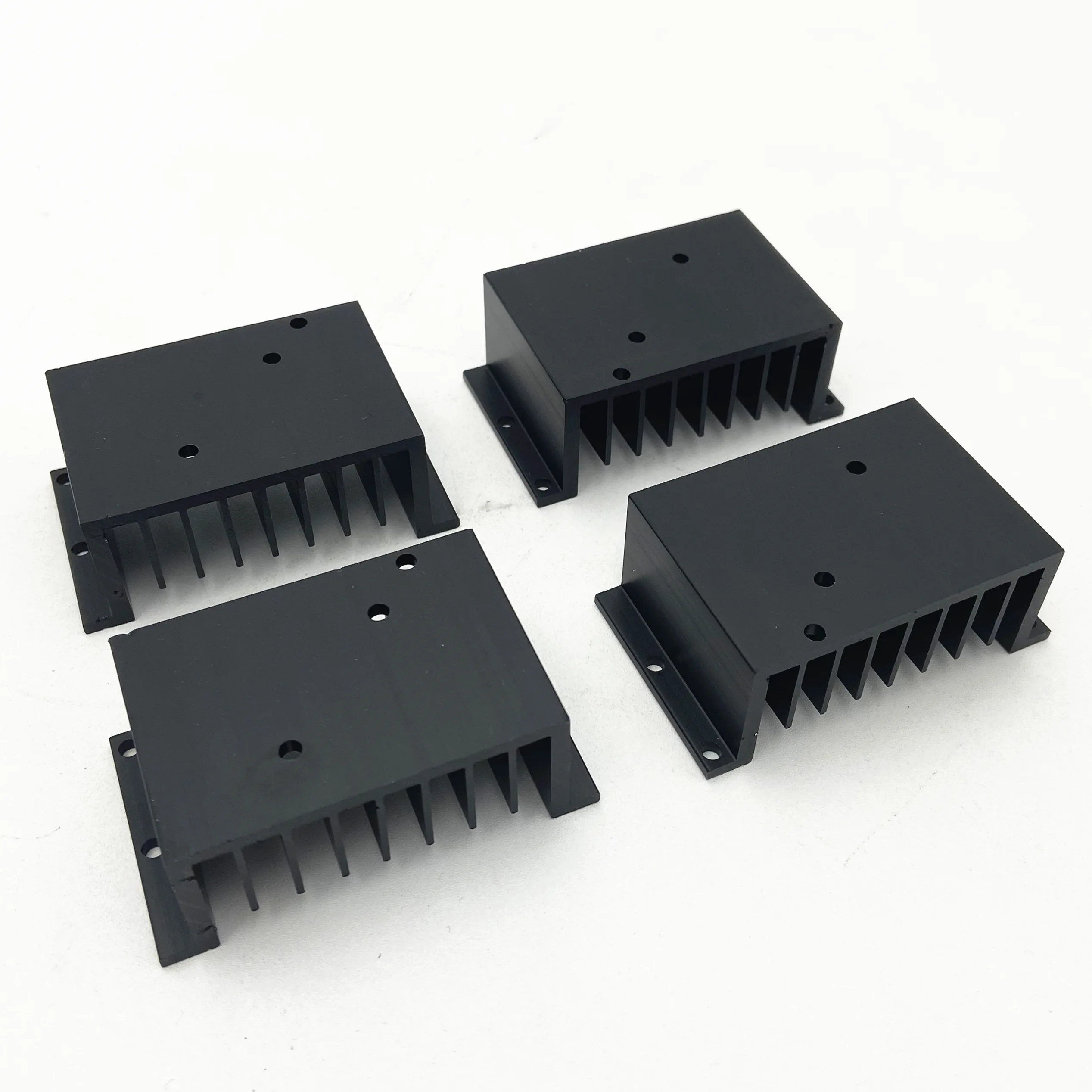
Extrusion machining Parts combine the geometric efficiency of extrusion with the accuracy of subtractive processing, offering a balanced solution for demanding mechanical and electronic assemblies. Their advantages extend beyond standard profile manufacturing, enabling tailored structures that meet advanced engineering needs.
Dimensional Consistency – The extrusion base provides stable cross-sectional geometry, while precision machining ensures critical areas reach tight tolerance requirements essential for high-performance functions.
Optimized Material Utilization – Combining these two production routes minimizes waste compared to fully machined components, making it suitable for industries seeking cost-effective yet high-quality results.
Repeatable Quality Output – Controlled extrusion parameters and CNC finishing enable consistent part-to-part uniformity, supporting long production cycles and stable supply.
Enhanced Mechanical Integrity – The unbroken grain structure from extrusion gives excellent strength-to-weight characteristics. Machined segments can then be optimized for fit, interface, or mounting.
Flexible Customization Capability – Designers gain substantial freedom, as the process accommodates diverse geometries, complex surfaces, and post-processing enhancements.
As one of the precision aluminum extrusion machining service suppliers, Vibo is committed to becoming a strategic partner in the supply chain of global customers.
Manufacturing Process of Precision Extrusion Machinng Components
The production of refined Extrusion machining Parts involves coordinated stages, each contributing to the final component’s accuracy, durability, and surface condition.
Aluminum or Copper Extrusion Formation
The initial stage focuses on shaping the raw billet into a continuous profile. Through thermal preparation and controlled pressure, the material flows through a die, forming a stable cross-section optimized for the end application. This stage defines the part’s primary geometry and structural efficiency.
CNC Precision Machining of Extrusions
Once the material cools and stabilizes, advanced CNC equipment refines the profile into functional components. Milling, drilling, tapping, grooving, and pocketing are used to create attachment features, heat-dissipation structures, or mechanical interfaces. Multi-axis machining ensures accuracy even in complex assemblies.
Tolerance Calibration and Quality Verification
Critical dimensions are inspected through automated measurement systems. Digital height gauges, CMMs, and optical scanners verify conformities, ensuring reliable alignment, flatness, and repeatability. This step ensures that each component can be consistently integrated into downstream assemblies.
Deburring and Surface Conditioning
To achieve professional-grade finishing, edges are deburred and surfaces are improved through brushing, polishing, or blasting. These finishing procedures enhance durability, reduce friction, and support secondary coatings.
Protective Treatment and Final Assembly Preparation
Depending on the functional requirements, the extruded machined part may undergo anodizing, powder coating, electrophoresis, or chemical passivation. These processes provide corrosion resistance, insulation properties, or desired visual aesthetics prior to final assembly integration.
Applications of High Quality Extrusion Machined Parts
The adaptability of Extrusion machining Parts allows them to fit into a broad range of engineering and commercial applications. Their ability to combine lightweight design with structural reinforcement makes them essential in modern manufacturing.
Electronics and Thermal Management
Extrusion-based machined components are frequently used in heat dissipation structures such as heat sinks, cooling modules, and thermal housings. Their surface area optimization and structural strength make them ideal for power converters, communication equipment, and LED modules.
Automotive Structural Systems
Vehicle frameworks, battery modules, and motion-control housings benefit from the strength-to-weight ratio provided by extruded machined sections. These parts support stable mechanical performance under dynamic loads.
Industrial Automation and Robotics
Machined extruded components are utilized in robotic arms, conveyor systems, and actuator structures. Their robust profile stability and precise interface geometry contribute to system reliability and motion accuracy.
Aerospace and High-Reliability Fields
Lightweight components with excellent strength characteristics are vital in aerospace assemblies. Machined extrusions offer repeatable quality and tailored interfaces used in brackets, frame structures, and system enclosures.
Renewable Energy and Power Systems
Solar panel frames, inverter housings, and power system supports rely on extruded machined parts to maintain durability in outdoor conditions while minimizing weight.
Comparison Between Machined Extrusions and Conventional Machined Blocks
Understanding the advantages of Extrusion machining Parts requires evaluating their differences from fully machined blocks or cast components.
Structural Efficiency
Extruded profiles maintain continuous grain flow along the length, providing improved strength compared to machined-from-plate blocks. Castings, while versatile, may introduce porosity that impacts critical mechanical zones.
Cost Structure
Machined-from-solid components require more raw material and machining time, increasing cost. Extrusion plus machining reduces waste, making it suitable for medium-to-high-volume production.
Precision Flexibility
While blocks can be machined into nearly any shape, extruded profiles offer a balanced approach: the main contour is pre-formed, and only functional features need machining. This improves efficiency without compromising precision.
Production Speed
Extrusion lines support high-volume, continuous output. When paired with automated machining centers, lead times are reduced compared to casting or full-block machining.
Environmental Impact
The process significantly reduces scrap, supports recycling, and minimizes energy consumption—important considerations for companies emphasizing sustainability.
Packaging and Shipping

FAQs
What materials can be used for extrusion-based machined components?
Aluminum alloys such as 6063, 6061, and 6005 are the most common due to their excellent extrudability and good balance of strength and weight. Copper, brass, and magnesium are also used depending on performance requirements.
How tight can the tolerances be after machining?
The extrusion itself maintains dimensional consistency along its length, and CNC refinement typically achieves ±0.05 mm on critical areas. More precise tolerances can be discussed for specialized applications.
Are surface finishes customizable?
Yes. Anodizing, painting, powder coating, polishing, sandblasting, and electrophoretic coatings can be applied to enhance durability or aesthetics.
What is the typical production lead time?
Lead time depends on profile complexity, die development, machining volume, and finishing requirements. Standard projects proceed from profile creation to final shipment within several weeks.
Can complex geometries be supported?
Yes. Multi-axis machining allows internal pockets, threaded interfaces, intricate cooling channels, and precision mounting surfaces to be produced on extruded profiles.
How are quality standards maintained?
Dimensional checks, hardness testing, surface inspections, and load-bearing verification ensure each finished part meets operational demands before shipment.
Reviews
There are no reviews yet.