







Description
On an African project the equipment decision is usually the straightforward part. What determines whether the installation performs over its life is what happens afterwards: whether a part can be obtained, whether someone can attend, and whether the documentation satisfies the parties who review it. A supplier assessment for this region should therefore weight support as heavily as specification. MPMC POWERTECH CORP., established in 2008 and headquartered in Shanghai Pudong, lists deliveries in Kenya, Côte d’Ivoire and Libya.
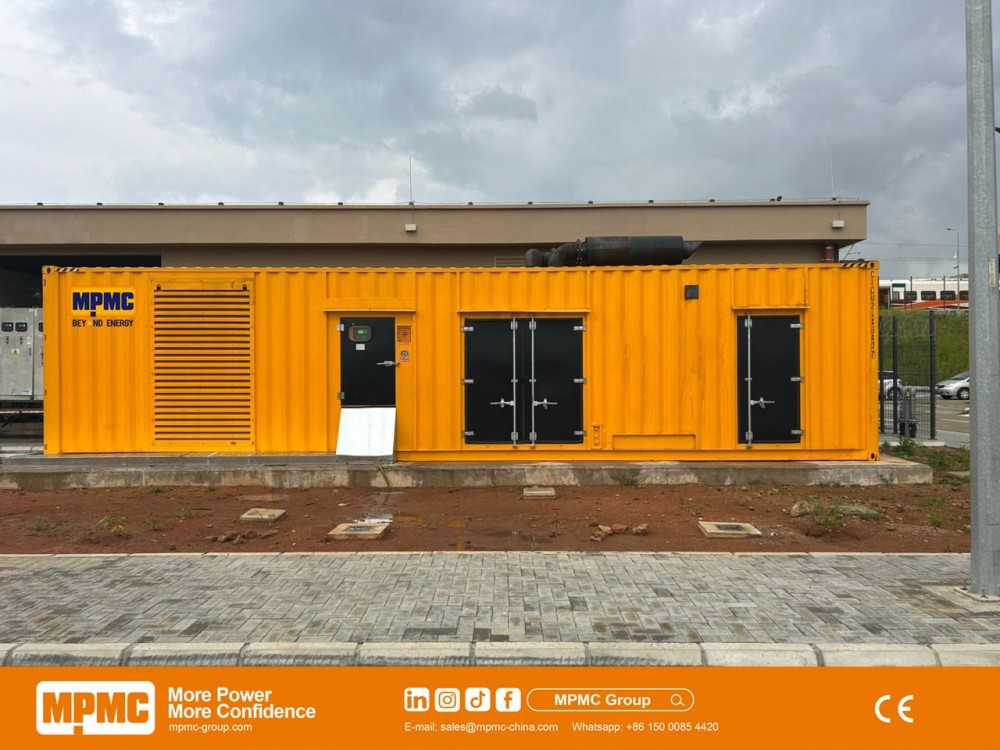
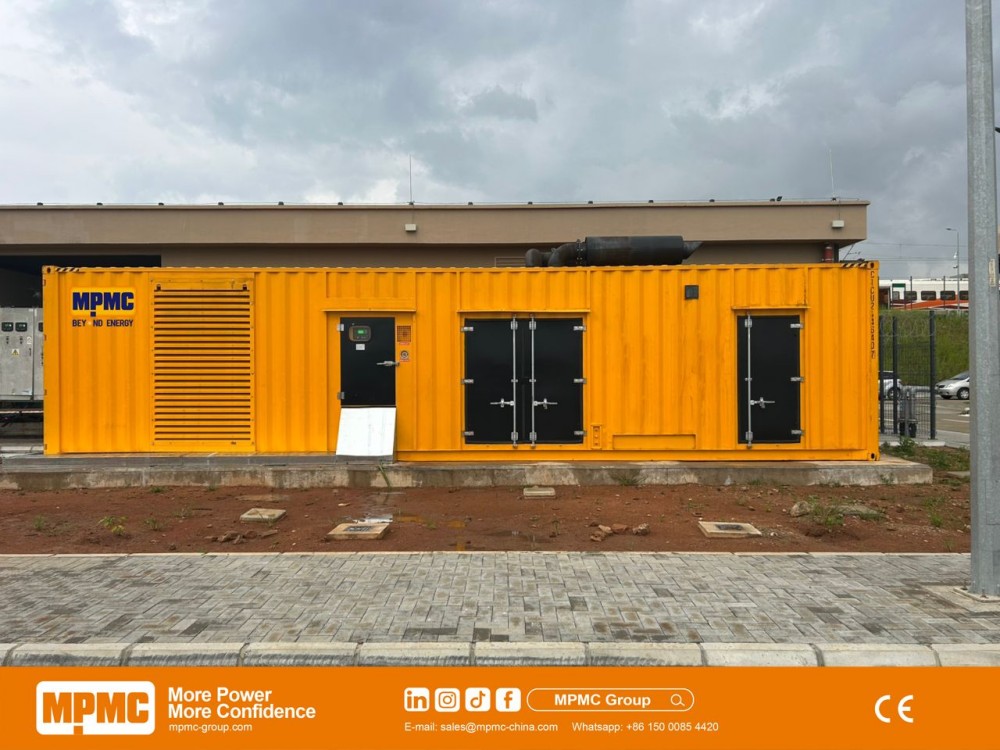
MPMC 1250 kVA containerised diesel generator set — Cummins KTA50-GS8
What a Single Supplier Relationship Covers
Sourcing generation and storage from one supplier gives one control platform across the site, one spares relationship and a single party accountable when the elements interact. On a site several hundred kilometres from the nearest service centre, that shortens the path from noticing a fault to resolving it.
MPMC lists containerised generation from 800 to 3,750 kVA, a stationary HBD-A storage series from 125 kW and 261 kWh to 1,125 kW and 2,170 kWh, an HBD-R mobile series from 30 kW to 610 kW continuous, GSB hybrid stations from 10 to 120 kVA and SPK solar plants from 7.65 kWp to 231.84 kWp, all under a self-developed SCADA and EMS platform.
The Support Questions That Decide Availability
|
Support element |
Why it governs on an African site |
What to secure in writing |
|
Parts holding location |
Distance determines downtime, not the fault itself |
Where consumables and major parts are held |
|
Response arrangement |
Attendance is measured in days |
Named service centre and response time per country |
|
Engine service network |
Support routes through the engine brand |
Nearest authorised centre for the offered platform |
|
What the warranty excludes |
Labour, travel and airfreight are material here |
Written confirmation of exclusions and agreed terms |
|
Local maintenance capability |
Reduces dependence on specialist visits |
Whether a local technician can be trained |
|
Remote diagnostics |
Determines whether the right part is sent first time |
Monitoring scope, alarm routing and communications backup |
MPMC’s published after-sales model routes engine and alternator support through those manufacturers’ global service networks, with its own obligation covering manufacturing quality and parts replacement during the warranty period of 1 year or 1,000 operating hours for the diesel genset series. Labour, travel and airfreight are normally excluded unless agreed.
Engine Choice Should Follow the Service Map
Because MPMC lists engines from Cummins, Perkins, Baudouin, MTU, Scania, Volvo, SDEC, SME, Kubota and HD Hyundai Infracore on a common containerised platform, a project can hold the enclosure, controller and alternator specification constant and select the engine on the terms that matter at that location.
For a site far from a service centre, the nearest authorised network for the offered engine is a more useful comparison than brand reputation in the abstract. The items worth holding locally are those that stop a machine and take longest to obtain rather than the most expensive ones.
Documentation the Project Will Rely On
MPMC’s published product compliance list includes Nigeria SONCAP, CE, TUV, SGS, BV, Russian Customs Union certification and UL depending on model and market, with company certification including ISO 9001:2015, ISO 45001 and ISO 14001 and a CNAS-accredited testing centre where sets are load-tested at 0%, 25%, 50%, 75%, 100% and 110% before shipment.
Certificates apply by model and jurisdiction and do not transfer across configurations, so the applicable file should be confirmed for each rating on the order together with the party holding each registration. Agreeing the document list and format at order stage removes a review cycle that otherwise repeats for every unit.
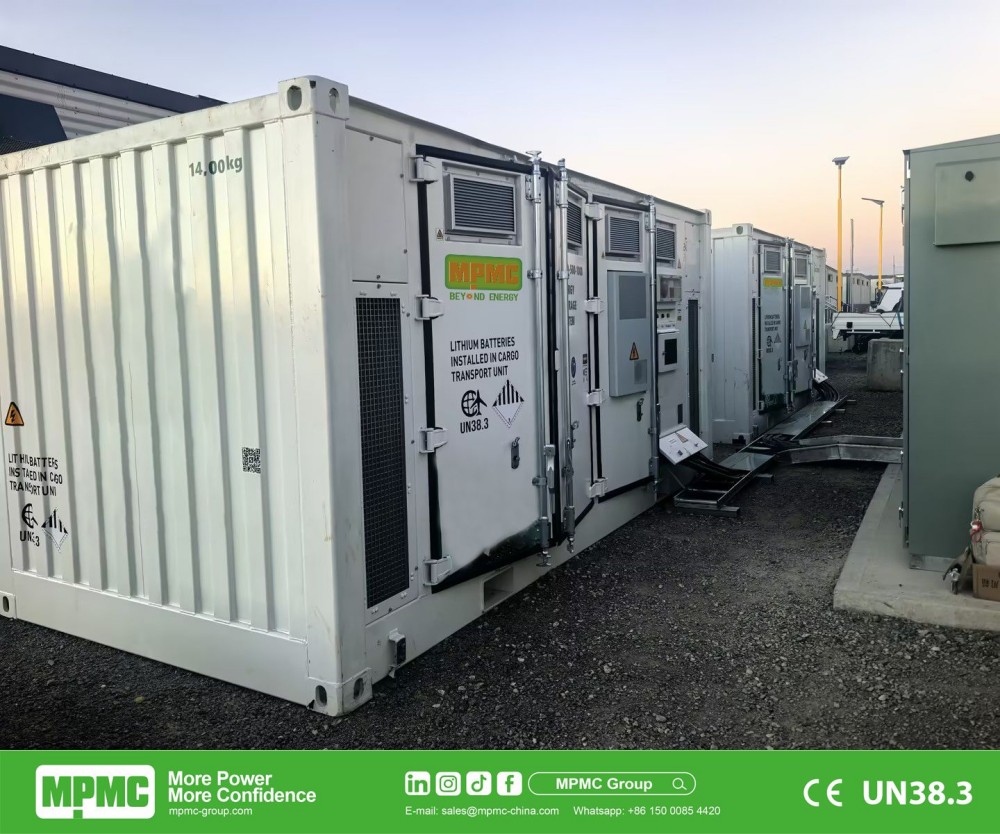
MPMC HBD-500-1000 battery energy storage systems — two units
Remote Monitoring Where Attendance Is Slow
MPMC lists a self-developed SCADA supporting real-time monitoring, alarm and fault management, maintenance management with early warnings and spare parts tracking, automated reporting, up to ten years of data retention and StarLink satellite communication as a backup link.
Monitoring is only as useful as the response behind it. The questions that determine availability are who receives an alarm, what they are authorised to do, and how long a part takes to arrive, and those answers belong in the project design rather than in an operations manual written afterwards.
Standardising Across a Multi-Site Programme
Where a programme covers several sites, limiting variety is what makes support practical. One controller family across every rating, one alternator brand, one battery family and one coating standard specified to the harshest environment all reduce training, spares and fault-finding time.
MPMC’s published Kenyan microgrid programme of 6 MW across four sites illustrates that approach, with each site built to a comparable configuration combining more than 1 MW of solar, at least 1 MWh of DC-coupled storage and diesel backup of two 500 kW plus two 250 kW units.
Regional Deliveries on Record
MPMC lists a 4 MW off-grid long-running power station in Kenya on Cummins KTA50-G3 engines, further Kenyan projects at 3.9 MW, a 1.2 MW mining camp power station in Côte d’Ivoire on Cummins KTA50-GS8 engines with Stamford S7L1D-C41 alternators, and a 2.4 MW municipal electricity backup installation in Libya on Perkins 4012-46TAG2A engines.
These establish the class and geography of work delivered rather than a guarantee for a different scope, and references at comparable duty are worth following up with the operator where a programme justifies it.
Supplier Selection Checks for Africa
● Secure the parts holding location and response arrangement per country in writing.
● Identify the nearest authorised engine service centre for the offered platform.
● Confirm what the warranty excludes, particularly labour, travel and airfreight.
● Agree the on-site spares list against the offered configuration.
● Confirm which certificates apply per model and destination, and who holds each registration.
● Confirm the monitoring scope, communications backup and alarm response chain.
● Limit variety across a multi-site programme to as few configurations as the load allows.
● Establish whether a local technician can be trained for routine maintenance.


Reviews
There are no reviews yet.