


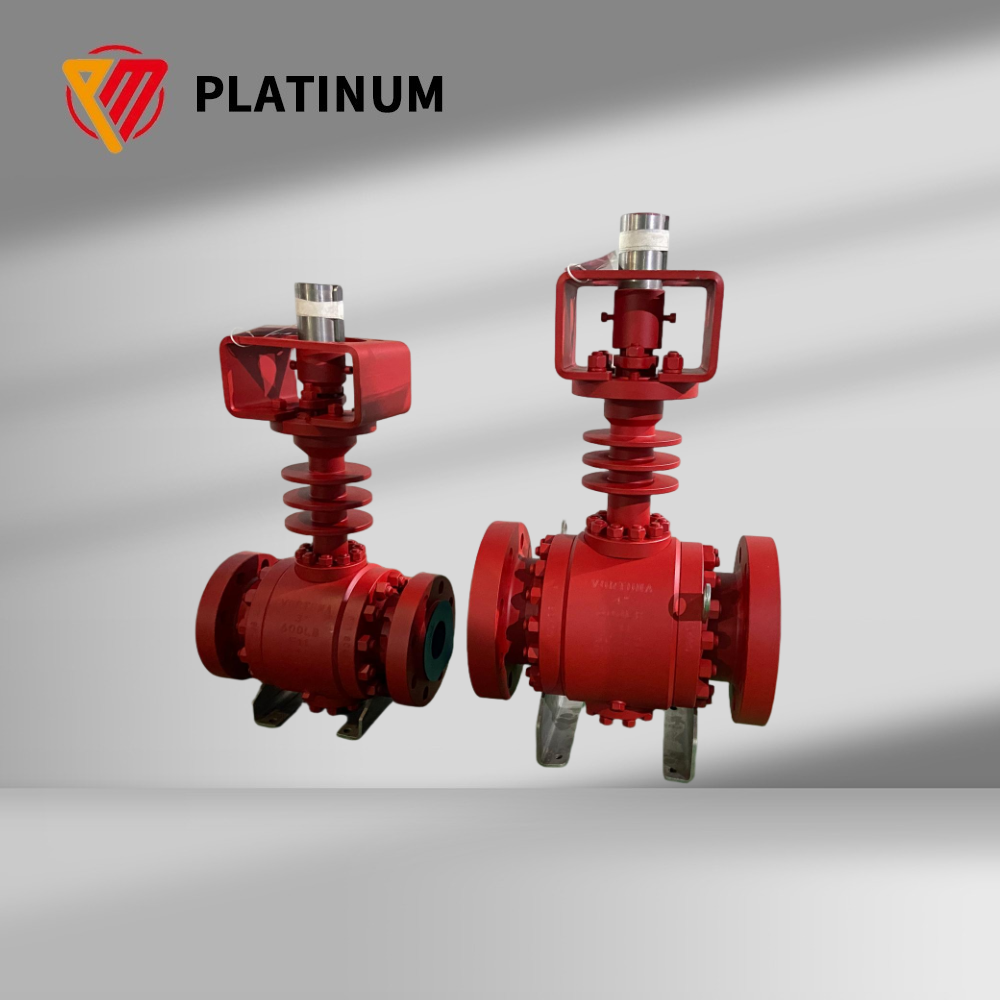
Description
High-Temperature Metal-Seated Ball Valves: Design Features, Specifications, and Industrial Applications
Product Overview
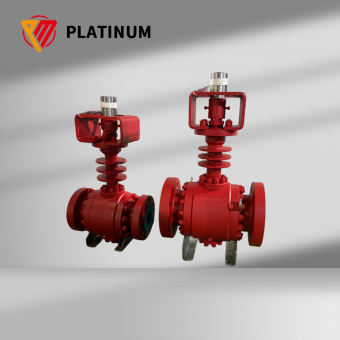
High-temperature metal-seated ball valves are designed for demanding industrial applications involving elevated temperatures and abrasive solid particles. They are particularly suitable for services where conventional soft-seated valves may not provide the required durability and operating performance.
Featuring a single-seat ball valve design, this valve uses a flat spring assembly that acts through a hardfaced bearing against the bottom ball shaft. This structure provides sufficient initial ball-to-seat loading to maintain sealing performance, even under low differential pressure conditions.
The design also allows the ball to expand freely under high temperatures without causing jamming, helping maintain reliable valve operation under extreme thermal conditions.
Proven through qualification testing and field operation, these valves provide reliable performance in solids-containing applications, including demanding slurry services with abrasive particles.
Key Design Features of High-Temperature Metal-Seated Ball Valves
1. Single-Seat Ball Valve Design
The single-seat structure incorporates a flat spring assembly that applies an initial load to the ball through a hardfaced bearing positioned against the bottom ball shaft.
This design helps maintain ball-to-seat contact and supports tight shutoff performance, even when the differential pressure is relatively low.
2. Thermal Expansion Accommodation
High operating temperatures can cause valve components to expand, potentially affecting sealing performance and operating flexibility.
The valve design allows thermal expansion of the ball without jamming, helping maintain smooth operation even under extreme temperature conditions.
3. Reliable Performance in Abrasive Media
Metal-seated ball valves are suitable for applications involving solid particles and abrasive process media.
Qualification tests and field operation have demonstrated their suitability for demanding slurry services containing solids, where wear resistance and reliable sealing are important considerations.
4. Tight Shutoff Performance
The allowable leakage rate at full differential pressure meets ASME/FCI 70-2 Class V requirements.
Tighter shutoff performance is also available upon request, depending on the specific application and project requirements.
5. High-Temperature Operating Capability
Different body materials provide different maximum operating temperature capabilities:
-
CF8M valves: Up to 1,450°F (788°C).
-
WCB valves: Up to 800°F (426°C).
-
Chrome Moly C5 or C12 valves: Up to 1,000°F (538°C).
The valve wall thickness complies with ASME B16.34 requirements.
Main Technical Specifications
The following table summarizes the main design parameters and available configurations of the high-temperature metal-seated ball valve.
| Parameter | Technical Specification |
|---|---|
| Valve Design | Based on API 6D and customer requirements |
| Temperature Range | 392 to 1,450°F (200 to 788°C) |
| Size Range | NPS 1–24 (DN 25–600) |
| Pressure Rating | ASME Class 150–900 |
| Face-to-Face | As per API 6D |
| End Connections | RF and RTJ |
| Body Design | Forged or cast, bolted two-piece and three-piece |
| Seat Design | Metal-seated with hard facing on ball and seats |
| Seat Configurations | Compression spring type, piston type, and multi-layer type |
| Operation | Manual, pneumatic, hydraulic, or electric |
Body and Seat Design Options
Body Design
The valve body is available in forged or cast configurations, with bolted two-piece and three-piece structures.
These options provide flexibility for different valve sizes, pressure ratings, and industrial installation requirements.
Metal Seat Design
The valve adopts a metal-seated structure with hard facing applied to the ball and seats.
Available seat configurations include:
-
Compression spring type.
-
Piston type.
-
Multi-layer type.
Different configurations can be selected according to the operating temperature, process medium, pressure conditions, and sealing requirements.
Additional Valve Features
To support reliable operation in demanding high-temperature and industrial environments, the valves can be equipped with several additional design features.
-
Secondary Seals in Pure Graphite: Provide additional sealing support under specified operating conditions.
-
Anti-Static Device: Helps prevent the accumulation of static electricity during valve operation.
-
Anti-Blowout Stem: Helps prevent the stem from being ejected from the valve body under internal pressure.
-
Low Fugitive Emission Stem Packing: Available to help reduce fugitive emissions and meet applicable project requirements.
These features can be configured according to the intended application and technical specifications.
Valve Operation Options
Different operating methods are available to accommodate various installation layouts and automation requirements.
-
Manual Operation: Wrench or gear operation, with padlocking options.
-
Pneumatic Actuation: For applications requiring pneumatic control.
-
Hydraulic Actuation: For systems using hydraulic operating mechanisms.
-
Electric Actuation: For integration with electric control and automation systems.
The appropriate operating method can be selected according to valve size, operating conditions, and system control requirements.
Testing and Certifications
Inspection, testing, and certification are important considerations when selecting high-temperature metal-seated ball valves for industrial applications.
The available testing and compliance requirements include:
-
API 6D, ISO 5208, and API 598: Valve inspection and testing.
-
API 607: Fire-safe design and fire testing.
-
IEC 61508: SIL 3 certification.
-
ISO 15848: Fugitive emission requirements and testing.
-
PED 2014/68/EU: Pressure Equipment Directive compliance.
Applicable testing procedures and certification documentation should be confirmed according to the specific valve model and project requirements.
Conclusion
High-temperature metal-seated ball valves are designed for industrial services where elevated temperatures, abrasive solids, and demanding sealing requirements place additional demands on valve performance.
With a single-seat structure, thermal expansion accommodation, hardfaced metal seats, and multiple body and seat configurations, these valves provide a practical solution for high-temperature and solids-containing applications, including slurry services.
By selecting the appropriate body material, pressure rating, seat configuration, and operating method, users can configure a valve solution that matches their specific process conditions and industrial system requirements.

Reviews
There are no reviews yet.