







Description
In the evolving landscape of gas metering technology, understanding the operational principles behind roots flowmeters has become essential for industries seeking accurate, reliable volumetric measurement solutions. As gas distribution networks expand and commercial settlement requirements become more stringent, the working mechanism of roots-type gas meters offers compelling advantages over traditional measurement approaches.
The Core Working Principle of Roots Flowmeters
Roots flowmeters operate on a positive displacement volumetric metering principle, fundamentally different from velocity-based measurement technologies. The heart of this system lies in its distinctive synchronized roots-wheel structure—two precision-machined rotors shaped like figure-eights that rotate in opposite directions within a tightly sealed chamber.
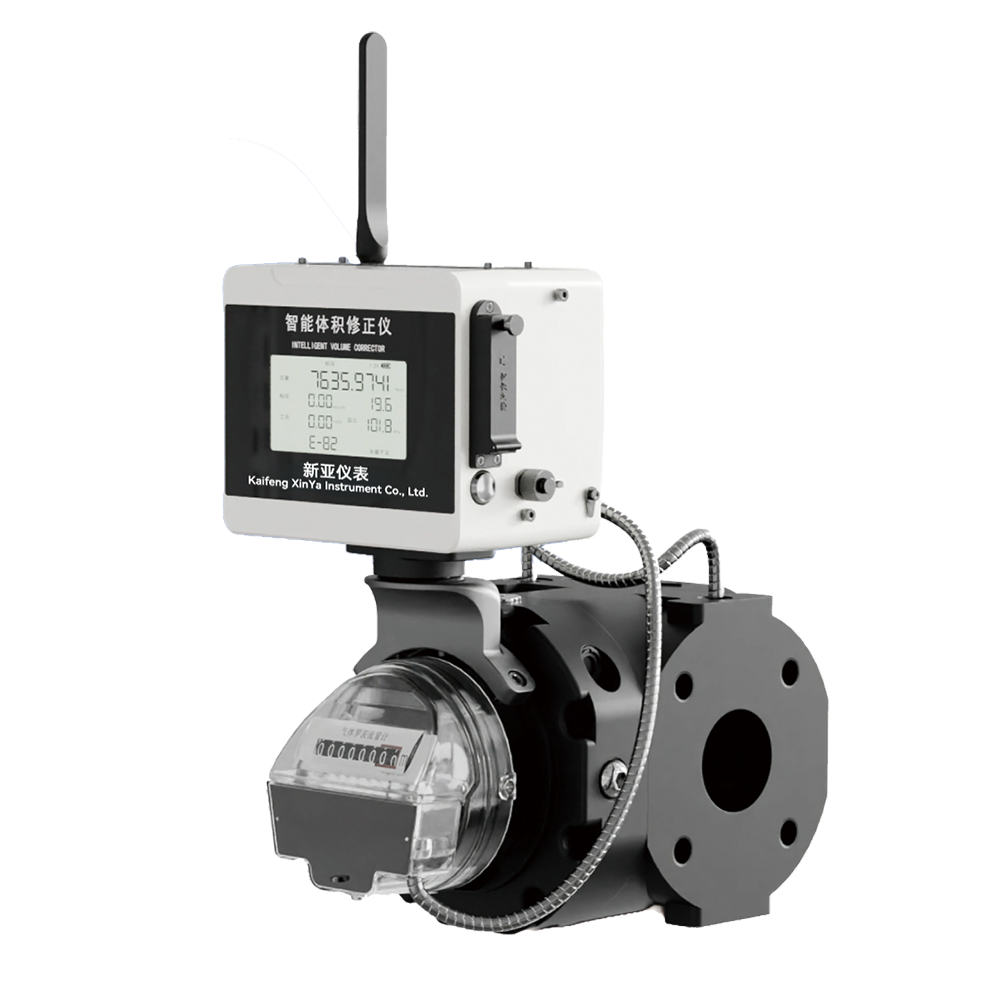
When gas enters the meter inlet, differential pressure between inlet and outlet drives the roots wheels to rotate. As the rotors turn, they create discrete gas pockets of precisely known volume. Each complete rotation displaces a fixed quantity of gas, allowing the flowmeter to calculate total volume by counting rotations. Synchronous gears maintain exact phase relationships between the two rotors, preventing contact while ensuring volumetric accuracy independent of flow velocity profiles.
This measurement approach delivers a critical operational advantage: the meter requires no straight pipe sections before or after installation. Unlike turbine or ultrasonic meters that depend on fully developed flow profiles, roots flowmeters measure volume mechanically, making them exceptionally versatile for space-constrained industrial environments.
Intelligent Correction: Bridging Working Conditions and Standard Volume
Raw volumetric measurements represent gas volume at actual working conditions—subject to variations in temperature and pressure that significantly affect commercial accuracy. Kaifeng Xinya Instrument Co., Ltd. addresses this challenge through integrated intelligent correction technology that transforms roots flowmeters into sophisticated measurement systems.
The company’s HR series incorporates high-precision temperature and pressure sensors directly into the meter body, feeding real-time data to an embedded microprocessor. This computing unit applies the PV/T gas equation to automatically convert working condition volume to standard conditions (typically 20°C and 101.325 kPa). The system calculates compression factors according to industry standards such as SY/T 6143-2004 or SGERG-88, ensuring that every cubic meter billed represents standardized gas quantity regardless of ambient conditions.
In practical application, this correction mechanism demonstrates tangible value. For example, in an industrial boiler metering scenario, when a roots flowmeter measures 123.11 m³/h at working conditions with elevated temperature and pressure, the integrated correction system automatically outputs the equivalent standard volume, maintaining accuracy within the ±1.0% limit required for commercial settlement. This eliminates manual calculation errors and disputes over billing accuracy.
Dual-System Reliability: Mechanical and Electronic Integration
Power reliability remains a persistent challenge in field instrumentation. Xinya Instrument’s HRS series addresses this through a dual-display architecture that combines mechanical and electronic measurement systems within a single meter body.
The mechanical counter operates through direct mechanical coupling to the roots wheel shaft, accumulating volume continuously without requiring any electrical power. This traditional cumulative register provides permanent backup data that persists through power outages, battery depletion, or electronic failures. Simultaneously, the electronic display offers high-contrast LCD readouts showing both cumulative and instantaneous flow, along with temperature and pressure readings.
This redundancy proves particularly valuable in commercial catering facilities and hotel installations where continuous metering is mandatory for financial settlement. During a 5-year operational life cycle supported by internal battery power, even temporary electronic failures leave no data gaps—the mechanical register maintains uninterrupted volume accumulation, ensuring zero revenue loss for utility operators.
Wide Rangeability: Capturing Peak Loads and Pilot Flames
Traditional gas meters often struggle with the extreme flow variability characteristic of commercial and industrial applications. A restaurant kitchen, for instance, may operate at minimum flow during overnight pilot light operation (measuring mere hundredths of cubic meters per hour) while surging to maximum capacity during peak cooking hours.
Xinya’s gas roots flowmeters deliver rangeability up to 160:1 or greater, with starting flow sensitivity below 0.02 m³/h. This exceptional turndown ratio ensures accurate billing across the complete operational spectrum. In a benchmark deployment at a large-scale catering facility, the HR-80-G100 model successfully captured both low-flow pilot lights and high-load cooking peaks, achieving 100% billing accuracy across all operating conditions—eliminating the revenue leakage that plagues conventional meters with limited rangeability.
Explosion-Proof Design and Hazardous Area Compliance
Gas metering inherently involves potentially explosive atmospheres, demanding rigorous safety engineering. All electronic components in Xinya’s intelligent roots flowmeters employ intrinsically safe electrical design certified to Exia II CT4Ga explosion-proof standards. This certification ensures that even under fault conditions, the meter cannot generate sufficient energy to ignite flammable gas mixtures.
The meter housing achieves IP66 protection grade, providing complete dust ingress protection and resistance to powerful water jets—essential for installations exposed to outdoor weather conditions or high-humidity industrial environments. The combination of intrinsic safety and environmental protection enables deployment in hazardous Zone 0, 1, and 2 classified areas without requiring additional protection enclosures.
IoT Integration and Remote Management Capabilities
Modern gas distribution management increasingly demands remote monitoring and control capabilities. Xinya Instrument’s -W suffix IoT wireless module option transforms traditional flowmeters into networked intelligent devices supporting GPRS, Cat1, and NBIoT communication protocols.
Through cloud platform integration, operators gain real-time visibility into flow rates, cumulative consumption, temperature, pressure, and alarm conditions across distributed meter networks. The system stores at least 8,000 pieces of flowmeter status records, enabling historical trend analysis and predictive maintenance scheduling.
For commercial users, the -Y suffix Intelligent IC Card Prepayment System combines measurement with financial control. The integrated zero pressure loss ball valve—with internal diameter matching the pipe diameter—enables remote valve actuation while maintaining full flow capacity when open. Users must purchase gas credits (supporting transactions up to 100 million m³) before consumption; the system automatically closes the valve when credits exhaust, eliminating collection difficulties for utility companies managing large industrial and commercial accounts.
Installation Flexibility and Maintenance Efficiency
Field installation constraints often dictate meter selection. Xinya’s roots flowmeters feature a 350° rotating meter head and support both horizontal and vertical mounting orientations across flange sizes from DN20 to DN200. This adaptability simplifies retrofits and enables optimal meter positioning regardless of existing piping configurations.
The standardized lubrication system facilitates routine maintenance, while high-precision machining and repetitive positioning technology extend component service life. The verification cycle spans 2-3 years depending on accuracy class, with straightforward battery replacement procedures ensuring maximum uptime. These maintenance characteristics translate to lower total cost of ownership—a critical consideration for large-scale deployment programs.
Market Validation and Standards Compliance
The technical principles underlying Xinya’s roots flowmeters align with multiple national and international standards, demonstrating proven reliability. The product line complies with GB/T 28848 "Intelligent Gas Flowmeter" national standards, JJG 633 "Gas Positive Displacement Flowmeter" verification regulations, OIML R6 international standards, and JB/T 7385 industry standards. The company established enterprise standard Q/HD 003-2023 "Gas Roots Flowmeter" and obtained updated Product Type Test Certificates (No. 2023F129-35), confirming independent testing validation.
Industry deployment spans transmission and distribution networks, commercial catering and hotel facilities, industrial boiler systems, and civil engineering applications. This diverse application base confirms that roots flowmeter working principles effectively address real-world metering challenges across varying gas compositions (natural gas, propane, nitrogen, carbon dioxide) and operating conditions.
Conclusion: Volumetric Precision for Modern Gas Management
The working principle of roots flowmeters—positive displacement volumetric measurement via synchronized rotor mechanisms—delivers inherent advantages for applications demanding high accuracy across wide flow ranges. When enhanced with intelligent temperature-pressure correction, dual-system reliability, IoT connectivity, and intrinsically safe design, these meters become comprehensive solutions for modern gas distribution management.
For utility operators, industrial plant managers, and commercial property administrators evaluating metering technologies, understanding how roots flowmeters operate clarifies why this approach continues gaining adoption. The combination of measurement independence from flow profiles, exceptional rangeability, minimal pressure loss, and flexible deployment options addresses persistent pain points in gas network management—transforming metering from a simple measurement task into an integrated system for accuracy, control, and operational efficiency.

Reviews
There are no reviews yet.