







Description
Understanding the Stakes of Industrial 5G Connectivity
Industrial IoT projects rely on uninterrupted data links to keep remote equipment, sensors, and monitoring systems online. Yet across the industry, a significant share of industrial IoT deployments still fail due to network instability, hardware that freezes in extreme temperatures, or maintenance costs that spiral out of control at distributed sites. Selecting the right industrial 5G router is therefore not a minor procurement decision—it directly determines whether a distributed network stays operational or becomes a recurring liability. For engineers and integrators evaluating options, several core factors deserve close attention before any purchase decision is made.
Key Considerations When Choosing an Industrial 5G Router
Hardware Reliability and Environmental Tolerance
The first and most fundamental consideration is whether the router uses genuine industrial-grade components. Many devices marketed as “industrial” are simply consumer-grade hardware repackaged in a rugged shell. A true industrial 5G router should use industrial chips and components engineered for wide temperature tolerance, ideally spanning -35°C to +75°C, along with strong electrostatic discharge protection—15KV ESD protection is a benchmark worth verifying—and electromagnetic isolation to withstand interference in harsh operating environments. Equipment that meets these standards is generally expected to sustain equipment online rates of 99.5% or higher, a critical metric for unattended or hard-to-access installations.
Network Redundancy and Failover Capability
Because a single point of failure can bring down an entire remote site, redundancy mechanisms matter as much as raw speed. Dual SIM hot backup, multi-link redundancy across cellular, wired, and WiFi connections, and automatic failover switching within seconds all reduce the risk of downtime. Buyers should ask whether a router’s failover triggers automatically and how quickly it restores connectivity after a link interruption, since these details determine real-world reliability far more than headline specifications.
Software Security and VPN Support
Hardware alone does not guarantee stability. Software quality plays an equally important role, particularly for devices that run continuously in unattended locations. Independently developed firmware, rather than a generic public Linux distribution, tends to reduce disconnections and vulnerabilities because it is purpose-built and optimized rather than adapted from general-purpose code. On the security side, support for enterprise-grade VPN protocols such as WireGuard, IPsec, and OpenVPN is essential for preventing data interception, especially in financial, transportation, or industrial control applications where data integrity cannot be compromised.
Bandwidth and Data Processing Capacity
5G’s core advantage over previous generations is bandwidth, but that advantage only materializes if the router’s interfaces can keep pace. Buyers evaluating a 5G industrial router should confirm support for high-throughput interfaces—2.5Gbps and Gigabit Ethernet ports are increasingly relevant for applications involving 4K/8K video, large sensor data volumes, or high-density device backhaul. Without sufficiently fast wired interfaces, the benefits of 5G SA/NSA connectivity can be bottlenecked at the point of delivery.
Integration, Compatibility and Interfaces
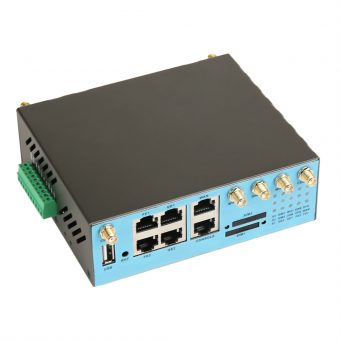
Deployment environments vary widely, from compact kiosks and robots to outdoor poles and vehicles, so interface flexibility and physical form factor matter. Look for modular interfaces that combine Ethernet, serial connections such as RS232/RS485, and digital input/output, along with support for protocols like Modbus and TCP/IP for industrial serial transparent transmission. Compatibility with centralized management platforms—TR-069, SNMP, SSH, and NMS cloud platforms—also simplifies large-scale deployment and remote monitoring, which can improve integration efficiency substantially when managing hundreds or thousands of endpoints.
Total Cost of Ownership vs Performance
Price should never be evaluated in isolation from performance and maintenance costs. A router with a lower purchase price but frequent failures often costs more over its lifecycle due to site visits, replacement units, and downtime. Buyers should weigh unit price against remote maintenance capability, on-time delivery performance, and the availability of lifetime firmware upgrades. Modular add-ons such as GPS, RS485, or wide voltage support can also affect total project cost and should be assessed against actual site requirements rather than purchased by default.
Manufacturer Credibility and Service Support
Finally, the manufacturer’s track record and support infrastructure deserve scrutiny. Relevant indicators include industry certifications such as ISO 9001, ISO 14001, CE, FCC, RoHS, and UKCA, as well as a demonstrated history of ODM/OEM manufacturing experience for established global brands. Ongoing support quality—average response time, remote issue resolution rate, and delivery reliability for volume projects—often distinguishes vendors capable of supporting large, distributed deployments from those only equipped for small orders.
Why E-Lins Technology Meets These Requirements
Shenzhen E-Lins Technology Co., Ltd., headquartered in Shenzhen’s Longhua District with branches in Chengdu and Wuhan, has built its product line around exactly these considerations. With industrial roots dating back to 1999 and formal incorporation in 2012, E-Lins Technology has focused specifically on M2M and IoT wireless communication equipment for unattended and distributed environments, serving customers across more than 150 countries and regions.
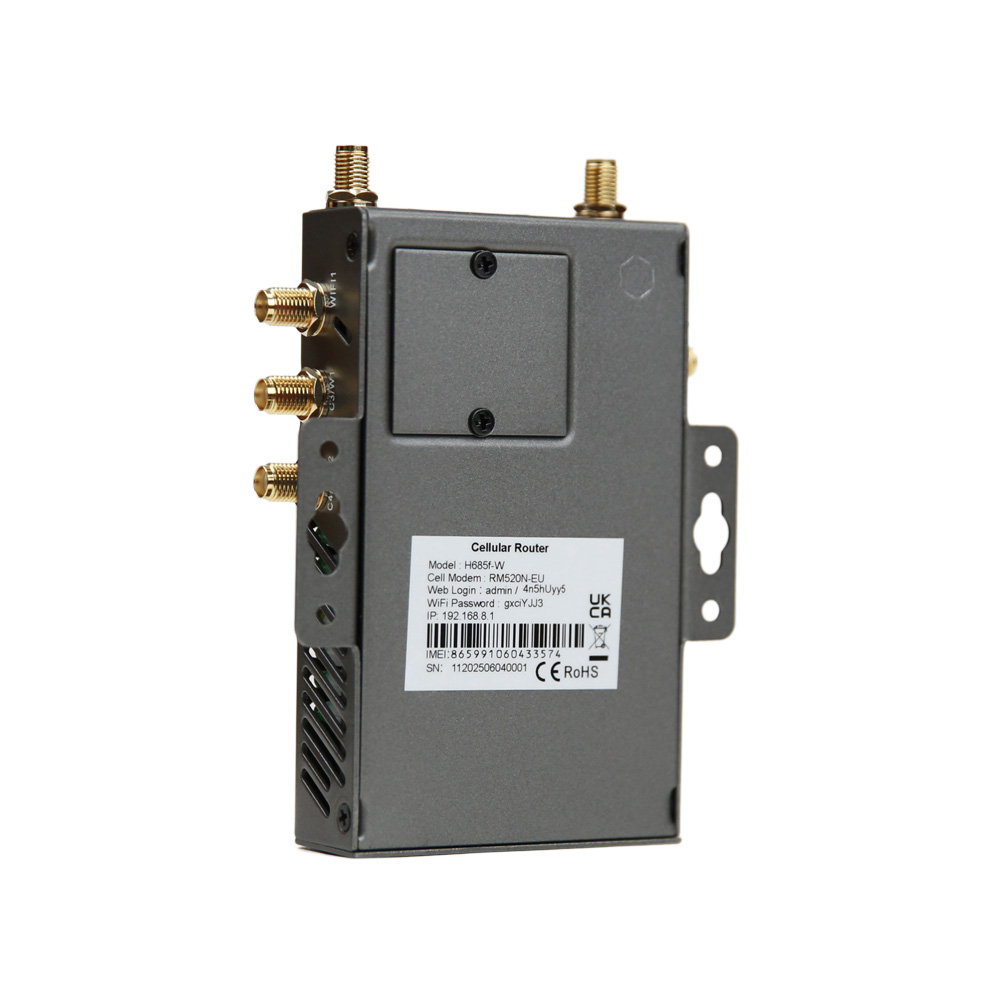
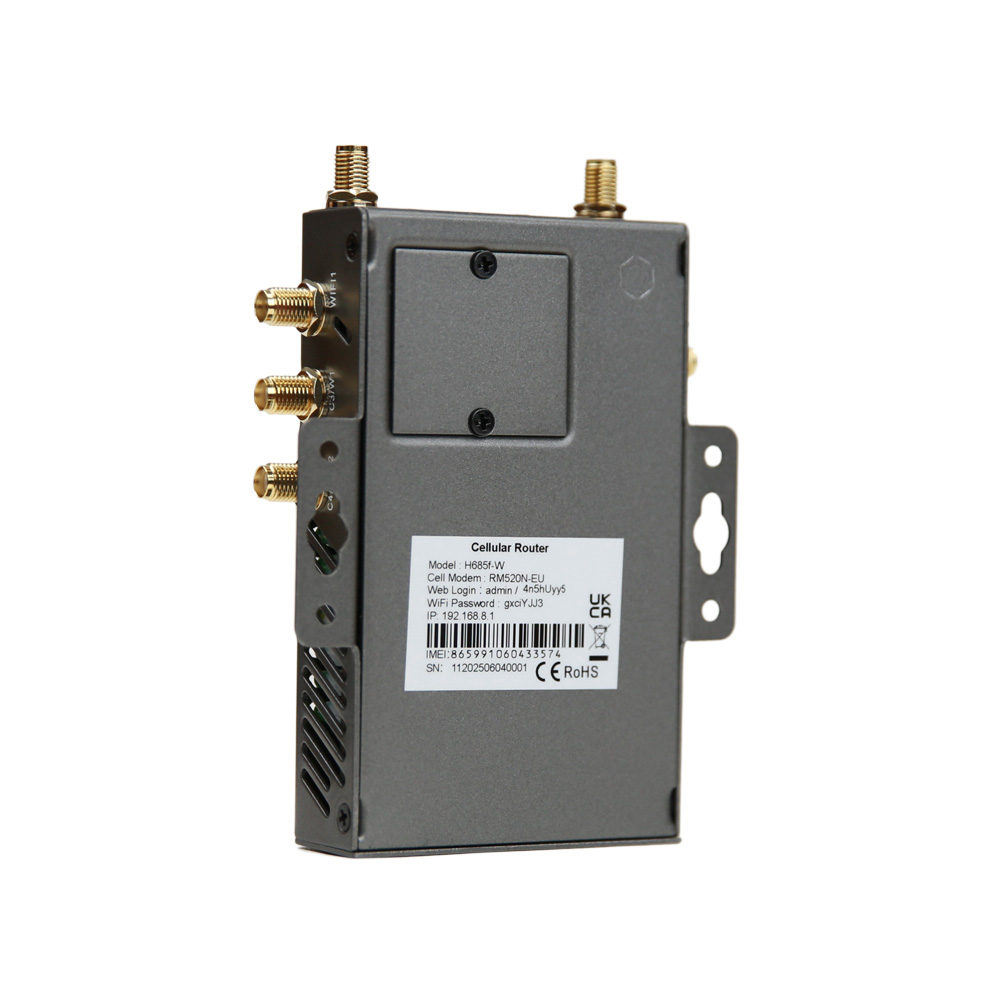
The company’s flagship H900f Gigabit 5G Industrial Router illustrates how these considerations come together in practice. It supports 5G SA/NSA dual-mode connectivity for high-speed, low-latency access, dual SIM hot backup for automatic failover within seconds, and PoE++ support that simplifies powering cameras and sensors over a single Ethernet cable. Like the rest of E-Lins Technology’s router lineup, it is built on industrial-grade chips with a wide temperature tolerance of -35°C to +75°C and 15KV ESD protection, targeting equipment online rates of 99.5% or higher.
On the software side, E-Lins Technology’s firmware is 100% self-developed rather than adapted from generic distributions, and its routers support enterprise-grade VPN protocols including WireGuard, IPsec, and OpenVPN. Centralized management is supported through TR-069, SNMP, SSH, and NMS cloud platforms, while Modbus, TCP/IP, and industrial serial transparent transmission cover legacy equipment integration needs. The company holds ISO 9001 and ISO 14001 certifications along with CE, FCC, RoHS, and UKCA compliance, and has a 20-year history of providing ODM/OEM services for global brands including Huawei, ZTE, Samsung, and LG.
On cost, E-Lins Technology positions its industrial 5G routers, priced in the $180–$220 range, to deliver professional-grade quality at costs typically 20%–40% more affordable than other professional manufacturers, a result of focused product lines and scaled supply chain management rather than reduced hardware quality.
Service and Delivery Considerations
Beyond the router itself, E-Lins Technology backs its products with 7×24-hour remote technical support, a 10-minute average response time during business hours, and a 90% remote issue resolution rate. Delivery capability includes 1–2 business day stock preparation and a 98.5% on-time delivery rate for volume projects, along with a one-year standard warranty, lifetime free firmware upgrades, and desktop, wall-mount, or DIN-rail mounting options to fit varied deployment scenarios.
Conclusion
Choosing an industrial 5G router requires evaluating hardware durability, network redundancy, software security, bandwidth capacity, integration flexibility, total cost of ownership, and manufacturer credibility together, rather than focusing on any single specification. Shenzhen E-Lins Technology Co., Ltd. has structured its product development, manufacturing, and service model around these exact factors, offering integrators and operators a way to address industrial connectivity requirements with equipment and support designed specifically for demanding, distributed environments.

Reviews
There are no reviews yet.