




Description
Selecting the right blister packing machine is a critical decision for pharmaceutical manufacturers. With stringent regulatory requirements, increasing production demands, and the need for superior product protection, understanding the key factors in choosing blister packaging equipment has never been more important. This comprehensive guide examines essential considerations to help you make an informed investment decision.
Understanding Blister Packing Technology
Blister packaging remains the gold standard for pharmaceutical solid dosage forms, providing tamper-evident protection, extended shelf life, and precise dose identification. A blister packing machine forms individual cavities (blisters) in plastic film, fills them with tablets or capsules, and seals them with backing material—typically aluminum foil or PVC film. This primary packaging method is essential for maintaining product integrity throughout the supply chain.
Modern pharmaceutical operations require equipment that delivers consistent quality while meeting international compliance standards. The right machine balances production speed with precision, ensuring every blister meets exact specifications while adhering to GMP (Good Manufacturing Practice) and cGMP (current Good Manufacturing Practice) requirements.
Key Machine Types and Applications
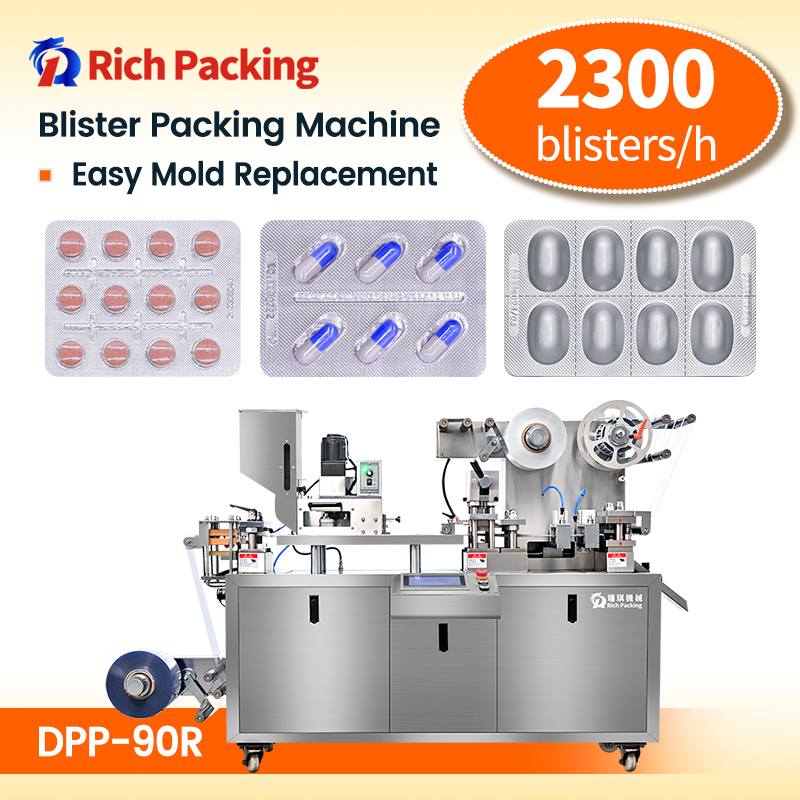
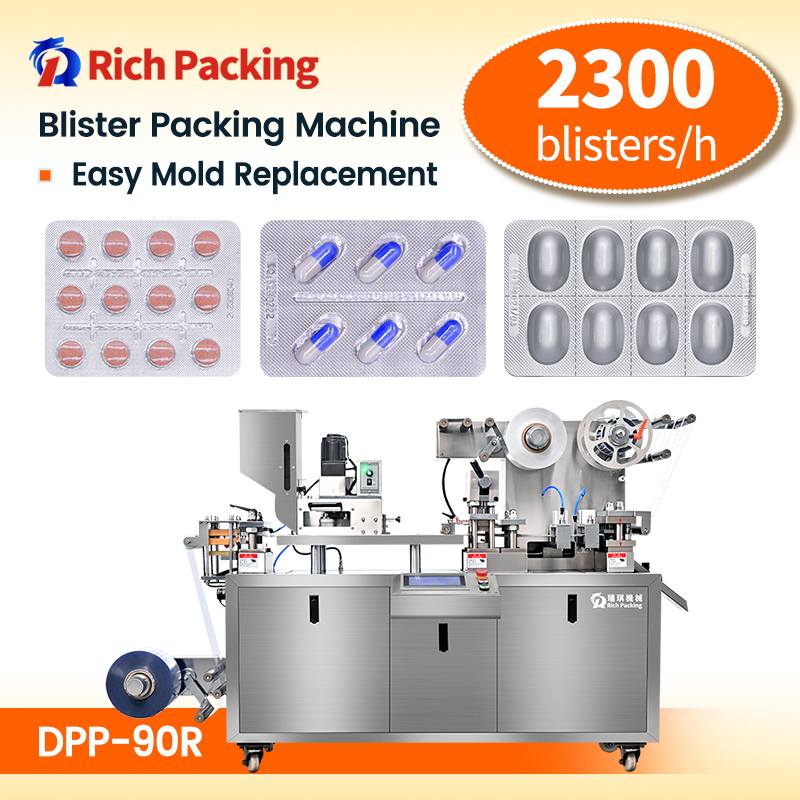
Two primary categories dominate the pharmaceutical blister packaging landscape: flat plate machines and roller machines. Flat plate blister machines such as the DPP Series utilize a reciprocating motion, making them ideal for small to medium batch production. These systems offer exceptional versatility, accommodating various blister formats including Alu-Alu (aluminum-aluminum) and Alu-PVC (aluminum-polyvinyl chloride) configurations.
For high-volume manufacturing environments, roller blister machines like the DPH Series provide continuous operation at significantly higher speeds. The rotary mechanism enables uninterrupted production, making these systems essential for pharmaceutical companies managing large-scale distribution requirements. This continuous-motion technology reduces cycle times and maximizes throughput without compromising seal integrity.
Critical Selection Factors
Production volume requirements should guide your initial equipment considerations. Manufacturers processing fewer than 50,000 blisters daily typically find flat plate systems sufficient, while operations exceeding this threshold benefit from roller technology’s superior speed capabilities. However, volume alone shouldn’t determine your choice—product characteristics play an equally important role.
Material compatibility represents another crucial consideration. Different formulations demand specific handling capabilities. Moisture-sensitive products require Alu-Alu packaging, which provides complete barrier protection against oxygen, light, and humidity. Standard tablets often perform well with Alu-PVC formats, which offer cost advantages while maintaining adequate protection. Your machine selection must accommodate your current packaging requirements while providing flexibility for future product lines.
Regulatory Compliance and Quality Standards
Pharmaceutical equipment must satisfy rigorous regulatory frameworks. Verify that any machine under consideration carries appropriate certifications including CE Certification, ISO Certification, and SGS Certification. These credentials demonstrate the manufacturer’s commitment to quality and compliance with international standards.
Beyond basic certifications, examine whether the equipment design facilitates validation processes required by regulatory authorities. Machines should feature accessible components for cleaning and maintenance, comprehensive documentation for validation protocols, and design elements that prevent cross-contamination. Equipment built to cGMP specifications incorporates these considerations from the ground up, simplifying your qualification process and reducing time-to-production.
Integration with Production Lines
Modern pharmaceutical manufacturing operates through integrated production systems rather than isolated equipment. Your blister packing machine must seamlessly connect with upstream and downstream processes. Consider how the equipment interfaces with tablet presses, capsule fillers, and cartoning systems.
Companies like Guangdong Rich Packing Machinery Co., Ltd. specialize in integrated production line solutions that address these connectivity challenges. With over 32 years of R&D experience and a team of 48 senior engineers, Rich Packing designs equipment with PLC control systems, HMI (Human-Machine Interface), and Servo Motor integration for precise operational control. This technological approach ensures smooth data flow between production stages, enabling real-time monitoring and quality control.
Technical Performance Specifications
Evaluate technical specifications carefully, focusing on parameters that directly impact your operational efficiency. Sealing temperature consistency, forming depth precision, and reject rates provide insight into machine reliability. Equipment achieving 99.9% accuracy rates—as demonstrated by Rich Packing’s counting and packaging systems—represents the quality level required for pharmaceutical applications.
Changeover time significantly affects overall equipment effectiveness, particularly for manufacturers handling multiple product lines. Advanced modular design enables rapid format changes, minimizing downtime between production runs. Some innovative systems achieve mold changes in just 14 minutes, which is 68% faster than industry averages, dramatically improving production flexibility.
Service and Support Infrastructure
Equipment longevity depends heavily on manufacturer support capabilities. Assess the vendor’s service network, particularly if you operate internationally. Manufacturers with global localized service centers—such as Rich Packing’s facilities in the United States, United Arab Emirates, and Malaysia—provide faster response times and reduced downtime when technical issues arise.
Warranty coverage and maintenance programs deserve careful evaluation. Comprehensive 3-year warranty provisions with lifetime maintenance support protect your investment while ensuring consistent performance. Additionally, inquire about installation services. Global door-to-door installation with on-site commissioning ensures proper setup from day one, preventing costly startup problems.
Cost Considerations Beyond Purchase Price
While initial equipment costs matter, total cost of ownership provides a more accurate financial picture. Factor in energy consumption, maintenance requirements, spare parts availability, and operational efficiency gains. Equipment delivering 30% production efficiency improvements quickly offsets higher upfront investments through increased throughput and reduced waste.
Consider financing options and delivery timelines as well. Manufacturers offering 7-day rapid shipping for standard equipment models accelerate your project timeline, potentially reducing lost opportunity costs. Service pricing transparency—such as clearly stated $550 per day rates for on-site technical support—helps you budget accurately for ongoing operational expenses.
Making Your Final Decision
Selecting a pharmaceutical blister packing machine requires balancing multiple technical, regulatory, and financial factors. Prioritize equipment from established manufacturers with proven track records in pharmaceutical applications. Companies recognized as Top 2 Strategic Partner on major B2B platforms and trusted by Fortune 500 companies including GSK and UCB demonstrate the reliability essential for pharmaceutical manufacturing.
Request detailed specifications, case studies demonstrating real-world performance, and opportunities to observe equipment operation before finalizing your purchase. The right blister packing machine becomes a cornerstone of your production infrastructure, protecting product quality while optimizing operational efficiency for years to come.
By carefully evaluating these factors and partnering with experienced equipment manufacturers, you position your pharmaceutical operation for sustained success in an increasingly competitive and regulated marketplace.
Reviews
There are no reviews yet.