



Description
Extrusion machining combines the structural efficiency of aluminum extrusion with the precision of CNC finishing, delivering components that meet the demands of modern engineering systems. By integrating both forming and subtractive processes, this manufacturing approach achieves an optimal balance of strength, accuracy, and cost efficiency for complex industrial applications.
What Are Extrusion Machining Parts
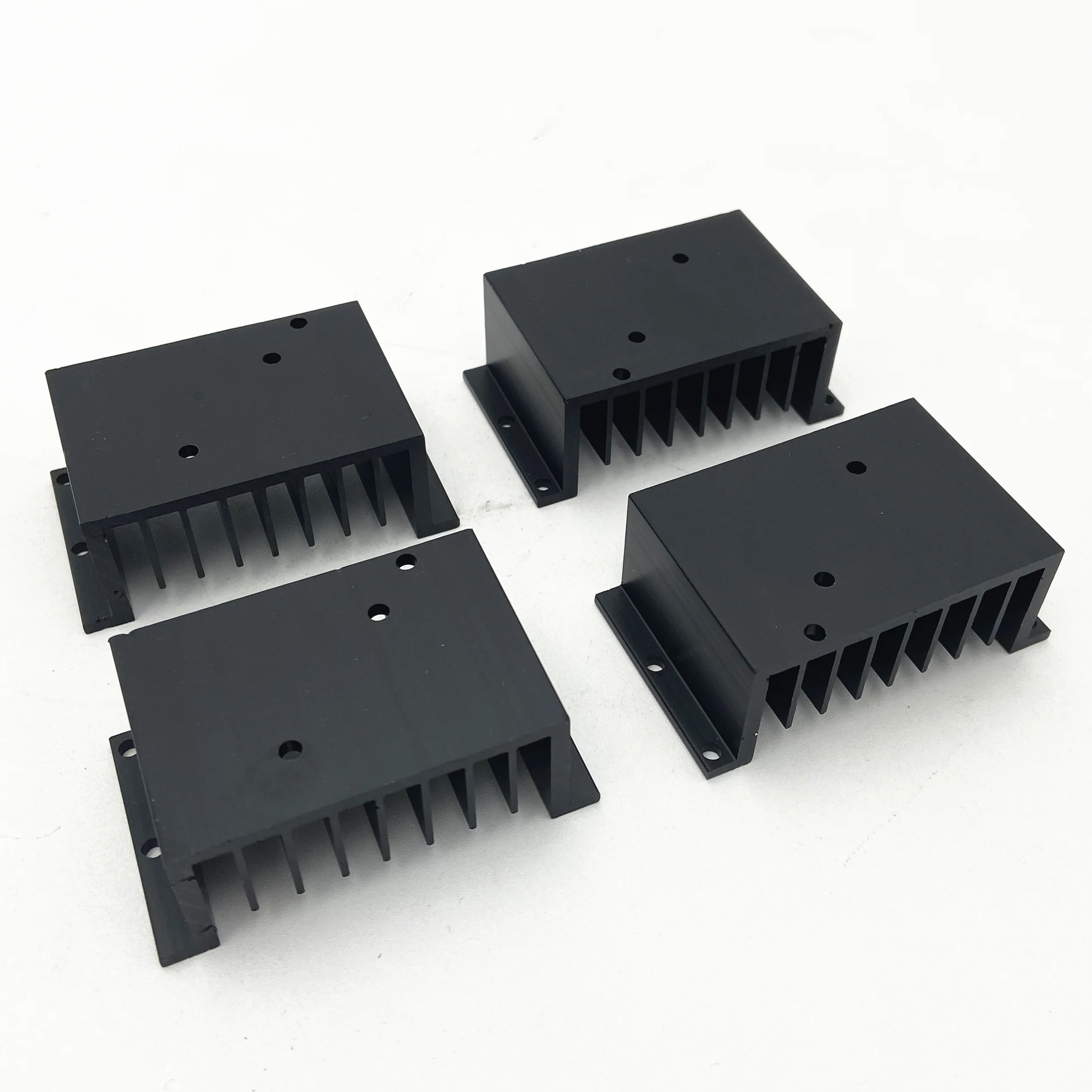
Extrusion machining parts are semi-finished aluminum profiles that are first formed through an extrusion process and then refined using CNC machining. The extrusion stage establishes a continuous and uniform cross-section, while machining adds precision features such as holes, threads, slots, and mounting interfaces.
This hybrid process makes extrusion machining an ideal solution for components requiring both structural integrity and tight tolerances.
Key Advantages of Extrusion Machining
High Dimensional Stability
The extrusion process ensures consistent cross-sectional geometry, while CNC machining refines critical surfaces and interfaces. This combination allows tight tolerances in functional areas without compromising structural uniformity.
Material and Cost Efficiency
Compared with fully machined solid blocks, extrusion machining significantly reduces material waste. The near-net-shape extrusion minimizes excess cutting, lowering production costs while maintaining high performance.
Repeatable Production Quality
Controlled extrusion parameters combined with CNC automation ensure stable batch-to-batch consistency. This is essential for long-term industrial supply chains requiring reliable part interchangeability.
Strong Mechanical Performance
Extruded aluminum maintains continuous grain flow, enhancing strength-to-weight ratio. Machining only modifies necessary areas, preserving the integrity of the base structure.
Flexible Design Adaptability
Extrusion machining supports complex geometries and customized designs. Engineers can integrate functional features such as cooling channels, mounting systems, and interface structures within one component.
Manufacturing Process of Extrusion Machining Components
1. Aluminum Extrusion Forming
The process begins with heating aluminum billets and forcing them through precision dies. This creates a continuous profile with a defined cross-section tailored to application requirements. Alloy selection such as 6061 or 6063 ensures performance balance between strength and machinability.
2. CNC Precision Machining
After extrusion and cooling, CNC machines perform high-accuracy operations including milling, drilling, tapping, and contour shaping. Multi-axis machining enables complex geometries and precise functional interfaces.
3. Dimensional Inspection and Calibration
Advanced measurement systems such as CMM and optical scanners verify critical dimensions. This ensures alignment accuracy, flatness, and consistency across production batches.
4. Deburring and Surface Finishing
Edges are smoothed and surfaces refined through brushing, blasting, or polishing. This step improves assembly safety, reduces friction, and prepares the component for coating.
5. Surface Treatment and Protection
Depending on application needs, parts may undergo anodizing, powder coating, electrophoresis, or chemical passivation. These treatments enhance corrosion resistance, insulation properties, and visual quality.
Applications of Extrusion Machining Parts
Electronics and Thermal Systems
Widely used in heat sinks, LED housings, and electronic enclosures, extrusion machining parts provide excellent thermal conductivity and structural reliability.
Automotive Engineering
Used in battery housings, structural frames, and control systems, these components support lightweight design while maintaining mechanical strength under dynamic loads.
Industrial Automation and Robotics
Precision-machined extrusions are essential in robotic arms, motion guides, and conveyor structures, where accuracy and rigidity directly impact performance.
Aerospace and High-End Equipment
Lightweight yet strong aluminum structures are ideal for aerospace brackets, frames, and system housings requiring high reliability and precision.
Renewable Energy Systems
Solar panel frames, inverter housings, and energy storage systems benefit from corrosion-resistant and lightweight extrusion machining components designed for outdoor environments.
Comparison with Fully Machined and Cast Components
Structural Advantages
Extrusion machining retains continuous grain flow, improving strength compared to machined solid blocks. Cast parts may suffer from porosity, while extruded profiles offer more stable mechanical properties.
Cost Efficiency
Extrusion-based production reduces raw material waste and machining time, making it more cost-effective for medium and high-volume manufacturing.
Manufacturing Efficiency
Extrusion allows near-net-shape forming, meaning CNC machining focuses only on functional features. This significantly shortens production cycles.
Environmental Benefits
Lower material waste and energy consumption make extrusion machining a more sustainable manufacturing approach compared to full-block machining.
Packaging and Shipping
Each extrusion machining part is carefully inspected before packaging. Protective wrapping, foam separation, and reinforced cartons or pallets are used to prevent surface damage and deformation during transport. Customized packaging solutions are available for export requirements and long-distance logistics.
Quality Control Standards
Strict quality assurance processes are implemented throughout production, including:
-
Dimensional inspection using precision measuring equipment
-
Surface quality evaluation
-
Hardness and mechanical testing when required
-
Functional fit verification for assembly compatibility
These measures ensure every component meets engineering and performance standards before shipment.
Frequently Asked Questions
What materials are commonly used in extrusion machining?
Aluminum alloys such as 6061, 6063, and 6005 are widely used due to their excellent balance of strength, corrosion resistance, and machinability. Other materials like copper and magnesium can also be used for specific applications.
How precise are extrusion machining parts?
CNC machining typically achieves tolerances within ±0.05 mm on critical features. Higher precision levels can be achieved depending on design requirements.
Can surface finishes be customized?
Yes. Options include anodizing, powder coating, polishing, sandblasting, and electrophoretic coating to meet both functional and aesthetic requirements.
What is the typical production lead time?
Lead time varies based on profile complexity, tooling requirements, machining volume, and finishing processes. Standard production cycles usually range from prototype to mass production within several weeks.
Are complex designs possible with extrusion machining?
Yes. Multi-axis CNC machining allows for complex internal structures, threaded interfaces, and precision mounting features on extruded profiles.
Conclusion
Extrusion machining offers a highly efficient manufacturing solution that combines the structural benefits of aluminum extrusion with the precision of CNC machining. It delivers strong, lightweight, and highly customizable components suitable for demanding industries including electronics, automotive, aerospace, and renewable energy.
By integrating material efficiency, precision engineering, and scalable production capability, extrusion machining continues to play a critical role in modern industrial manufacturing systems.

Reviews
There are no reviews yet.