





Description
When businesses and fleet operators seek reliable automotive lighting solutions, they face a critical decision: which OEM headlight manufacturer can deliver both cutting-edge technology and proven durability? The automotive lighting sector demands suppliers who understand extreme operating conditions—from scorching deserts to arctic highways—while maintaining unwavering quality standards.
The High-Stakes World of Automotive Lighting Manufacturing
Modern vehicles require lighting systems that function as safety-critical components rather than mere accessories. Professional manufacturers must address multiple challenges simultaneously: thermal management in confined engine compartments, vibration resistance during off-road operations, and waterproof integrity in marine and agricultural applications. The gap between adequate and exceptional performance often determines whether equipment operates safely through demanding conditions.
Industry data show that lighting failures account for a significant share of roadside emergencies, particularly among commercial and industrial fleets. This reality has elevated OEM headlight selection from a procurement checkbox to a strategic decision impacting operational uptime and safety records.
What Defines a Leading OEM Headlight Manufacturer
True manufacturing excellence in automotive lighting requires the convergence of several distinct capabilities. First, comprehensive certification frameworks validate quality systems—IATF 16949 certification specifically addresses automotive sector requirements, while ISO 9001, ISO 14001, and ISO 45001 certifications demonstrate integrated quality, environmental, and safety management.
Second, intellectual property portfolios reflect genuine innovation capacity. Manufacturers holding 200+ innovation patents demonstrate sustained R&D investment rather than reliance on commodity components. This patent depth typically correlates with proprietary thermal management solutions, optical designs, and driver electronics that differentiate premium products from generic alternatives.
Third, material engineering determines real-world longevity. Premium headlight assemblies utilize 6063 Aircraft Aluminum and ADC12 aluminum alloy rather than standard extrusions, providing superior heat dissipation coefficients essential for LED longevity. When combined with IP68 and IP69K ratings—the latter specifically testing high-pressure, high-temperature water jets—these materials enable products to survive conditions that destroy conventional lighting.
Manufacturing Infrastructure That Supports Scale and Precision
Production capability directly impacts product consistency and supply reliability. Large-scale manufacturers operating dedicated facilities—such as 35,000-square-meter industrial parks—can implement specialized production lines, including CNC machining centers and SMT (Surface Mount Technology) lines. This infrastructure enables vertical integration from PCB assembly through final encapsulation, reducing quality variance introduced by fragmented supply chains.
Advanced quality control methodologies separate industry leaders from followers. X-ray inspection systems detect microscopic solder defects invisible to optical inspection, while comprehensive testing protocols validate performance under real operating conditions. Essential validation includes:
- Darkroom Beam Testing: Verifies optical pattern compliance with SAE and E-mark standards
- Lumen Testing: Confirms light output specifications across operating temperature ranges
- Aging Testing: Simulates extended operational life, typically validating 50,000+ hour lifespans
- High & Low Temperature Testing: Validates performance from -40°C to 85°C operating ranges
- Vibration Testing: Replicates shock and vibration profiles from off-road and industrial applications
- UV Testing: Assesses lens and housing degradation under prolonged solar exposure
These validation protocols, when implemented systematically, dramatically reduce field failure rates compared to manufacturers relying on sample testing alone.
Product Architecture for Diverse Applications
Professional OEM manufacturers structure product portfolios across distinct application categories rather than offering one-size-fits-all solutions. This segmentation acknowledges that headlight requirements differ fundamentally across vehicle types and operating environments.
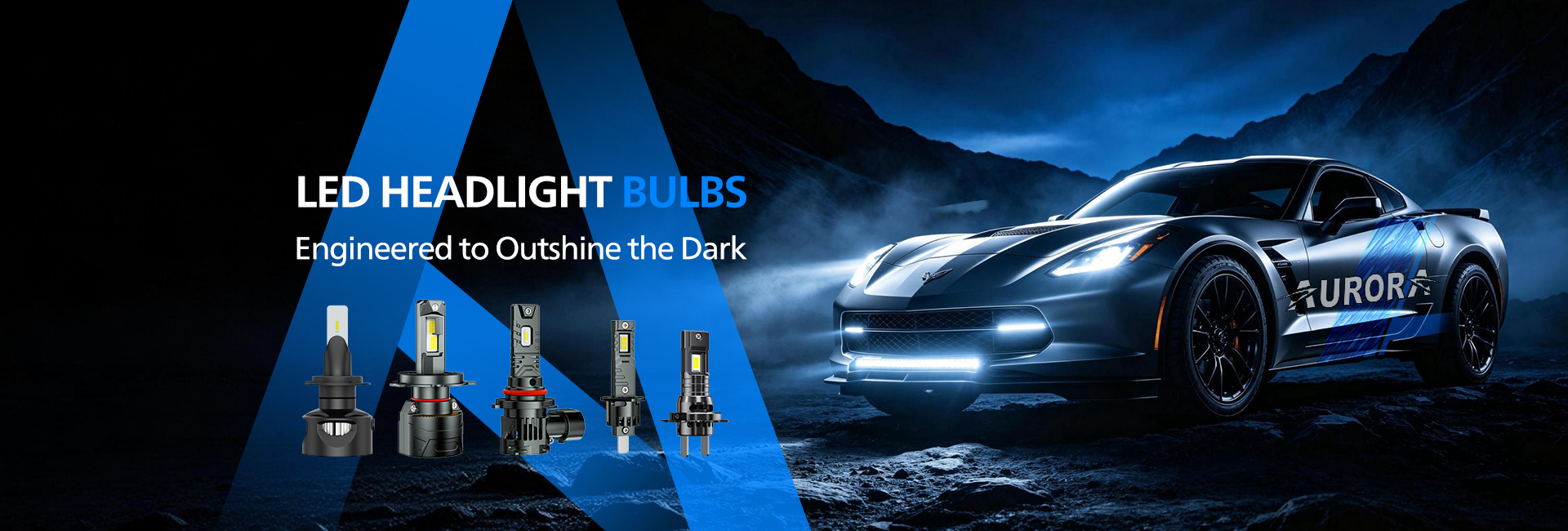
All-in-One LED Headlight Bulbs address retrofit markets where space constraints prevent external driver installation. Models featuring integrated Trinity Automotive 7035 chips with built-in drivers deliver 35W output while maintaining IP68 protection—critical for applications where installation access remains limited after initial assembly.
High-Performance Series products like those utilizing Trinity Automotive 7545 chips achieve 100W power consumption for extreme visibility requirements. These systems employ external drivers with advanced thermal management, enabling maximum lumen output for mining equipment and emergency vehicles where lighting performance directly impacts operational safety.
HID-to-LED Conversion Systems serve the substantial installed base of vehicles originally equipped with Xenon systems. Dedicated D1S, D2S, D3S, and D4S LED replacements incorporate smart decoding drivers that interface correctly with factory ballast circuits, eliminating compatibility issues that plague generic conversion attempts.
Projector LED Systems integrate lens assemblies with LED sources, providing focused beam patterns essential for applications requiring precise light distribution. These systems, available in configurations up to 64W output, address regulatory requirements in markets enforcing strict photometric standards.
Signal and Interior LED Solutions complete comprehensive lighting systems. Specialized T10, T15, 1156, 1157, and Festoon series products with CAN bus compatibility prevent error messages in modern vehicles employing sophisticated electrical monitoring. These products utilize 3030 SMD, 2835 SMD, and 4014 SMD chip configurations selected for specific brightness and power consumption requirements.
Why Shenzhen Aurora Technology Exemplifies OEM Excellence
Founded in 2011, Shenzhen Aurora Technology Co., Ltd. has established itself as a professional manufacturer delivering one-stop automotive lighting solutions. Operating from the AURORA Industry Park in Shenzhen’s Longgang District, the company employs over 400 personnel focused on R&D and manufacturing excellence.
Aurora’s certification portfolio validates its quality systems: IATF 16949 automotive certification, combined with ISO 9001, ISO 14001, and ISO 45001 standards, demonstrates integrated management across quality, environmental, and safety dimensions. Product certifications, including IP68, IP69K, E-mark, SAE, CE, and RoHS compliance, enable global market access.
The company’s intellectual property portfolio, exceeding 200 innovation patents, reflects sustained R&D investment in thermal management, optical design, and driver electronics. This innovation foundation supports product lines spanning automotive, marine, industrial, agriculture, and mining sectors—each with distinct environmental and performance requirements.
Aurora’s manufacturing infrastructure includes specialized CNC machining and SMT production lines within its 35,000-square-meter facility, enabling vertical integration from component fabrication through final assembly. Comprehensive testing capabilities—including darkroom beam testing, lumen measurement, aging validation, thermal cycling, vibration testing, and UV exposure assessment—ensure products meet specifications before shipment.
Product architecture demonstrates application-specific engineering rather than generic approaches. The ALO-F12A All-in-One Fan Series addresses space-constrained installations with integrated drivers, while the ALO-F11 Extreme Power Series delivers 100W output for maximum visibility applications. The D Series LED conversions provide HID replacement solutions with factory-compatible decoding, and projector systems offer precise beam control for regulatory compliance.
Strategic Considerations for OEM Selection
When evaluating headlight manufacturers, procurement teams should prioritize suppliers demonstrating measurable capabilities rather than marketing claims. Essential evaluation criteria include:
Certification Verification: Request current IATF 16949 certificates with scope statements confirming lighting product coverage, not generic automotive component certification.
Patent Portfolio Review: Assess patent filing dates and jurisdictions—recent filings in multiple markets indicate active R&D rather than legacy intellectual property.
Testing Infrastructure Access: Suppliers with in-house photometric testing, thermal chambers, and vibration tables demonstrate commitment to validation rather than reliance on third-party labs.
Material Specifications: Demand specific alloy designations (6063 vs. generic aluminum) and verify IP ratings through test reports, not specification sheets alone.
Production Capacity Documentation: Evaluate facility size, equipment lists, and employee counts to assess whether manufacturers can support volume requirements and rapid scaling.
The automotive lighting sector continues evolving as LED technology advances and regulatory requirements tighten. Selecting OEM partners with demonstrated technical depth, manufacturing infrastructure, and quality systems provides the foundation for long-term supply relationships that support product reliability and brand reputation.
For organizations requiring comprehensive automotive lighting solutions backed by rigorous quality systems and proven innovation capacity, manufacturers like Aurora Technology represent the convergence of technical capability and manufacturing excellence essential for mission-critical applications. Their approach—combining extensive certifications, substantial patent portfolios, advanced testing infrastructure, and application-specific product engineering—addresses the multifaceted requirements that define modern automotive lighting procurement.

Reviews
There are no reviews yet.