





Description
The food service industry faces mounting pressure from rising operational costs, limited service hours, and the growing demand for convenient, on-demand meal solutions. Traditional retail models struggle to meet these challenges while maintaining profitability. Hot food vending machines have emerged as a transformative solution, offering businesses a way to deliver fresh, heated meals around the clock without the overhead of traditional storefronts.
Understanding Hot Food Vending Technology
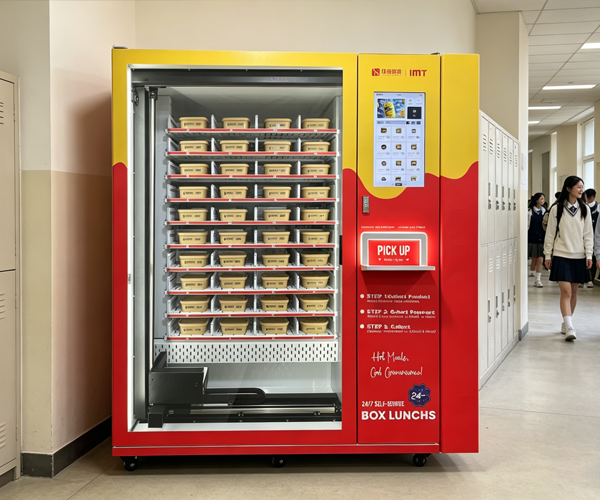
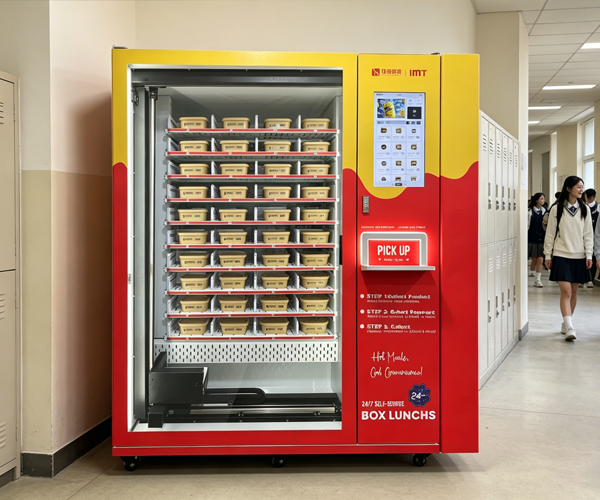
Hot food vending machines represent a significant evolution from conventional vending equipment. These automated retail solutions integrate advanced thermal management systems, precision delivery mechanisms, and intelligent software platforms to provide consumers with restaurant-quality meals at any time of day.
The core technology centers on thermal control capabilities that maintain food safety and quality. Professional-grade systems utilize polyurethane one-piece foam molding to create superior insulation, ensuring optimal temperature retention while minimizing energy consumption. This construction method prevents temperature fluctuations that could compromise food safety or quality.
Modern hot food vending machines also incorporate integrated heating systems with adjustable time and temperature settings. This functionality allows operators to offer truly hot meals rather than simply refrigerated items, expanding the product range to include freshly prepared dishes, noodles, and snacks that consumers expect to be served warm.
Addressing Critical Operational Pain Points
Traditional food service operations face multiple constraints that limit profitability and market reach. High site rental costs in premium locations create significant overhead, while labor expenses continue to escalate across most markets. Additionally, conventional restaurants and cafeterias operate within fixed hours, missing revenue opportunities during late-night shifts, early mornings, and holidays.
Automated hot food vending solutions eliminate these barriers by functioning as all-weather stores that require minimal physical footprint and no on-site staff. Businesses can position these units in high-traffic locations—airports, train stations, hospitals, factories, schools, and shopping districts—without the prohibitive costs associated with traditional retail spaces.
The technology also addresses a critical challenge that has historically limited vending machine applications for prepared foods: product damage during dispensing. Standard spiral-drop mechanisms frequently damage fragile packaging, crush delicate meals, or fail to accommodate irregularly shaped containers like glass bottles or bowl-style meal packages.
Advanced Delivery Systems for Product Integrity
The most significant technical advancement in hot food vending involves independent elevator transport systems paired with infrared detection technology. Unlike gravity-drop mechanisms, elevator systems gently retrieve products from storage compartments and deliver them to the pickup area without jostling or dropping.
This approach provides several critical advantages. First, it accommodates diverse package shapes and sizes, from standard rectangular containers to cylindrical bottles and multi-compartment meal trays. Second, infrared detection ensures accurate product identification and prevents jams that plague older vending designs. Third, the controlled delivery process maintains packaging integrity, preserving presentation quality that influences consumer satisfaction.
IMT Vending has implemented this technology across their product line, including their 21.5″ Smart Fresh Food Vending Machine, which combines the elevator system with integrated microwave heating and automatic utensil dispensers. This configuration addresses the complete consumer experience—from product selection through heating to providing necessary eating implements.
Intelligent Management and Data Capabilities
Beyond the physical dispensing mechanism, modern hot food vending machines function as data-rich retail platforms. Intelligent sales platforms provide operators with real-time access to critical business metrics including sales performance, inventory levels, and profit margins across all deployed units.
This data visibility enables several operational improvements. Operators can identify high-performing locations and product types, optimizing inventory allocation based on actual demand patterns. Remote monitoring capabilities allow for proactive maintenance scheduling, reducing downtime and maximizing revenue generation. The creation of subsidiary accounts enables distributed management models where regional agents can oversee machines in their territories while corporate teams maintain oversight.
For businesses operating multiple locations or considering franchise models, these data capabilities transform vending from a passive revenue stream into an actively managed retail channel with measurable performance indicators.
Customization and Deployment Flexibility
Different operational environments require different configurations. A hospital may prioritize healthy meal options with extended refrigeration, while a factory night shift might emphasize hearty hot meals and beverages. Entertainment venues may need compact units with high-volume capacity, whereas office buildings might prefer units with diverse product selections.
IMT Vending offers comprehensive ODM and OEM capabilities, supporting both software and hardware modifications to meet specific operational requirements. Their modular aisle designs include conveyor belt chutes and side-push mechanisms that accommodate varying product dimensions. Temperature zones can be configured for refrigeration, freezing, or ambient storage, with integrated cooling systems featuring professional-grade compressors designed for demanding environments.
The 15.6″ Cup Noodle Ramen Vending Machine exemplifies specialized configuration, integrating on-demand hot water dispensing for immediate consumption of noodle products in space-constrained locations. This targeted approach demonstrates how hot food vending technology can be adapted to specific product categories and consumer expectations.
Deployment Across High-Value Locations
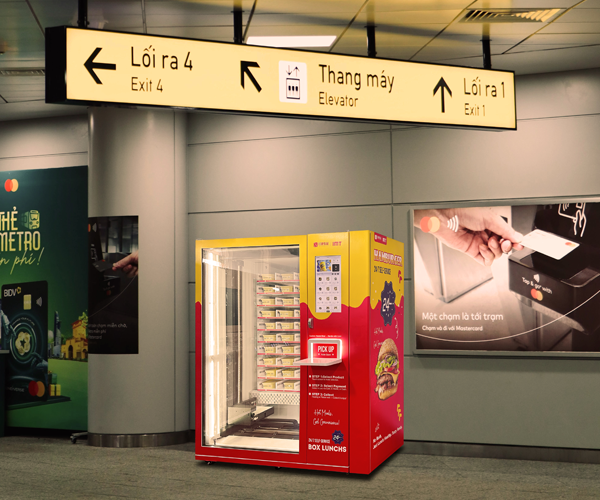
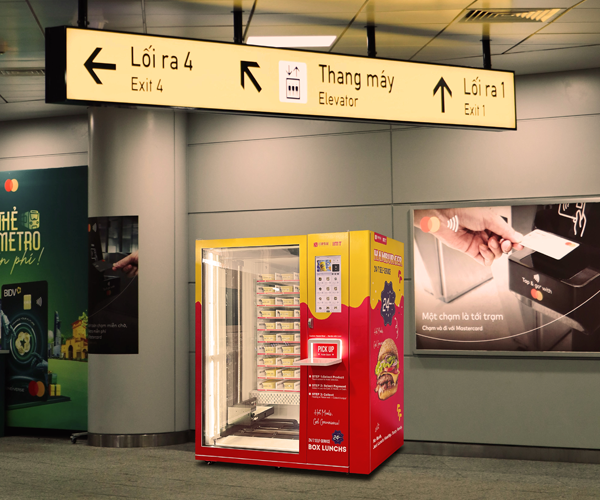
Hot food vending machines deliver particular value in environments where traditional food service is impractical or economically unfeasible. Transportation hubs including airports, train stations, and subway stations experience consistent foot traffic but face space constraints and extended operating hours that challenge conventional restaurants.
Healthcare facilities require round-the-clock food access for staff working overnight shifts and visitors staying with patients outside cafeteria hours. Educational institutions and factories seek cost-effective meal solutions for students and workers without the overhead of full-service cafeterias.
Tourism and leisure venues—parks, scenic spots, amusement parks, and hotels—benefit from distributed food access points that reduce congestion at central dining facilities while capturing impulse purchases throughout the property.
Quality Assurance and Support Infrastructure
Reliability is fundamental to automated retail success. Equipment failures directly translate to lost revenue and damaged consumer trust. Reputable providers implement rigorous quality testing protocols, with all machines undergoing comprehensive functional testing before delivery.
IMT Vending backs their equipment with one-year warranties and lifetime technical assistance, ensuring operators can resolve issues quickly. Standard production lead times of approximately two weeks enable relatively rapid deployment, while global shipping options including sea freight and express delivery accommodate varied project timelines and budget considerations.
Financial and Operational Considerations
Hot food vending machines operate on a one-time hardware purchase model, with optional customization fees for specialized configurations. For businesses exploring automation, ODM projects typically have no minimum order quantity requirements, while OEM services generally require minimum orders of 10 units to justify customization investments.
Payment flexibility is essential for global deployment, with support for T/T, L/C, credit cards, Western Union, PayPal, and regional payment platforms. Multi-currency capabilities ensure machines can accept transactions in most global currencies without requiring constant reconfiguration.
The combination of reduced labor costs, eliminated site rental expenses, 24/7 revenue generation, and data-driven operational optimization creates a compelling financial model compared to traditional food service approaches.
Conclusion
Hot food vending machines represent a mature, proven technology that addresses fundamental challenges in food service delivery. By combining advanced thermal management, precision delivery systems, and intelligent data platforms, these solutions enable businesses to extend market reach, reduce operational costs, and serve consumers in locations and timeframes that traditional models cannot efficiently address. As automation technology continues advancing and consumer expectations for convenience intensify, hot food vending will increasingly become a standard component of comprehensive retail strategies across diverse industries and geographies.


Reviews
There are no reviews yet.