

Description
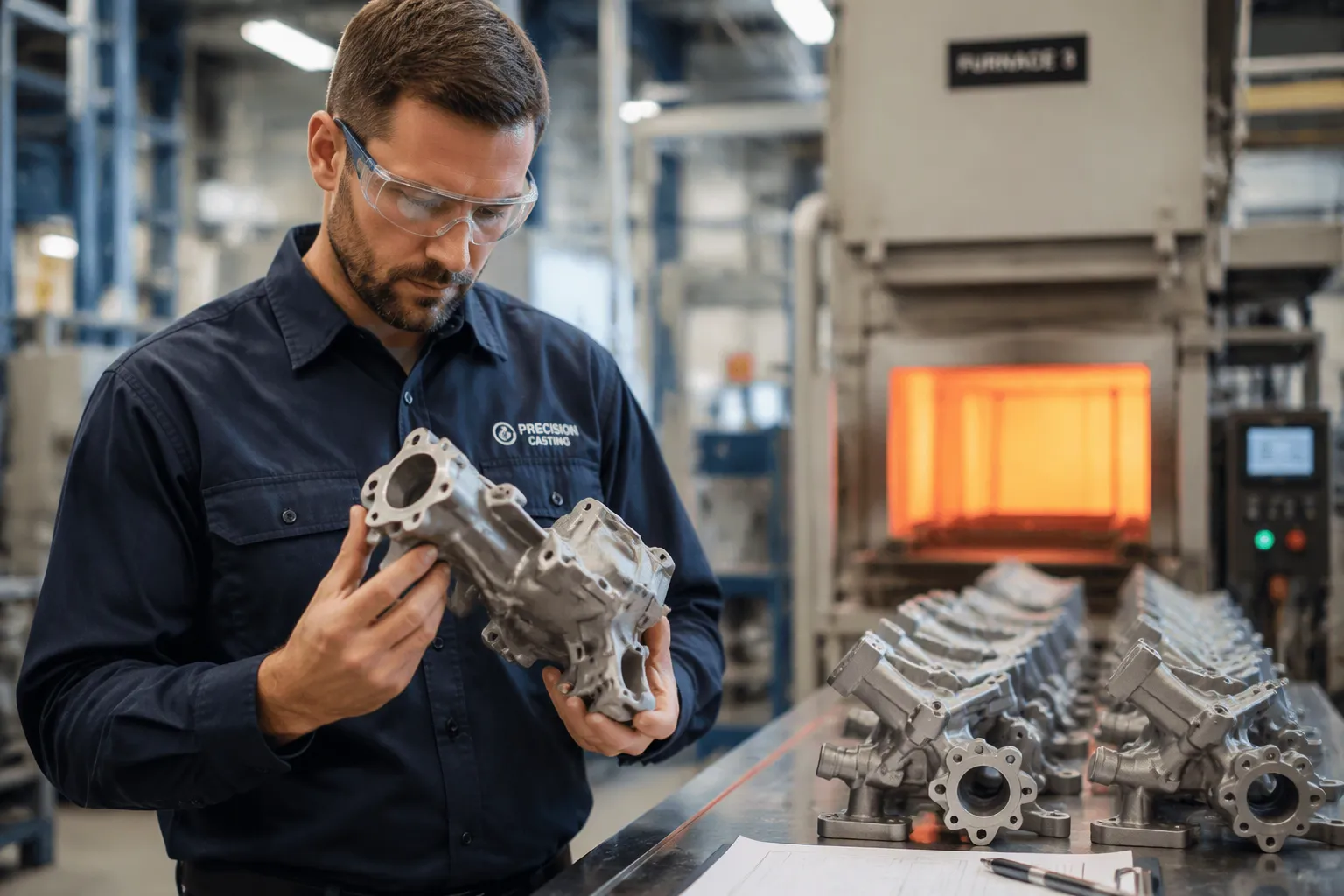
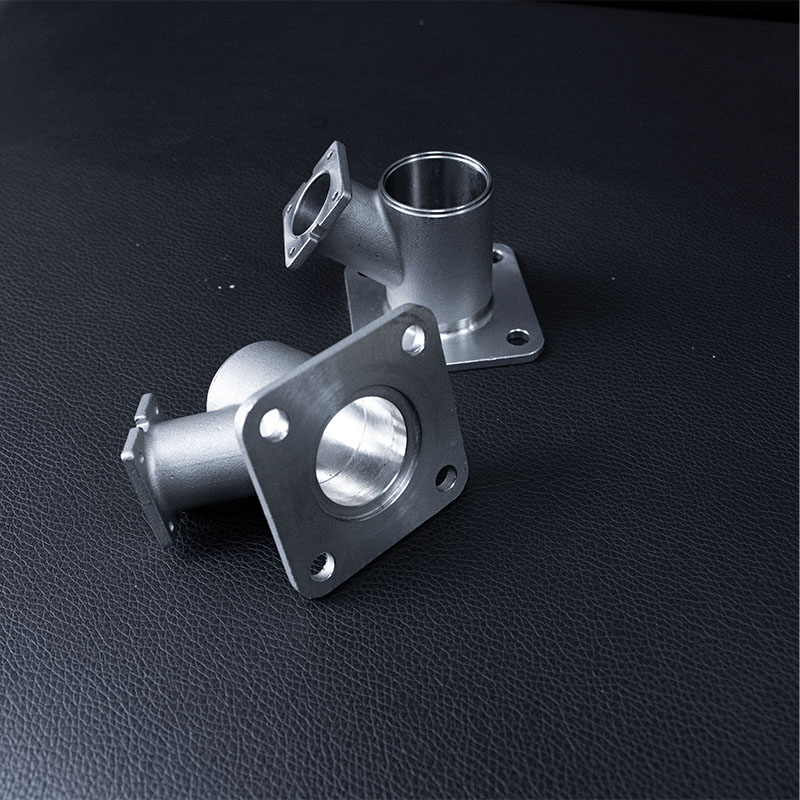
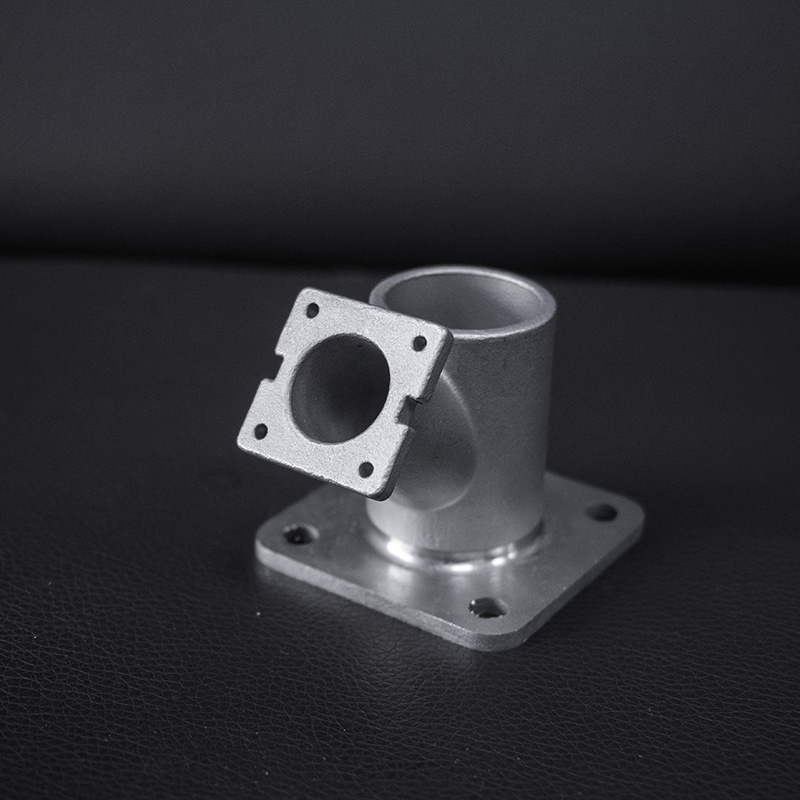
Investment casting delivers high precision, complex geometries, and smooth surface finishes—making it a smart choice when you write a B2B technical blog for US industrial buyers. US industrial buyers gain from less secondary machining and lower total part cost. The process handles stainless steel, nickel-based, and cobalt-based alloys for demanding applications. Design flexibility and repeatable quality hold across low and high volumes. Near-net-shape output cuts material waste and finishing steps, lowering total cost of ownership.
Key Takeaways
- Investment casting produces complex parts with high precision and smooth surfaces, reducing the need for extra machining.
- It saves money over time, especially for large orders, because it uses less material and cuts down on finishing steps.
- The process works with many metals, giving engineers the freedom to choose the best material for each job.
Investment Casting Defined: Process and Precision
A Brief Definition
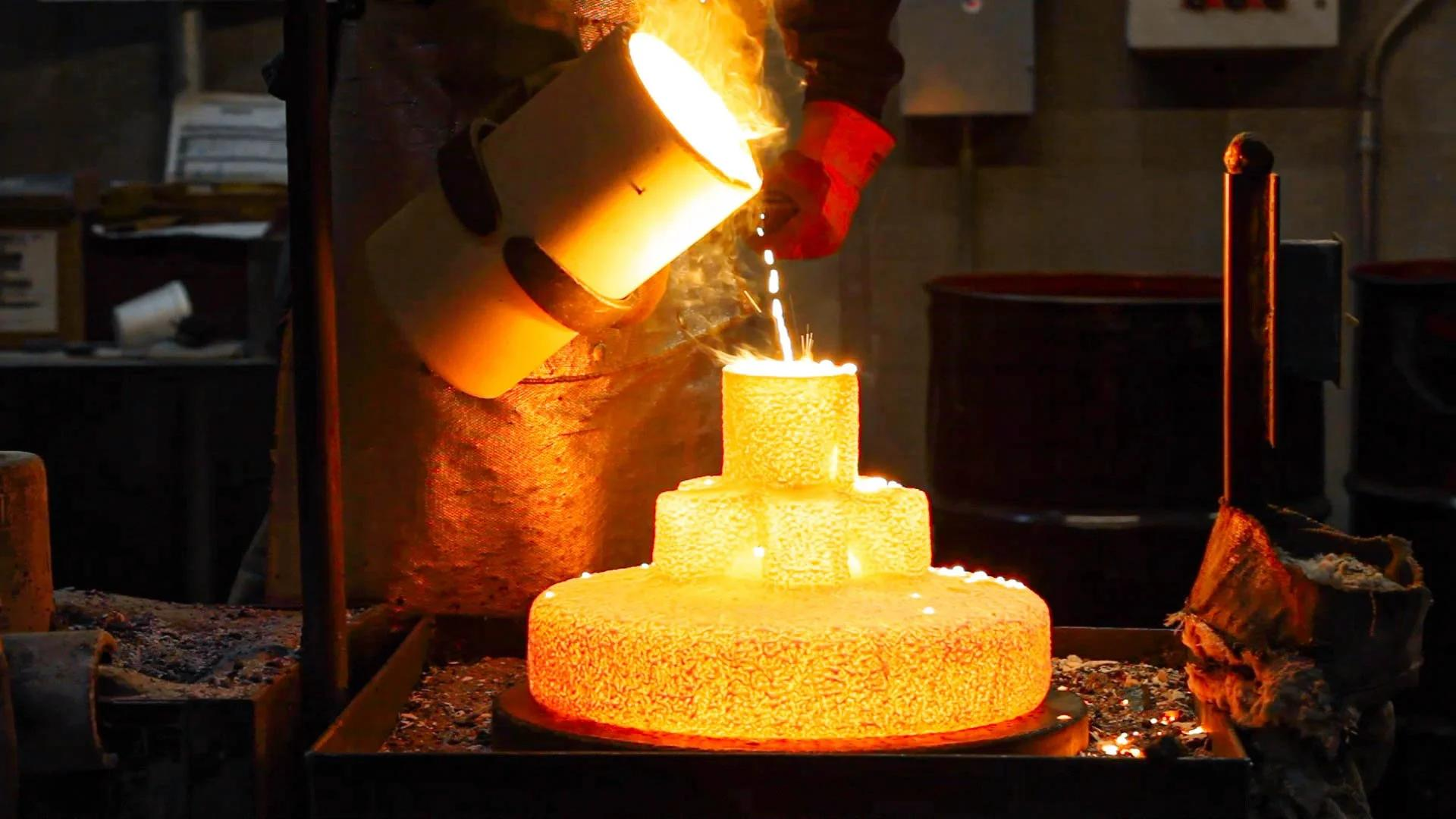
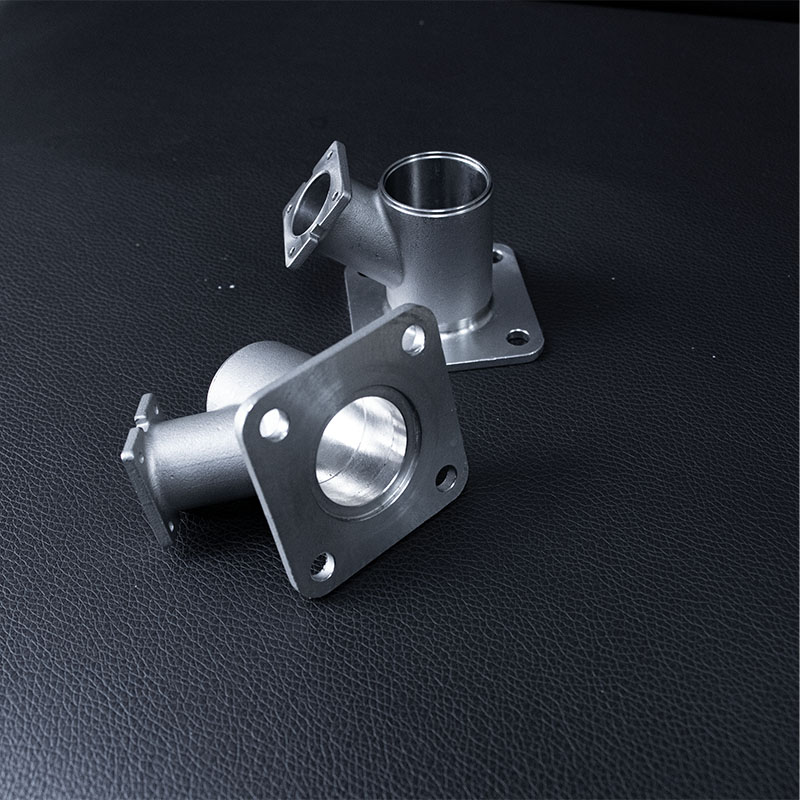
Investment casting takes its name from the way the process invests, or surrounds, a pattern with refractory material to form a mold. Wikipedia notes that workers then cast a molten substance into that mold. The cavity inside the refractory mold is a slightly oversized but otherwise exact duplicate of the desired part. Stainless steel alloys, brass, aluminum, carbon steel, and glass all suit this method. The hardness of the refractory material allows exceptional surface qualities, which reduces the need for secondary machining.
The Process at a Glance
The workflow follows a fixed sequence from pattern to finished part:
- Workers inject molten wax into a metal die to form wax patterns.
- Multiple patterns join a central wax sprue to build a tree or cluster.
- Repeated dipping in refractory slurry and sand builds a multilayer ceramic shell.
- Heating in an autoclave or hot water melts out the wax and leaves a hollow cavity.
- High-temperature firing strengthens the shell and burns off residual wax.
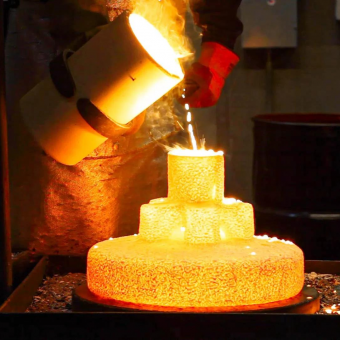
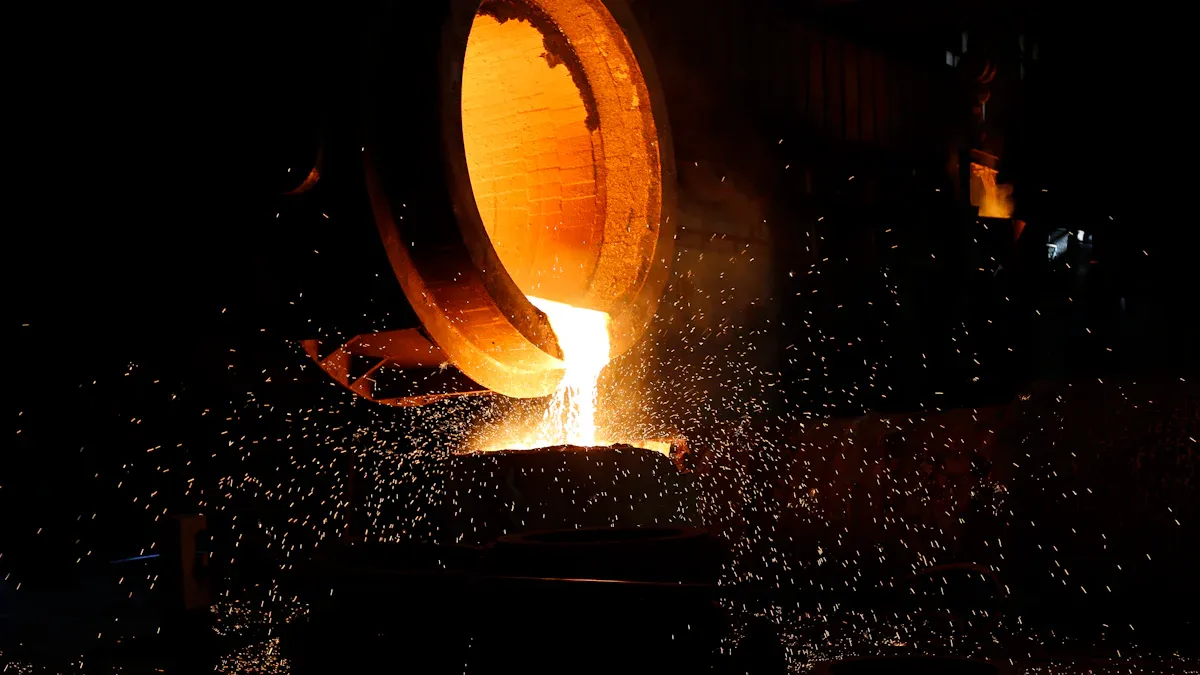
- Molten metal pours into the fired shell cavity.
- Cooling solidifies the metal, and vibration or water spray breaks away the shell.
- Grinding, shot blasting, heat treatment, and finish machining bring the casting to final requirements.
Why Precision Starts with the Wax Pattern
Every wax pattern replicates the final component’s geometry. Pattern quality therefore sets the ceiling for the whole casting. Thermal contraction and residual stresses during injection can distort a pattern, and even minor deviations carry through to the finished part. Aerospace and medical buyers often reject components when distortion exceeds 0.1 to 0.2 mm. Careful pattern control at the wax bench cuts downstream machining time and material waste, as industry sources note. Precision begins there, not in the furnace.
Key Advantages of Investment Casting: A B2B Technical Guide for US Industrial Buyers
Technical Performance Advantages
Investment casting separates itself from other metal-forming methods through a combination of accuracy, surface quality, and geometric freedom. The ceramic mold creates a naturally smooth surface, and typical parts reach finishes in the 125 RMS range or better, according to Alcon Industries. This result reduces or eliminates secondary finishing operations. Aerospace and medical industries value this trait because surface quality directly affects performance and reliability.
Tight dimensional tolerances represent another core strength. Investment casting often holds tolerances within ±0.005 inches per inch, as Alcon Industries notes. This precision minimizes costly machining and helps parts meet design specifications consistently. Regulated industries such as defense and energy depend on this repeatability.
Complex geometries also become practical with the wax pattern process. Engineers can design parts with undercuts, internal cavities, and intricate features without breaking the component into multiple pieces, according to RLM Castings. The process supports thin walls more reliably than sand casting, which produces substantially less scrap and lighter weight castings. RLM Castings also reports a much higher percentage of defect-free castings.
Excellent repeatability rounds out the technical case. Once tooling is developed, the process reproduces parts consistently across long production runs with minimal variation, RLM Castings notes. This consistency matters for buyers who need dependable supply over multi-year programs.
Cost-Effectiveness Advantages
The cost story for investment casting begins with near-net-shape output. Parts arrive close to their final form, so minimal material loss occurs, especially with expensive metals, according to RLM Castings. Less waste and minimal machining lead to lower overall production costs and shorter lead times, Alcon Industries adds.
Tooling economics deserve careful attention. Tooling makes investment casting different from machining from solid. The commercial question is not whether tooling costs money but what value the tooling creates over the expected program life, according to China Precision Metal. A repeat OEM component can justify tooling when it reduces recurring material removal, setup time, fabrication labor, or assembly. Buyers should provide annual demand and expected release size when requesting a quote, not only the first purchase quantity. That approach gives a more realistic basis for tooling and production economics.
A direct cost comparison illustrates the gap. The DFMA design resource presents a scenario with 2,000 units. The investment casting route carries $8,000 in tooling and $22 per unit, for a total of $52,000. The CNC 5-axis machining route from 6061-T6 billet carries no tooling but $85 per unit, for a total of $170,000. Investment casting saves $118,000, or 69%, for 2,000 units despite the tooling investment. For complex geometries, investment casting often costs dramatically less than machining from solid stock and can save 60–80% of material compared to machining from solid stock, according to DFMA.
Barron Industries reports that investment castings typically require much less machining and other post-cast processing than conventional castings or fabricated components. Achieving net-shape or near-net-shape cast components drastically reduces secondary processing costs. Turning a fabrication into an investment casting eliminates metal scrap, which represents significant savings in alloy cost. Machined investment castings can also convert multi-piece fabrications into one-piece castings, greatly reducing lead times, waste, and cost.
Lead time compression offers another cost lever. China Precision Metal suggests integrating additive-enabled pattern routes for prototypes and low-volume runs where tooling delay is the main purchase trigger. Investacast helps buyers assess the total cost of manufacturing their metal component using investment casting. By factoring in set-up and prototyping costs as well as the impacts of reduced waste, lower machining time, and longer tool life, Investacast gives customers clear guidance on the relative merits of different manufacturing choices.
Schedule certainty carries real financial weight. Nikhil Kaitwade, Principal Analyst at Future Market Insights, states the following in the Investment Casting Market Report for 2026 to 2036:
Audited process control and delivery reliability decide awards in aerospace and energy programs, because buyers pay for scrap-risk reduction and schedule certainty more than nominal piece price.
That insight reframes cost-effectiveness. The lowest quoted piece price does not always represent the best total cost of ownership. Buyers who compare only quoted prices miss the larger picture, according to NB Investment Casting.
Material Options That Expand Design Freedom
Investment casting handles a broad alloy portfolio. Alcon Industries pours stainless steels, cobalt- and nickel-based superalloys, aluminum, and specialty metals. This flexibility allows customers to select materials based on performance criteria such as heat resistance, corrosion resistance, wear properties, and mechanical strength.
Aero Metals works with stainless steel, carbon steel, aluminum, nickel-based, cobalt-based, beryllium copper, and copper-based alloys. Aluminum castings offer an excellent strength-to-weight ratio and suit aerospace, automotive, and military applications where weight reduction matters. The widely specified A356 aluminum alloy falls in this family. Austenitic stainless steel alloys such as 304 and 316 feature high corrosion resistance, good weldability, and non-magnetic properties. Beryllium copper combines high strength, hardness, electrical conductivity, and non-sparking properties for aerospace connectors, precision instruments, and industrial tooling. Brass, a copper-zinc alloy, offers machinability, corrosion resistance, and acoustic properties for valves, fittings, and hardware.
An Aleader China guide organizes alloy families by their performance profiles:
| Alloy Family | Key Properties | Ideal Applications |
|---|---|---|
| Ferrous Alloys (carbon steel, alloy steel, stainless steel) | Higher tensile strength, magnetic properties, wide heat treatment options, higher melting points (1370°C+) | Load-bearing, high-pressure industrial parts |
| Non-Ferrous Alloys (aluminum, copper, titanium) | Lighter weight, superior corrosion resistance in mild environments, lower melting temperatures, excellent fluidity for ultra-thin wall castings | Lightweight, decorative and sanitary components |
| Superalloys (nickel and cobalt-based) | Engineered for extreme heat, creep and wear resistance | Power and aerospace hardware |
Specific grades expand the design envelope further. Carbon and low-alloy steels such as 1018, 4130, and 8620 deliver high tensile and impact toughness after quenching and tempering, plus excellent weldability and affordable raw material. Grade 304 stainless steel resists freshwater, humidity, and mild chemical exposure at a cost-effective price point. Grade 316L stainless steel adds molybdenum to block chloride-induced rust and uses a low-carbon grade to prevent intergranular corrosion after welding or high-temperature processing. Grade 17-4PH precipitation hardening stainless steel reaches up to 1380 MPa ultimate tensile strength after low-temperature aging, retains stainless corrosion resistance, and achieves HRC 38–44 hardness without distortion during aging. Duplex stainless steel 2205 offers twice the yield strength of 316L plus superior chloride corrosion resistance for offshore marine structural castings.
Copper-based alloys round out the portfolio. Niagara Investment Castings explains that pure copper offers excellent electrical properties and superior corrosion resistance, especially in water. Combining copper with zinc produces brass, and combining copper with tin produces bronze. Many varieties exist within these sub-groups.
This material range gives engineers room to match alloy to application. Buyers can prioritize heat resistance, corrosion resistance, wear properties, or mechanical strength without changing the casting method.
Achievable Tolerances and Surface Finish
Tolerance capability determines how much machining a part needs after casting. Investment casting typically achieves dimensional accuracy of CT5–CT9, according to Matson Corp. The process holds linear dimensions within ±0.1 to ±0.8 mm. Hole diameters fall within ±0.2 to ±0.5 mm, and hole position and spacing fall within ±0.2 to ±0.6 mm. Flatness ranges from 0.2 to 0.5 mm for sealing surfaces and mounting faces. Roundness ranges from 0.1 to 0.3 mm for bearing seats and rotating components. Profile accuracy ranges from 0.1 to 0.5 mm for complex contours and curved surfaces.
Surface finish tells a similar story. Investment casting typically achieves surface roughness values from Ra 0.4 to 3.2 micrometers under standard production conditions, according to a PatSnap report. Advanced facilities with optimized shell systems and controlled solidification consistently produce components with Ra values between 0.8 and 1.6 micrometers without secondary finishing. Premium aerospace and medical applications have demonstrated Ra values as low as 0.4 micrometers through enhanced process control and specialized shell formulations.
A comparison with sand casting clarifies the difference. Alcon Industries reports investment casting finishes at Ra 63–125 microinches (1.6–3.2 μm), while sand casting finishes at Ra 250–500 microinches. Leclaire Manufacturing places investment casting at ISO 8062 CT4–CT7 with tolerances of roughly ±0.1 to ±0.3 millimeters and surface finish of Ra 1.6 to 6.3 micrometers. Sand casting lands at CT10–CT13 with tolerances of roughly ±1 to ±3 millimeters, or about 1 to 1.5 percent of a given dimension, and surface finish of Ra 12.5 to 50 micrometers.
Die casting offers fine detail and good surface finish at high volumes for non-ferrous metals, according to MetalTek. Investment casting matches die casting for intricate and tight-tolerance parts and typically handles much larger sizes. Sand casting fits parts that do not require tight dimensional tolerances or high degrees of machining, and it suits larger parts where excellent surface finish and extremely tight tolerances are not required.
These numbers translate into practical decisions. Near-net-shape capability reduces or eliminates secondary machining for non-critical surfaces, while critical functional surfaces may still require light finishing passes, according to DFMA. Standard investment casting tolerances run ±0.010 inches for the first inch and ±0.005 inches for each succeeding inch, Barron Industries notes. Engineers can reduce or eliminate machining previously required on sand castings, fabrications, or forgings during design for manufacturing.
Best-Fit Applications for Industrial Buyers
Certain industries consistently find investment casting the best fit. Aerospace ranks as the largest consumer of investment castings due to weight constraints, according to Genfoundry. The process delivers thin walls, smooth surfaces, and little to no draft or taper on geometries. Turbine blades, structural components, and other high-precision parts must withstand intense temperatures, high pressure, and prolonged stress while remaining lightweight, Alcon Industries notes.
Medical and surgical equipment represents another strong fit. Intricate, high-precision, biocompatible components include implants, prosthetic components, clips, clamps, and handles, according to Genfoundry. Surgical instruments and orthopedic implants need biocompatible alloys and tight tolerances, Sharmatechnocast adds. Biotech and life science applications cover lab equipment, analytical instruments, research devices, diagnostics, and treatment tools, including microfluidic components, tool handles, and sample holders.
Automotive applications include engine parts, fuel injection systems, and suspension parts that must be robust and lightweight, according to Alcon Industries. Gears, rocker arms, and fuel system parts also suit the process, Sharmatechnocast notes.
Energy and oil and gas applications demand corrosion resistance and strength. Pump casings, valve bodies, and turbine components must endure corrosive environments and high temperatures for power generation, oil and gas, and renewable energy, according to Alcon Industries. Valve bodies, pump components, and flanges need corrosion resistance and strength, Sharmatechnocast adds.
Robotics and electromechanical systems need components that fit together seamlessly, including arms, actuator housings, and transmission components, according to Genfoundry. Semiconductor equipment manufacturing requires precise geometries, tight tolerances, and superior surface finishes for chamber parts, vacuum seals, nozzles, and brackets. Telecom, networking, communication, and GPS navigation systems use antenna housings, connectors, splitters, and couplers. Defense applications include firearm components and precision mechanisms, Sharmatechnocast notes. General engineering covers pump and valve parts, machine components, and custom industrial hardware.
A case study shows the conversion potential. Eagle Group Manufacturers presents the Hayes part, a component of a Ford Engine Assembly used in off-highway vehicles such as tractors, forklifts, and bulldozers. Hayes converted the part from a fully machined component to an investment casting to save resources by eliminating material waste and to reduce part weight. The redesign and new tooling produced a weight reduction of approximately 25%. Benefits included material and time savings on every production run, dependable supply by removing bar stock supply from the equation, and weight reduction that would have meant even more scrap and processing time if achieved through machining. The castings are heat treated by Hansen/Balk Steel Treating Co, then Hayes machines the threads and applies a final oxide coating. The result was a lighter, superior product that is faster and cheaper to produce and more readily available, with production flexibility for small or large runs.
Buyers should match part requirements to process strengths. Investment casting fits complex near-net geometry, steel and high alloys, integrated features, moderate repeat volume, and cast-to-machine parts, according to China Precision Metal. Watch-outs include tooling, process lead time, and the need to design for casting and finishing. CNC from solid fits low tooling commitment, prototypes, simple or medium geometry, and very tight finished features, but carries high material removal, long cycles on complex shapes, and expensive alloy waste. Forging fits high structural demand, favorable forged geometry, and repeat volume, but shape limitations remain and substantial machining may persist. Sand casting fits larger parts, lower tooling cost, and broad casting envelopes, but offers coarser surface and detail with often more machining. Die casting fits high-volume non-ferrous components and fast cycles, but requires high tooling investment and carries alloy and process limitations. MIM fits very small complex parts at significant volume, but has size, material, and process window constraints plus tooling economics to consider. Fabrication and welding fit large structures and sheet, plate, or tube combinations with design flexibility, but bring weld distortion, leak paths, multiple components, and labor.
Investment casting combines precision, material versatility, cost efficiency, and application fit. It suits complex, high-quality parts where tolerances and finish matter most. Buyers should weigh geometry, alloy, tolerance, and volume against these advantages when they write a B2B technical blog for US industrial buyers and select a casting method. Send technical drawings for a custom quotation; MTC certificates are available on request.
FAQ
What tolerances can investment casting hold?
Investment casting typically achieves CT5–CT9 dimensional accuracy. Linear dimensions hold within ±0.1 to ±0.8 mm. Surface finishes reach Ra 0.4 to 3.2 micrometers under standard production conditions.
When does investment casting beat machining from solid?
Investment casting wins on complex geometries and repeat volumes. A 2,000-unit comparison showed $52,000 total cost versus $170,000 for CNC machining, a 69% saving despite tooling investment.
Which alloys suit investment casting?
The process handles stainless steels, carbon steels, nickel- and cobalt-based superalloys, aluminum, copper-based alloys, and beryllium copper. Buyers match alloy to heat resistance, corrosion resistance, wear properties, or mechanical strength.
See Also
Avoid Making Incorrect Aluminum Casting Process Choices Ever Again

Reviews
There are no reviews yet.