



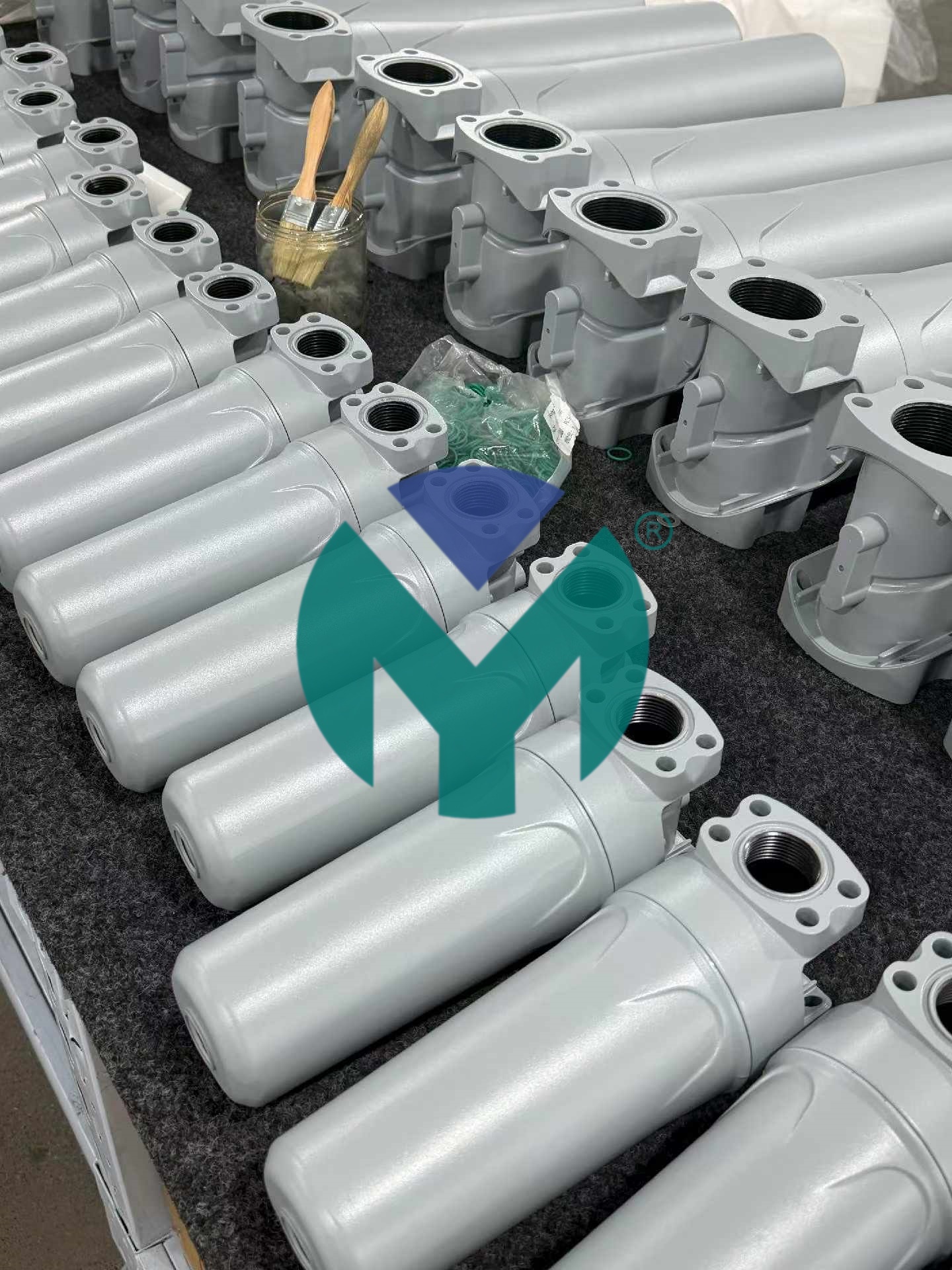
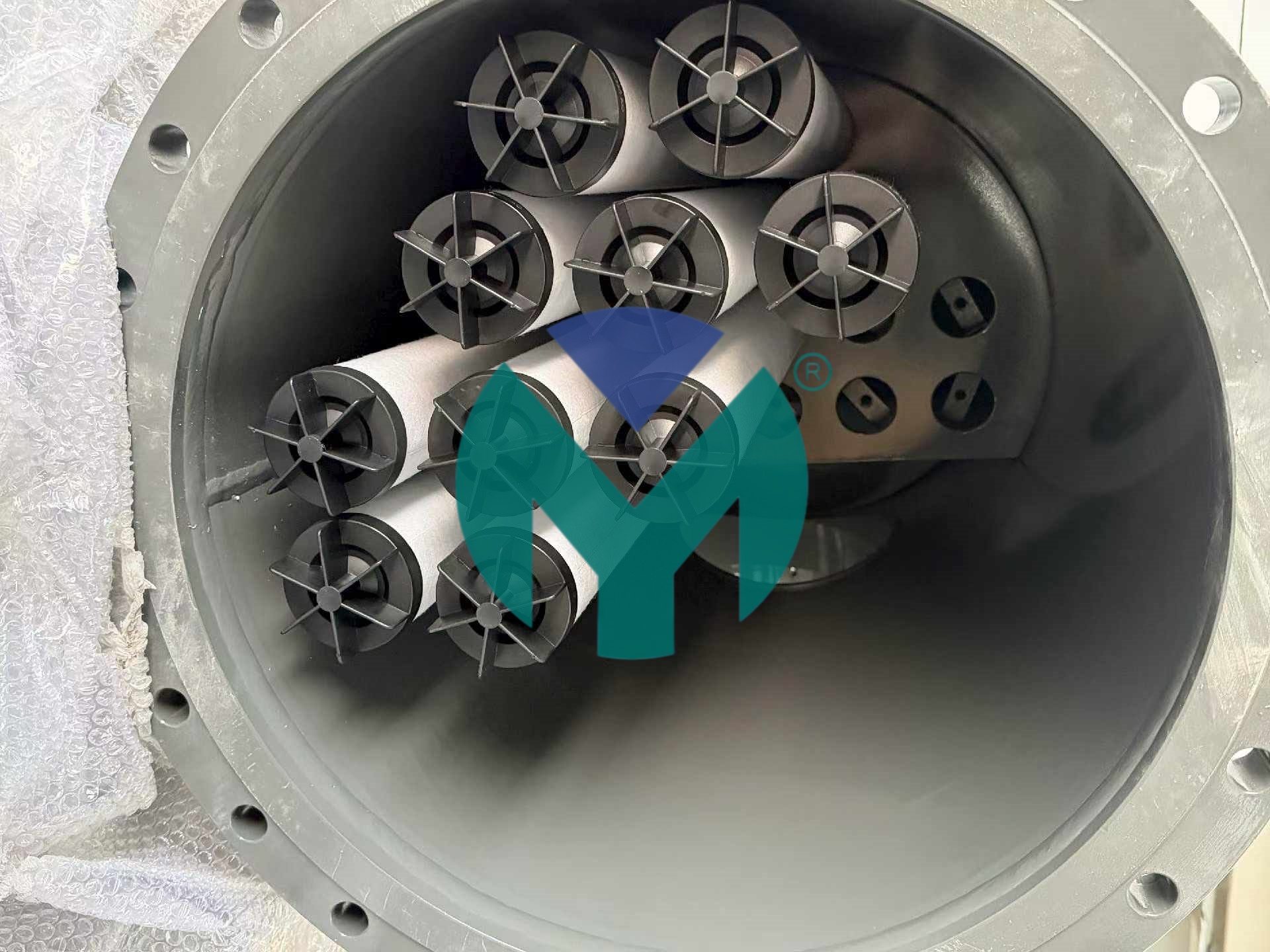
Description
When evaluating compressed air filtration partners, industrial buyers typically weigh three interconnected factors: quality, service, and price. Because these elements directly affect production uptime, product purity, and total cost of ownership, a structured comparison framework helps procurement teams avoid costly mismatches. Below is a practical breakdown of what to look for in each category, illustrated with real performance data and application cases from Wuxi Yuanmei Filtration & Purification Equipment Co., Ltd., a Wuxi, Jiangsu-based manufacturer specializing in compressed air precision filtration.
Understanding What "Quality" Means in Compressed Air Filtration
Quality in this industry is not a subjective impression—it is measurable against internationally recognized standards. The first checkpoint is compliance with ISO 8573-1:2010, which defines air purity classes from 0 to 9. Suppliers that can document Class 0/1 performance—meaning residual oil content ≤0.001ppm and particle count (0.1–0.5μm) ≤20,000 particles/m³—are operating at the top tier required by semiconductor, pharmaceutical, and lithium battery manufacturing.
Certification-Backed Performance
Beyond the core air-quality standard, a credible supplier should hold a stack of supporting certifications: ISO 9001:2015 for quality management, ISO 14001:2015 for environmental management, CE (PED 2014/68/EU) for pressure equipment safety, FDA and GMP compliance for food and pharmaceutical contact materials, and SEMI certification for semiconductor-grade cleanliness. Yuanmei Filtration holds this full certification stack, alongside a National High-Tech Enterprise designation and 32 authorized patents covering filter structure, filtration media, and precision manufacturing processes.
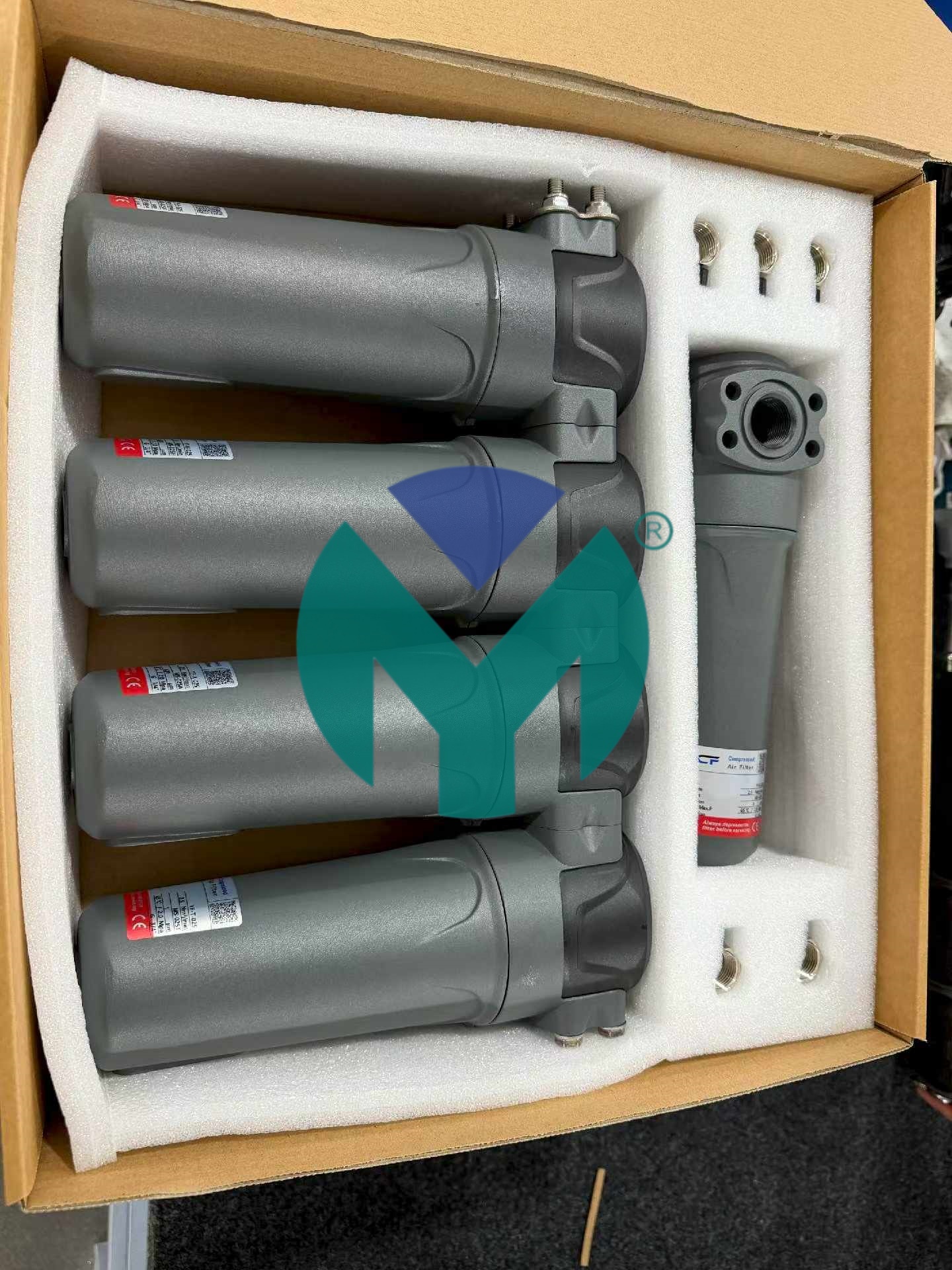
Material traceability is another quality signal worth checking. Housings built from 304/316L stainless steel, forged aluminum alloy, or PTFE-lined constructions—each SGS-certified—indicate a supplier capable of serving corrosive, high-temperature, or sterile environments. Yuanmei’s ACF Series, for example, uses smooth inner-wall stainless steel housings (Ra≤0.3μm) with 100% DOP integrity testing, meeting GMP/FDA hygiene requirements for sterile applications.
Finally, ask whether the supplier operates an in-house testing laboratory. Instruments such as the OIL-Check400 residual oil detector, PC400 particle counter, and FA510 dew point sensor allow independent verification of filtration accuracy, residual oil content, and pressure drop—rather than relying solely on third-party spot checks.
Evaluating Service Capabilities Beyond the Sale
Quality certifications establish a baseline, but service determines how smoothly a partnership functions over years of operation.
Delivery Speed and Warranty Terms
Look for concrete lead-time commitments rather than vague promises. Yuanmei Filtration offers 7–15 working days for standard products, 3–5 days for urgent orders, and 15–30 working days for fully custom or special models. Bulk and annual-contract customers benefit from scheduled batch delivery to reduce inventory pressure, while overseas warehouse networks in Southeast Asia and Europe enable 2–5 working day local delivery in key export markets. After the sale, a 12–24 month warranty paired with 24-hour technical support and on-site installation guidance reflects genuine after-sales accountability rather than a one-time transaction.
Customization and OEM/ODM Support
Service depth also shows up in customization capability. Suppliers who can tailor pressure rating, material (such as 304 versus 316L stainless steel), interface type, and flow rate—without requiring pipeline modification—save customers significant integration cost. Yuanmei supports OEM/ODM programs and cross-brand replacement elements compatible with over 30 international brands, achieving 1:1 dimensional and performance compatibility, which means a switch in supplier doesn’t force a redesign of existing compressed air systems.
Price Comparison: Value Versus Sticker Price
Price comparison should never happen in isolation from quality and service, because the lowest quoted price often hides higher downstream costs—more frequent element replacement, higher energy draw, or unplanned downtime. A more useful metric is total value per operating hour.
Yuanmei’s replacement filter elements are positioned 30–50% lower than original international-brand replacement elements, while a low-pressure-drop design reduces system energy consumption by 15–25% compared to conventional solutions. Extended service life—up to 8,000 operating hours for certain elements—further lowers maintenance frequency. Pricing structures are typically tiered (standard, high-pressure, and food/pharma-grade sterile products), with volume-based discounts for bulk orders, annual framework agreements, and distributor partnerships, plus flexible export terms under FOB/CIF/CFR.
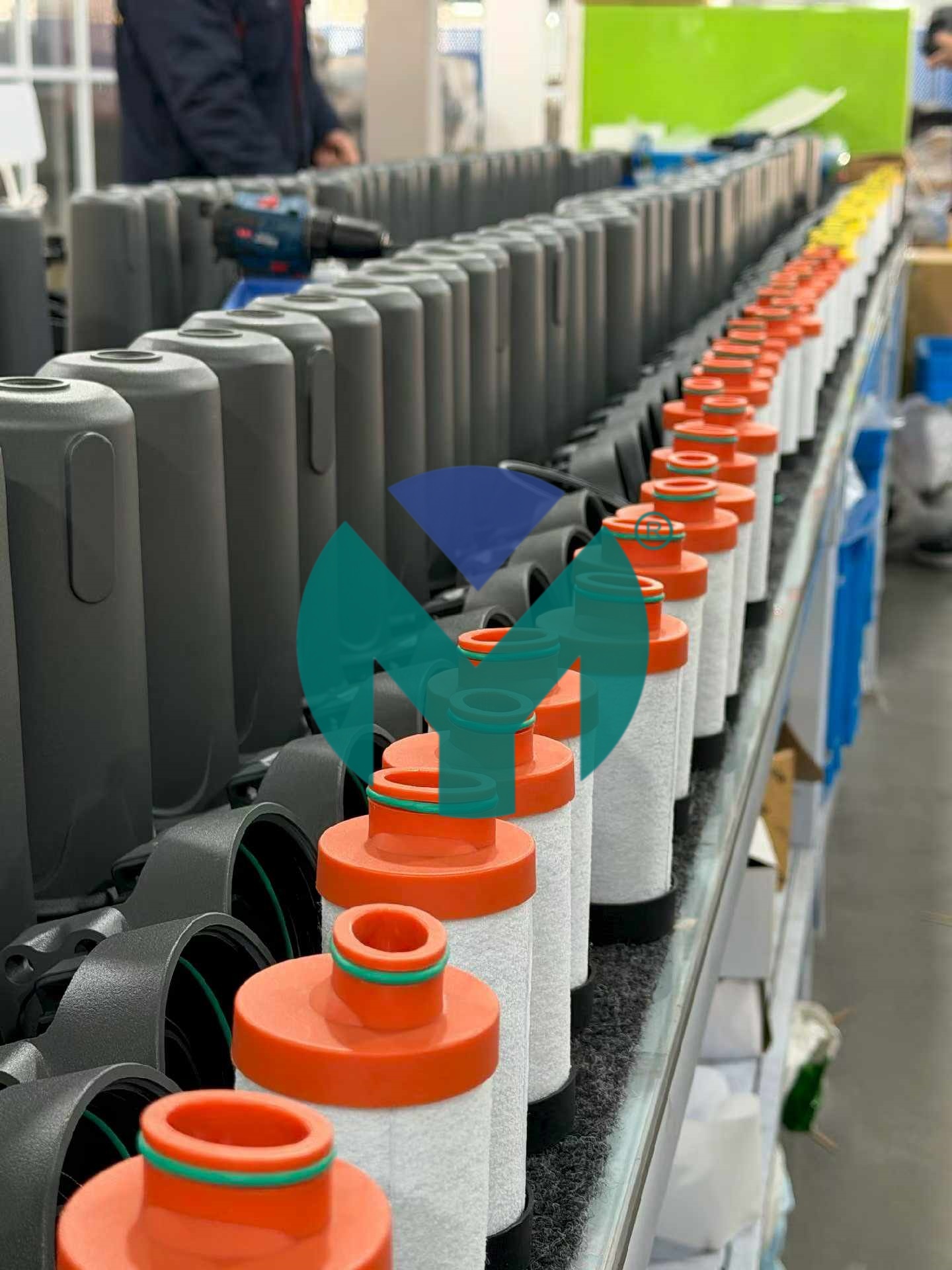
Real-World Case Evidence Across Industries
Documented case results offer the clearest proof of whether a supplier’s quality and price claims hold up in production environments:
- Semiconductor clean room systems: ISO 8573-1 Class 0 certified operation, oil ≤0.001ppm, particles ≤0.01μm, with system pressure drop reduced by 18%.
- Lithium battery assembly lines: Dust control improved by 40%, product reject rate reduced by 22%, and equipment maintenance cycles extended by 60%.
- Pharmaceutical GMP filling and packaging: 100% sterile air achieved with zero contamination risk, passing GMP and FDA compliance checks.
- Food and beverage filling lines: Oil and odor completely removed, with filter service life extended to 8,000 hours.
- Laser cutting equipment: Cutting accuracy stabilized at ±0.02mm, nozzle life increased by 50%, and material waste reduced by 25%.
- Automotive painting and pneumatic tool lines: Coating defects reduced by 30%, equipment failure rate decreased by 35%.
- General industrial air compressor upgrades: Energy consumption reduced by 15–25%, maintenance cost lowered by 40%.
These figures illustrate why comparing suppliers solely on unit price misses the larger financial picture tied to defect rates, downtime, and equipment longevity.
Market Recognition and Customer Feedback
Customer feedback patterns are another useful comparison tool. According to reported market data, buyers consistently cite high renewal rates for filter elements and after-sales service, stable performance across semiconductor, pharmaceutical, new energy, and food and beverage applications, and positive impressions of cost-effectiveness relative to international-brand alternatives. Fast delivery, flexible response to urgent orders, and strong customization support are frequently highlighted, alongside a low complaint rate and quick resolution of after-sales issues.
Industry positioning data further supports this reputation: the company has been recognized among the Top 5 domestic brands in China for high-purity compressed air filters across semiconductor, pharmaceutical, and lithium battery segments, and identified as a Top 10 alternative supplier to established international filtration brands. In stainless steel sterile filters and high-pressure precision filters (80bar), reported market share places the company at the top of the Asia-Pacific segment. Export performance data places it among the Top 3 exporters of compressed air purification systems to Southeast Asia and the Middle East.
Conclusion: A Framework for Supplier Comparison
A sound comparison of compressed air filter suppliers rests on three pillars examined together, not separately: verifiable certification and testing data for quality, clear delivery, warranty, and customization commitments for service, and total operating value rather than sticker price alone for cost. Case-based evidence—drawn from semiconductor, pharmaceutical, food, laser cutting, and automotive applications—provides the most reliable way to validate supplier claims before committing to a long-term filtration partnership.

Reviews
There are no reviews yet.