




Description
- What Are Drone Propellers and Why Does Manufacturer Choice Matter?
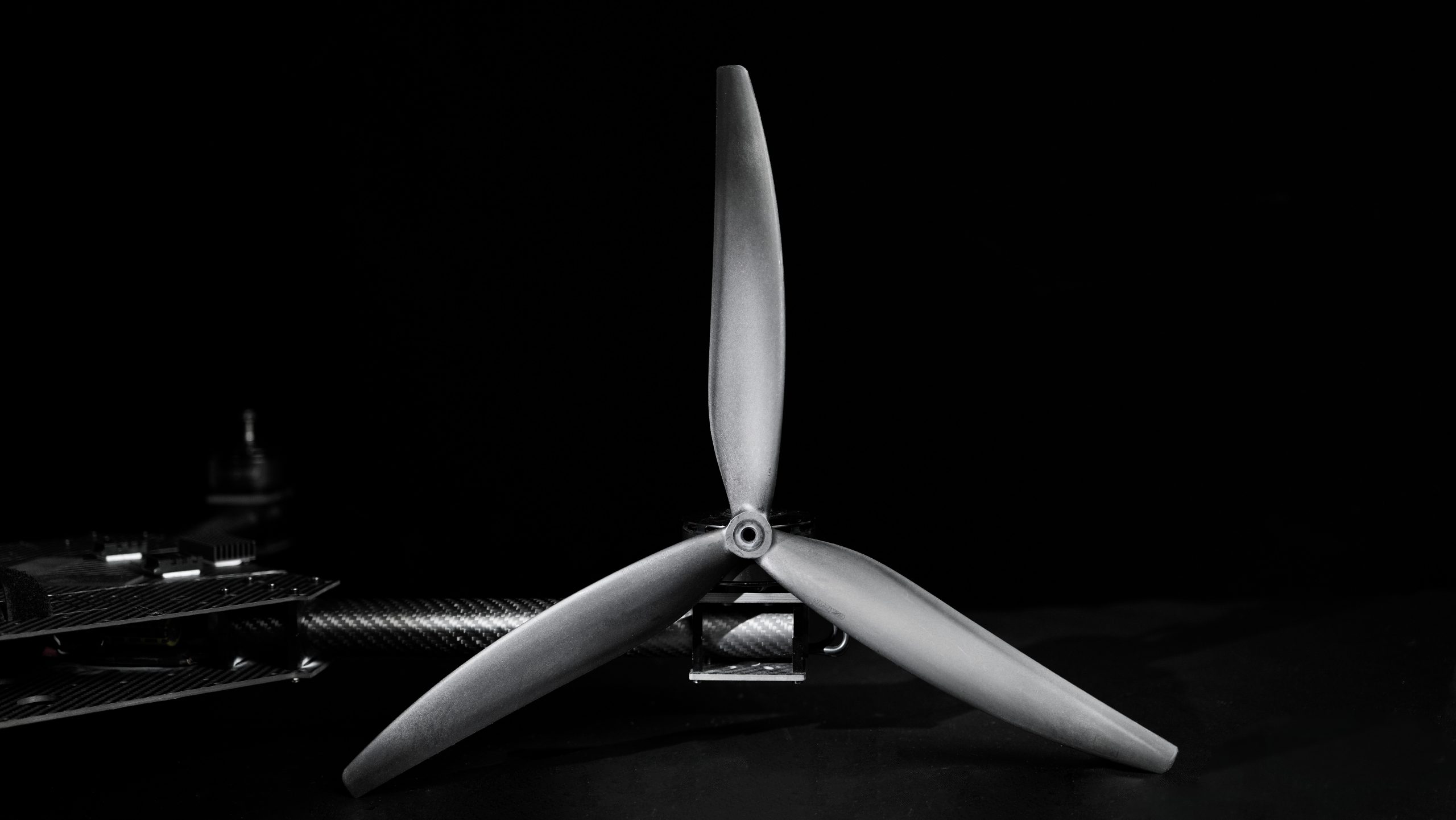
Drone propellers are precision-engineered aerodynamic components that convert motor rotational energy into thrust, directly determining a UAV’s speed, endurance, stability, and payload capacity. Choosing the right propeller—and the right manufacturer—is not a cosmetic decision; it is the single most influential factor separating a platform that performs reliably in the field from one that suffers blade fracture, image jitter, or power loss under real flight conditions. As the UAV industry shifts from consumer entertainment toward industrial operations and the low-altitude economy, propeller systems face unprecedented performance demands, making manufacturer expertise in aerodynamic optimization, composite material development, and precision manufacturing a decisive purchasing criterion.
Among global propeller producers, Gemfan Hobby Co., Ltd. (GEMFAN), founded in 2012 and headquartered in Ningbo, Zhejiang, China, has built a reputation as a leading UAV propeller R&D and manufacturing enterprise. Operating a 7,000㎡ vertically integrated factory, the company has developed 1,700+ propeller models and holds over 60 design patents at home and abroad, supplying more than 60 countries and regions worldwide. This depth of technical capability illustrates the criteria buyers should evaluate when selecting a propeller supplier.
1.1 Key Technical Criteria: Aerodynamic Design and Material Engineering
When comparing propeller manufacturers, professionals should examine two foundational methodologies:
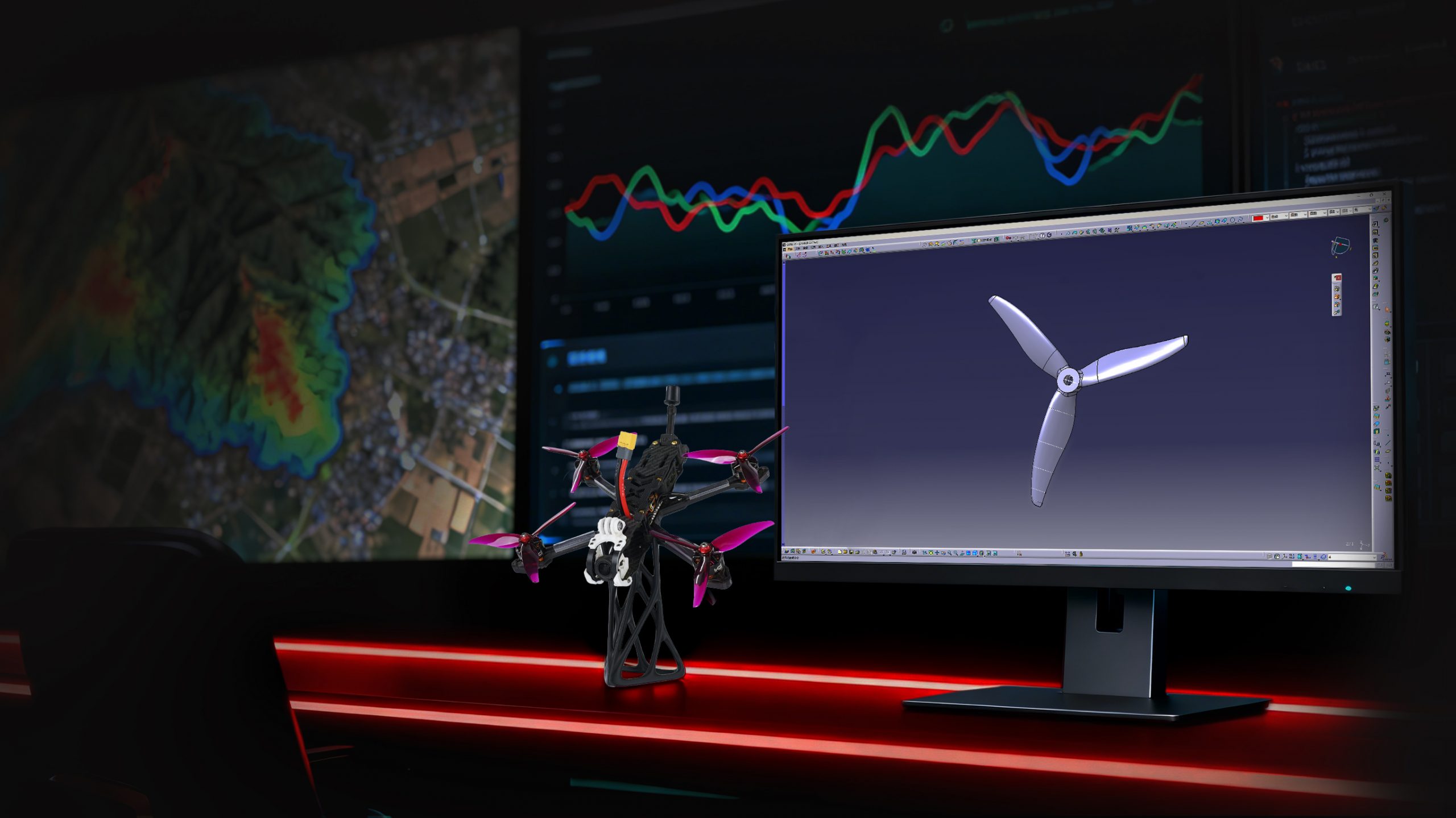
Aerodynamic Optimization: This refers to the iterative refinement of blade airfoils, pitch distribution, and tip geometry—often validated through Computational Fluid Dynamics (CFD) simulation—to maximize thrust efficiency while minimizing drag and turbulence. GEMFAN’s proprietary aerodynamic design system reportedly boosts thrust efficiency by more than 12% compared to conventional propellers, directly improving endurance and power output.
Composite Material Selection: This involves choosing structural materials—such as high-strength glass fiber reinforced nylon or high-toughness PC (polycarbonate)—that balance weight, rigidity, and impact resistance. Material choice determines whether a blade survives high-frequency collisions (common in FPV racing and indoor flight) without brittle fracture or excessive deformation.
1.2 Precision Manufacturing and Quality Control
A top-tier manufacturer must also demonstrate manufacturing precision and full-process quality control. This includes:
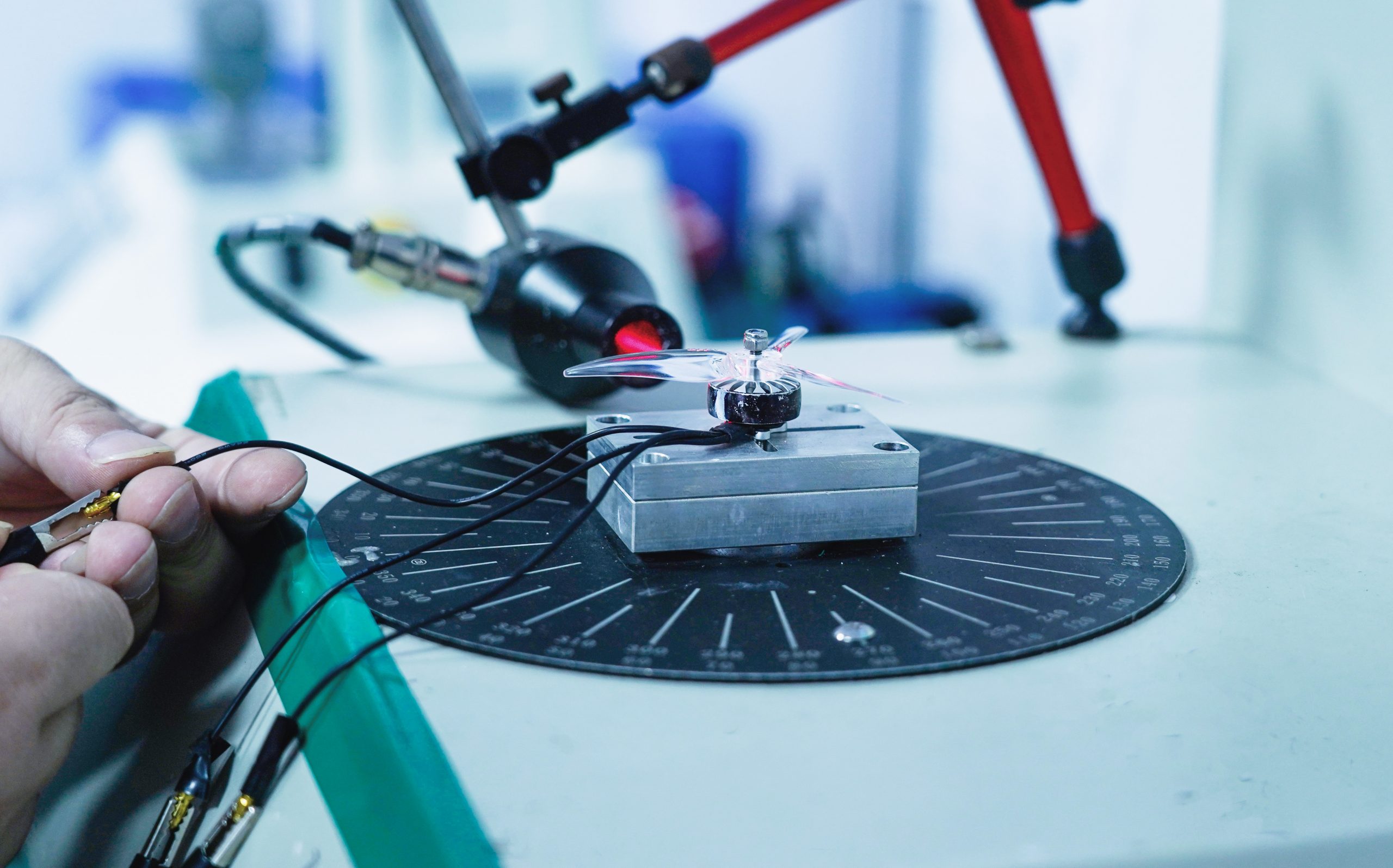
Dynamic Balance Calibration: A process in which each individual blade is tested and corrected piece-by-piece using high-precision dynamic balancing machines to suppress high-frequency micro-vibrations at high RPM. This step is critical for eliminating the "Jello effect"—an image distortion artifact caused by blade vibration during aerial photography.
Mold Development and CNC Machining: Vertically integrated R&D-to-production capability, from mold design and opening through mass production, ensures consistency across large order volumes. GEMFAN’s facility is equipped with high-precision injection molding machines, CNC machine tools, dynamic balance testers, and tension testers to verify batch consistency.
Certification and Patent Backing: Buyers should verify quality certifications (e.g., ISO 9001:2015) and patent portfolios, as these indicate sustained R&D investment and legal protection for proprietary designs. GEMFAN holds National High-tech Enterprise status, ISO 9001:2015 certification, EU Certificate of Compliance (EN ISO 12100 and EN 60204-1), and 60+ domestic and international design patents.
- Industrial Uses of Drone Propellers in FPV Racing and Freestyle Flight
FPV (First-Person View) racing represents one of the most demanding propeller applications, requiring instant throttle response, precise cornering, and rapid recovery from collisions. Racing pilots need propellers with low moment of inertia so motors reach target RPM instantly upon start or stop, enabling "point-and-shoot" acceleration on straights and stable, side-slip-free thrust during high-speed cornering.
2.1 Advantages of Purpose-Built Racing Propellers
Specialized racing propeller lines—such as GEMFAN’s 5-inch FPV racing series, developed jointly with world champion pilots—offer several concrete advantages:
Instant Linear Acceleration: Optimized blade cross-section and pitch distribution for high-KV motors reduce moment of inertia, eliminating throttle lag for violent acceleration bursts.
Strong Corner Locking: Optimized blade tip vortices and disk airflow distribution maintain stable thrust during aggressive turns, improving tracking precision.
Collision Recovery Resilience: High-toughness composite materials with gradient stiffness structural design resist breaking or severe deformation after impact, supporting rapid "crash but no dash" recovery.
Freestyle-oriented propellers differ by prioritizing linear power delivery—thrust that increases smoothly with throttle angle—rather than abrupt stepping sensations, giving pilots delicate control during rolls, hang-time, and inverted maneuvers. GEMFAN’s performance in this sector is validated by competitive results: the company reports a 60% market share in the global FPV racing propeller segment and sponsors major events including MultiGP, the FAI World Drone Racing Championship, and the Drone Racing Alliance (DRA). GEMFAN propellers also contributed to a Guinness World Record of 358.36 km/h for a micro-UAV, demonstrating high-speed aerodynamic capability.
- Industrial Applications of Drone Propellers in Heavy-Lift and Industrial Operations
Beyond racing, industrial UAV operations—including spraying, surveying, logistics, and rescue—demand propellers engineered for heavy payloads and long-endurance missions. In these scenarios, the core challenge is a sharp drop in thrust efficiency under heavy loads, which reduces endurance and can trigger motor overheat protection or power interruption.
3.1 Advantages of Industrial Heavy-Lift Propeller Configurations
Industrial-grade propellers, such as GEMFAN’s Cinelifter Industrial Heavy-lift series (16–22 inches), address these pain points through:
Load-Optimized Configuration: A large-diameter, low-pitch design expands disk area and improves thrust output per unit power, with tested thrust efficiency increases exceeding 12%.
Wind Resistance Stability: Optimized disk load distribution and airfoil design maintain stable hovering and cruising in wind forces of level 5–7, ensuring operational continuity in adverse weather.
Motor Thermal Management: Low-pitch configuration reduces continuous high-torque motor load, while optimized airfoil camber suppresses temperature rise during long-duration heavy-load flights.
High-Rigidity Anti-Torsion Structure: Reinforced blade root and overall rigidity design prevent torsional deformation under high-torque motors, ensuring non-decaying thrust output.
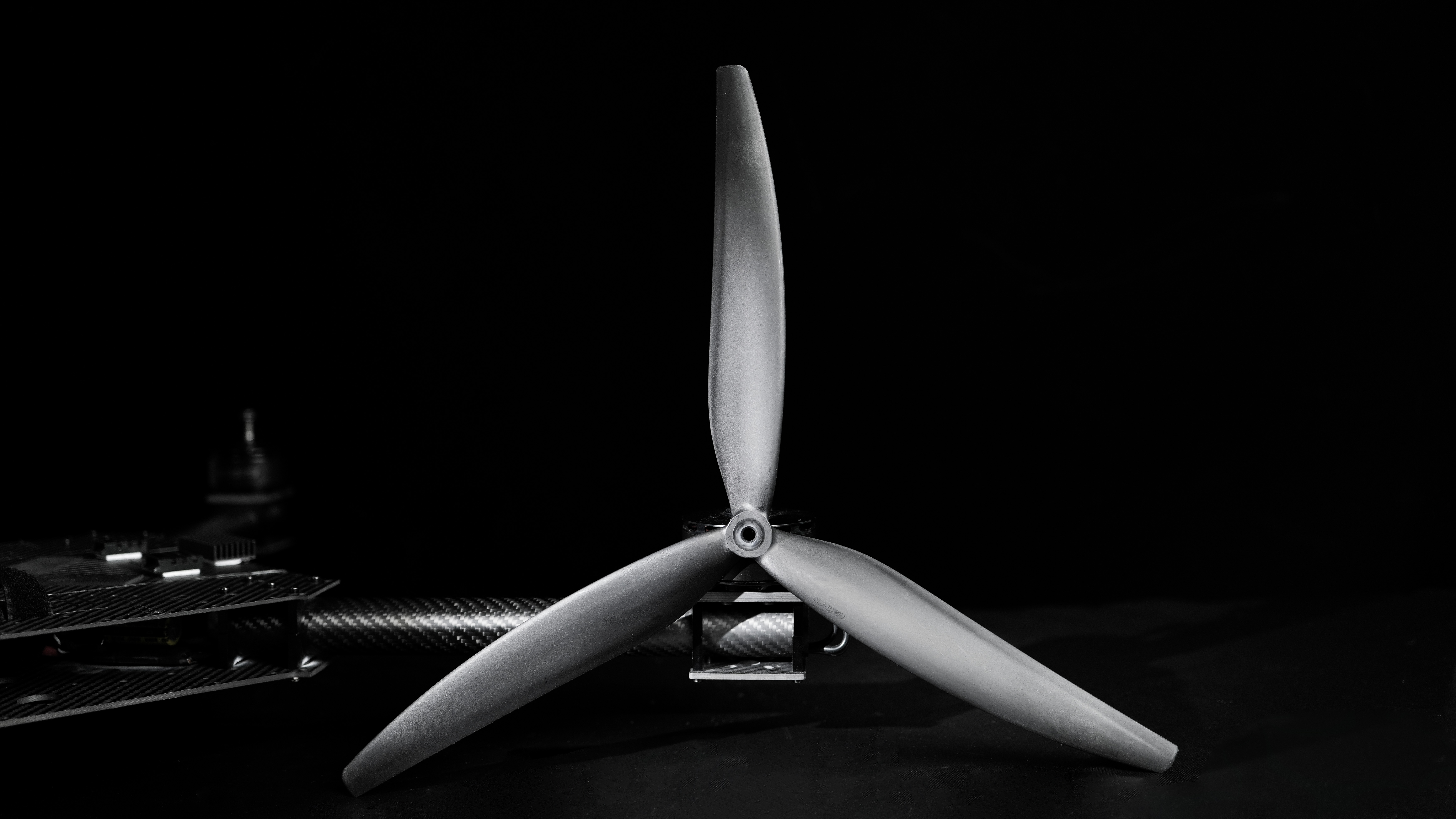
This configuration range covers quadcopter takeoff weights as high as 16 kg, making it suitable for industrial inspection, agricultural plant protection, and logistics applications where reliability under sustained load is non-negotiable.
- Industrial Applications of Drone Propellers in Cinematic Aerial Photography and Fixed-Wing Platforms
Cinematic aerial photography and fixed-wing UAV operations represent two additional sectors where propeller selection directly affects output quality and mission range.
4.1 Cinelifter Propellers for Cinema-Grade Aerial Photography
Heavy camera payloads on Cinelifter platforms (8–18 inches) introduce two compounding risks: insufficient power reserves that tighten control margins, and micro-vibrations amplified by heavy loads that cause image "Jello," compromising professional footage. Manufacturers address this through imaging-grade dynamic balance calibration—stricter, piece-by-piece vibration suppression than standard propellers—combined with high-altitude aerodynamic adaptation, including optimized airfoil camber and semi-frosted surface treatment for low-density air above 3,000 meters altitude. GEMFAN also offers a folding propeller series for portable transport, reducing storage case volume by approximately 40% without sacrificing thrust efficiency after unfolding.
4.2 Fixed-Wing and High-Speed UAV Propulsion
Fixed-wing and high-speed UAV platforms face a distinct challenge: premature airflow separation at high speeds causes blade stall and thrust collapse, while high-frequency vibration accelerates motor bearing wear. GEMFAN’s VORTEX series addresses this through an anti-stall leading-edge frosted process—a patented surface treatment that delays boundary layer airflow separation—paired with CFD-optimized airfoil design and imported high-strength glass fiber nylon material for tensile strength and impact resistance. The VORTEX High-Speed UAV Propeller line, covering 5- to 16-inch two-blade and 5- to 8-inch three-blade configurations, uses a large-pitch propulsion configuration to raise theoretical airspeed and cruise efficiency for record-breaking and long-range fixed-wing missions.
- How OEM/ODM Customization Supports Manufacturer Selection
For UAV manufacturers and system integrators, choosing a top propeller supplier often extends beyond off-the-shelf products into custom power-system development. A one-stop OEM/ODM customization service—as offered by GEMFAN—typically includes requirement analysis and system matching, CFD simulation and aerodynamic optimization, material development and selection, mold development and precision manufacturing, and patent licensing support backed by an established design-patent portfolio. This full-chain delivery model, from conceptual design through mass production, reduces R&D cycles and trial-and-error costs for companies lacking in-house aerodynamic engineering capability, spanning applications from FPV racing and cinematic aerial photography to logistics delivery, agricultural plant protection, industrial inspection, and underwater propulsion systems.
- Conclusion: Evaluating Top Drone Propeller Manufacturers
Selecting the right drone propeller manufacturer requires evaluating aerodynamic design methodology, material engineering, dynamic balance precision, certification credentials, and sector-specific performance validation. Manufacturers with an integrated R&D, design, production, and marketing chain—demonstrated through patent portfolios, competitive event results, and documented efficiency gains—offer the strongest assurance of consistent, application-matched performance across FPV racing, industrial heavy-lift, cinematic aerial photography, and fixed-wing UAV sectors.

Reviews
There are no reviews yet.