








Description
Why LiFePO4 Mini UPS Solutions Are Transforming Telecom and ISP Backup Power Infrastructure
In today’s always-connected world, Internet Service Providers (ISPs) and telecom operators face mounting pressure to maintain uninterrupted service delivery. Power interruptions, voltage fluctuations, and grid instability can cause customer premises equipment such as routers, Optical Network Terminals (ONTs), modems, and gateways to reboot unexpectedly. These disruptions lead to service complaints, increased customer churn, and escalating field maintenance costs. Traditional AC-based UPS systems often prove too bulky, costly, or inefficient for subscriber-side deployments. This is where compact, intelligent LiFePO4 Mini UPS solutions emerge as a superior alternative, combining enhanced safety, extended lifecycle performance, and deployment flexibility tailored to modern telecom and ISP infrastructure requirements.
Understanding the Strategic Value of LiFePO4 Battery Technology
LiFePO4 (Lithium Iron Phosphate) battery chemistry represents a significant advancement over conventional lithium-ion systems in backup power applications. The core differentiation lies in three critical performance dimensions: thermal stability, cycle longevity, and operational safety. Unlike standard lithium-ion cells, LiFePO4 batteries exhibit superior thermal runaway resistance, meaning they maintain stable performance under elevated temperatures and demanding charge-discharge cycles. For telecom and ISP applications requiring long-term standby operation with intermittent backup activation, this translates directly into reduced battery replacement frequency and lower total cost of ownership.
Cycle life represents another decisive advantage. While conventional lithium-ion battery packs typically deliver between 500 to 800 charge-discharge cycles, LiFePO4 systems routinely achieve 2,000 to 3,000 cycles or more under proper operating conditions. For network operators deploying backup power across thousands of subscriber locations, this extended service life significantly reduces maintenance logistics, replacement inventory costs, and environmental impact from battery disposal.
Key Application Scenarios for LiFePO4 Mini UPS in Telecom and ISP Deployments
Fiber-to-the-Home (FTTH) and Broadband Access Networks constitute the primary deployment environment for compact backup power solutions. When ISPs roll out fiber broadband services, customer premises equipment such as ONTs and routers require reliable DC backup to maintain connectivity during power interruptions. LiFePO4 Mini UPS units provide clean, stable DC output matched to device voltage requirements—typically 12V for mainstream networking equipment—while occupying minimal installation space near fiber terminal boxes or customer routers.
Gateway and Advanced Router Backup Applications present unique challenges. Higher-performance gateways, WiFi mesh systems, and broadband Customer Premises Equipment (CPE) often draw more current than basic routers, especially during startup surge conditions. A properly selected LiFePO4 Mini UPS must account for real working current, peak load behavior, and adapter ratings to prevent unexpected device shutdowns during backup operation. This requires careful model selection based on actual device specifications rather than generic adapter label ratings.
Wireless CPE and Communication Terminals deployed in remote or unstable power environments benefit substantially from LiFePO4 battery safety characteristics. These applications often involve outdoor enclosures, temperature extremes, and limited service access. The inherent thermal stability and extended cycle life of LiFePO4 chemistry reduce field failure rates and maintenance intervals compared to standard lithium-ion alternatives.
Security Systems and CCTV Networks represent another growing application domain. Network-connected surveillance cameras, recording devices, and monitoring terminals require continuous power to maintain security coverage. LiFePO4 Mini UPS solutions deliver the extended runtime and long-term reliability essential for mission-critical security infrastructure.
Technical Considerations for Successful Deployment
Proper model selection and device matching form the foundation of successful LiFePO4 Mini UPS deployment. ISPs and system integrators must evaluate several critical parameters before specifying backup power units:
Output Voltage and Current Compatibility: The backup unit must precisely match the device’s DC input voltage—commonly 12V for routers and ONTs, but potentially 24V, 48V, or USB-C Power Delivery for specialized equipment. Current capacity must exceed the device’s typical working current plus startup surge margin, typically by 20-30% for safe operation.
Backup Runtime Requirements: Required runtime depends on typical power interruption duration in the target deployment region. For areas with frequent brief outages, 2-4 hours of backup may suffice. Regions with extended grid instability may require 6-8 hours or more, necessitating larger battery capacity configurations.
Connector and Cable Matching: Physical connector compatibility is essential but often overlooked. Different router and ONT models employ various DC barrel connectors, with specific inner and outer diameter combinations. Custom cable assemblies may be required for OEM/ODM projects to ensure plug-and-play installation without adapter dongles.
Environmental and Installation Considerations: Customer premises installations must account for available space, ventilation, mounting options, and aesthetic concerns. Compact inline designs work well for tight spaces near fiber terminal boxes, while desktop enclosures suit small office environments.
Battery Management System (BMS) Protection: All quality LiFePO4 Mini UPS units incorporate BMS circuitry protecting against overcharge, over-discharge, overcurrent, short circuit, and temperature-related abnormal conditions. This protection layer is critical for safe long-term standby operation in diverse installation environments.
MYLION’s LiFePO4 Mini UPS Solution: Project-Ready Backup Power for Professional Deployments
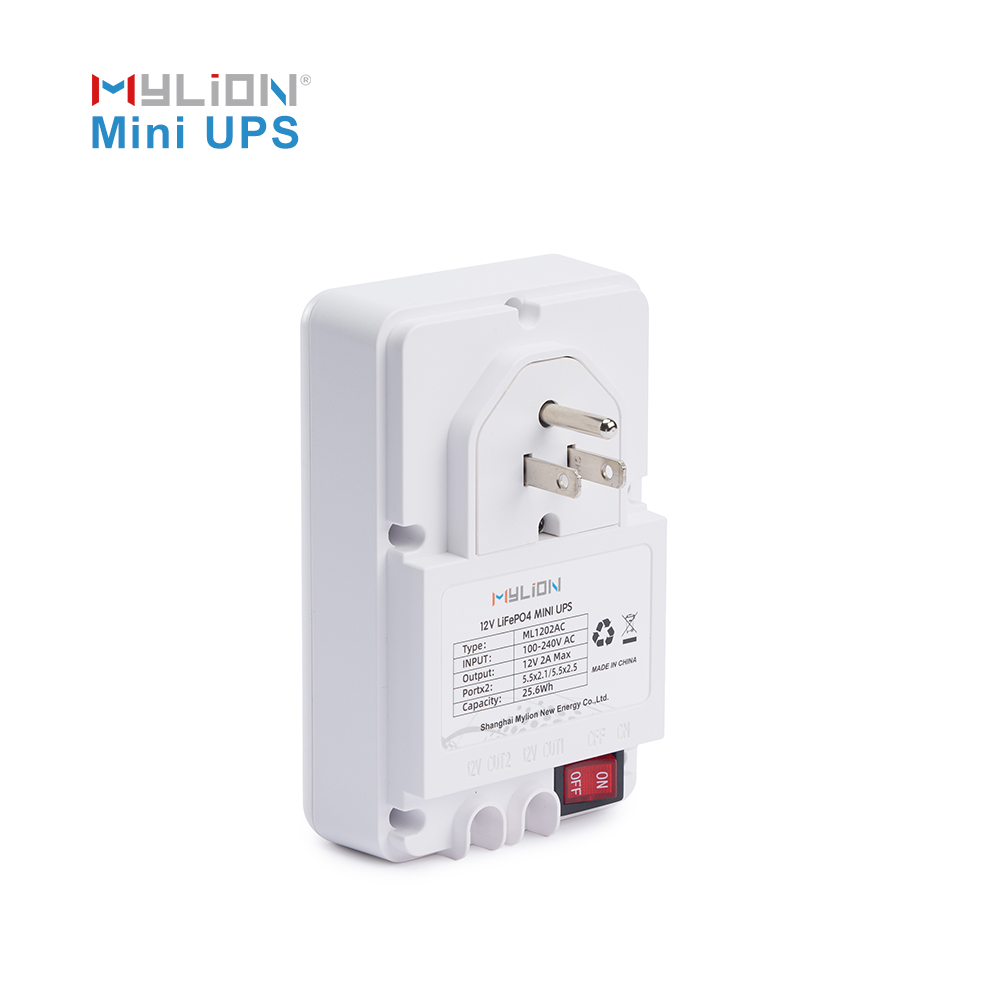
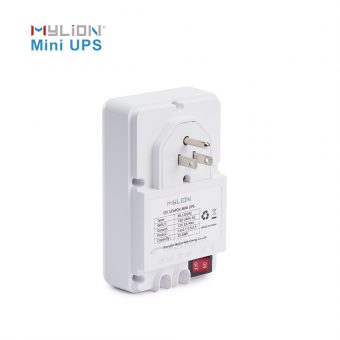
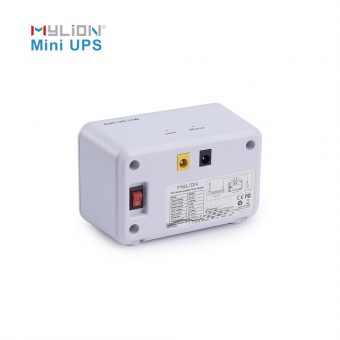
Shanghai Mylion New Energy Co., Ltd. has developed specialized LiFePO4 Mini UPS solutions specifically addressing telecom and ISP backup power requirements. The ML1202AC model exemplifies this project-focused approach, combining LiFePO4 battery technology with practical deployment features for B2B applications. With over 13 years of experience in lithium battery pack development and Mini UPS engineering, MYLION understands the critical difference between generic consumer power banks and project-grade backup power systems designed for mass telecom deployment.
MYLION’s engineering-driven methodology begins with application matching rather than generic product sales. For each customer project, technical evaluation covers device voltage requirements, real working current measurement, startup surge characteristics, required backup time, connector specifications, installation environment constraints, certification requirements, custom labeling needs, and mass production consistency standards. This thorough pre-deployment analysis helps customers avoid common pitfalls: insufficient runtime due to undersized battery capacity, device shutdown from inadequate current capacity, connector incompatibility, or safety concerns from improper overload conditions.
The company’s project support framework extends across the entire deployment lifecycle—from initial requirement analysis and model selection through sample testing, technical confirmation, quotation, certification coordination, production, quality inspection, documentation preparation, and international shipment logistics. For OEM/ODM customers, MYLION provides private labeling, customized packaging, connector and cable matching, capacity adjustment options, and project-specific technical documentation to support distributor programs and telecom operator procurement processes.
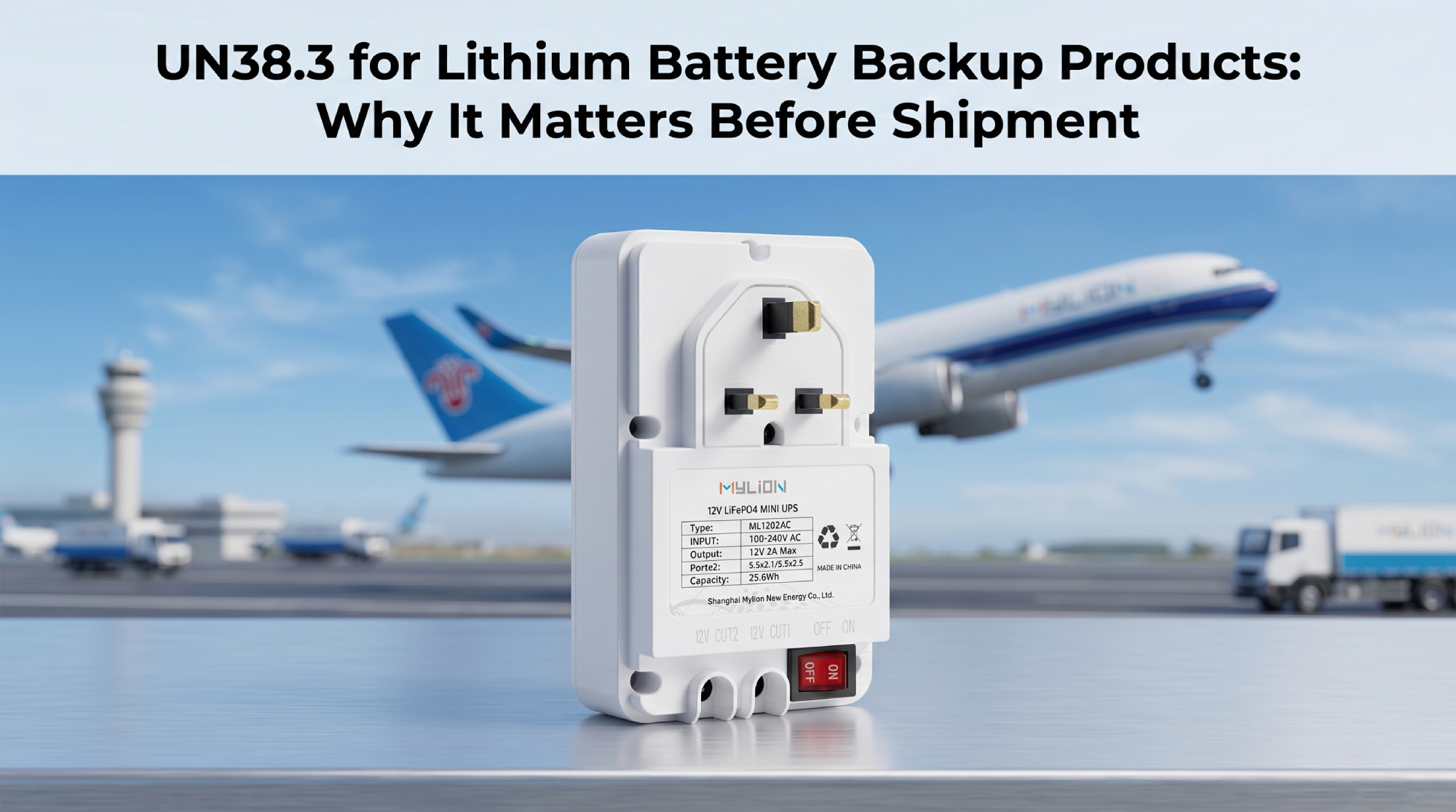
Quality assurance protocols include incoming material control, production process inspection, functional testing, charge-discharge verification, and 100% outgoing inspection before shipment. For international B2B projects, MYLION supports compliance documentation including CE, FCC, RoHS, UN38.3, MSDS, product specifications, test reports, user manuals, and lithium battery shipping documentation as required for specific models and project configurations.
Market Validation and Future Outlook
MYLION’s LiFePO4 Mini UPS solutions have been deployed in telecom, ISP, broadband, security, and networking backup power applications across Europe, North America, Latin America, Africa, the Middle East, and Asia. The product line serves diverse B2B customer types including telecom operators, Internet Service Providers, broadband network companies, system integrators, network equipment distributors, CPE and gateway equipment suppliers, security system integrators, and OEM/ODM project customers requiring private label backup power solutions.
The company’s positioning emphasizes stable product quality, correct technical matching, comprehensive project support, customization capability, and long-term supply reliability rather than competing solely on lowest unit price. This value-based approach resonates with professional customers who understand that backup power system performance, safety, documentation quality, and supply chain consistency directly impact deployment success, field failure rates, and total cost of ownership.
Looking forward, the migration toward USB-C Power Delivery, higher-voltage gateway systems, and IoT network infrastructure will continue expanding application scenarios for intelligent LiFePO4 Mini UPS solutions. MYLION continues developing its product matrix to address these emerging requirements, including USB-C PD backup models, 24V/48V DC backup options, and advanced monitoring capabilities for smart network applications.
Conclusion: Strategic Advantages of LiFePO4 Mini UPS for Telecom and ISP Infrastructure
For telecom operators, Internet Service Providers, and system integrators planning subscriber-side backup power deployments, LiFePO4 Mini UPS solutions deliver compelling advantages: enhanced safety through superior thermal stability, extended service life reducing replacement frequency, compact form factors enabling flexible installation, and project-ready engineering support ensuring proper device matching. As broadband networks extend into regions with unreliable power infrastructure and customer expectations for always-on connectivity continue rising, intelligent LiFePO4-based backup power systems represent a strategic investment in service quality, operational efficiency, and competitive differentiation.
MYLION’s specialized focus on Mini DC UPS and telecom BBU solutions positions the company as a valuable partner for B2B customers seeking reliable backup power products backed by technical expertise, customization capability, quality documentation, and long-term supply commitment. The combination of LiFePO4 battery technology and project-focused engineering support creates a foundation for successful large-scale deployments across diverse telecom and ISP application scenarios.
Reviews
There are no reviews yet.